PhD Philosophy & Psychoanalysis

Tag: Psychotherapy

On the Marginalising practices of Psychology

[vc_row][vc_column][vc_column_text]Interviewer:    Do you think that if you had paid for the train your life would have been entirely different?”

JG:                      Listen, do you believe in God?

Interviewer:    Sometimes.

JG:                      Well, ask him.  Ask him if my life would have changed – I don’t know.


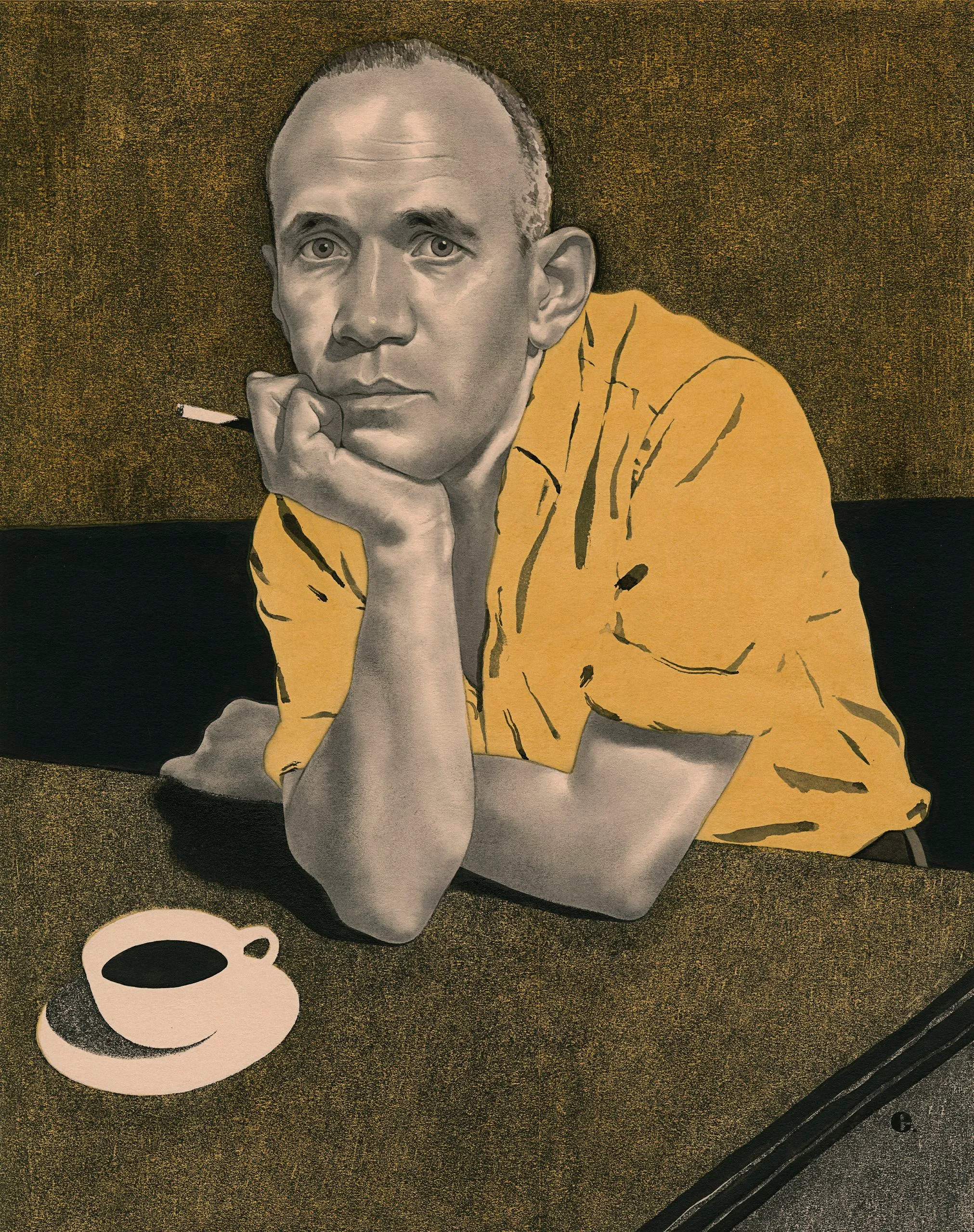
The psychological consultation can easily take the form of this kind of journalistic interview.  The question-answer sequence, in which the client’s life becomes an object of knowledge and scrutiny, can start to feel and sound like an interrogation process.  The therapist, as interviewer or interrogator, asks questions of the client with specific ideas and answers in mind.  We have preconceived ideas about how the world works and how a person is psychologically formed by their choices and experiences.  These ideas shape the questions we ask.  There is often the absence of a genuine question mark at the end of our questions.  They are more often statements than questions.  In some cases, they can even be surreptitious accusations of having made wrong choices, had wrong feelings, or come to failed conclusions.  In a BBC interview with the writer, playwright and “Saint” of French Existentialism, Jean Genet, in 1985 (soon before his death) – Genet is able to “break the order of things” (as the interviewer puts it) in this question answer process.  Genet was first incarceration in Mettray, one of the most severe reformatories in France, at the age of 15 (until the age of 20).  This was the first of many imprisonments.   Even though he was already in a habit of thieving, the offense at the time was not having a train ticket.  At the onset of the interview, he is asked about the “feelings” of his childhood – of not having parents.  A particularly psychologised line of questioning.  Genet refuses to take up any lines in this psychological script for how we assess our lives:

JG:                      You are asking me to tell you my feelings as a child. To speak of them in a satisfactory way. I would have to begin a kind of archaeology of my life, which is absolutely impossible.  All that I can tell you is that the memory that I have of it is of a difficult period, certainly. But, in escaping the family I also escaped from family feeling- the feelings I might have had for a family, or the feelings they might have had for me. And so, I am entirely detached, and I was as a child, from any family sentiments.  And, it is one of the virtues of the French Public Assistance, which certainly brings up children fairly well and stops them from attaching themselves to a family.  Which is, in my opinion (the family that is) probably the first criminal cell.


I am not sure if I would describe Genet as having been brought up “fairly well” but do we even know what that means?  He questions here whether the very institution of a family is a good place to be brought up.  You could perhaps say that his entire life, his creative works, are a challenge of normative ideas.  Genet may represent the possibility of something outside the “incarcerating” ways that we conceive of things as supposedly “normal”.  Or, perhaps, he is a genuinely traumatised man lost in his own defences?  Genet goes on to describe the relationship between the incarcerated: some inmates were appointed as authorities (elder brothers) over others, a relationship of dominance and submission, that was overseen by the warders.

JG:                      If you like, the warders were the first audience and we were the first actors, and they enjoyed the pleasure of looking on.

Ironically, the interview process mimics a scene of dominance and submission, being enjoyed by an audience.  Dominance of interviewer (on behalf of society) over interviewee (who refused to play by the same rules) and enjoyed by myself (the audience) who now becomes the warder.  I become complicit in the act of objectifying Genet as a thing to be known and judged for the life he has led, looking for psychological explanations for who and why he is how he is.  A mirror of a scene from Abert Camus’s The Outsider.


This is a position of onlooker is made readily available to us these days through the psychological and psychiatric ideas that have made there way into our everyday thinking and language.  We have become the onlookers of war, poverty and and the marginalised.  The supposedly well-meaning idea of “mental health” (and therefore, illness) is simply another form of marginalisation.  Psychological ideas and explanations of who, how and why “they” are serve as distancing practices that keep you over there and me, safely, over here.  Genet manages to address this in in the interview in a language that suggests we are all disempowered by this dynamic: both interviewer and interviewed, jailers and jailed.  He questions who has the “right to speak”, and when?  What are they allowed to say?  On the second day of his interview, he addresses the 7 people hidden from camera:

JG:                      I had a dream last night.  I dreamed that the technicians of this little film revolted.  While they’re taking the shots of this film, they never have the right to speak; how does that come about?  And I thought they might have enough guts to push me out and take my place.  But, nevertheless, they are not moving.  Could you ask them how they explain that?

Interviewer:    Yes.  How they…

JG:                      How they explain this..,why they don’t come and push me out, and you too…and say ‘It’s so stupid what you’re saying and that I don’t want to carry on with this work’.  Ask them.

Interviewer:    Yes certainly.  Because they don’t speak French.


The interviewer goes on to translate Genet’s utterances from French to English (in a much-abbreviated fashion).  The crew fumbles with answers as the camera haphazardly moves off Genet.  Part of the interrogation was about Genet’s choice to distance himself from society.  At this moment, Genet turns the interrogation onto the film crew and, in doing so, illustrates how it is these kinds of conventions, of treating people as objects to be known and questioned, that are actually the distancing and marginalising practices.

Interviewer:    But does it interest you to break the order of things, since you were dreaming about it, do you want to break the order in this room?

JG:                      To break the order?

Interviewer:    Yes.

JG:                      Of course.  It seems so rigid – I am all on my own here and in front of me are 1, 2, 3, 4, 5, 6, people.  Of course I want to break the order.  That’s why yesterday I asked you to come sit here [points to the chair he is sitting in].

Interviewer:    Is it like a police interrogation?

JG:                      There is that about it, yes.  I told you.  Is the camera rolling? [Looks at camera man] Good.  I told you yesterday that you were behaving like a policeman and you’re carrying on like that now, this morning.  I’ve told you that yesterday, and you’ve already forgotten.  Because you’re continuing to interrogate me, exactly like the thief I was thirty years ago was interrogated by the police.  [Gestures towards the rest of the room] By a squad of police.  And, I am alone on this little chair, being questioned by lots of people.  There is the norm on one side, where you are: 1, 2, 3, 4, 5, 6, 7 [pointing at people behind the camera] and elsewhere, the editors of the film and the BBC, and then there is the margin where I am [pointing to his chair] where I am marginalised.  If I am afraid to join the norm, then so be it.


So often, the psychologist or psychiatrist sits on the side of the supposed “norm” and the client or patient sits on the other side – the margin – awaiting judgment.  Let us rather talk in equal turns, side by side.  Neither of us marginalised by an imaginary audience with criteria for who and how we should be.  What would such a therapy look like?  Free from interrogation.  You shouldn’t need a ticket for the destination that is your own life.


[Image used above is an illustration of Jean Genet, by Edward Kinsella, from an article in the the New Yorker][/vc_column_text][vc_video link=”https://www.youtube.com/watch?v=Cn7LWdmdyTU”][/vc_column][/vc_row][vc_row][vc_column][/vc_column][/vc_row]

On being “no-thing-ness” (Day 1/5)

An existential Buddhist analysis of the self as the “struggle to exist”

Day 1: A view on Self

(Day 1 of a retreat hosted at Emoyeni Retreat Centre, Mooi Nooi, South Africa)


This retreat considers an intersection between Existential Philosophy, Buddhism and Psychotherapy. It is based on the assumption that we all bring our own personal struggles with the “self” to a retreat setting in the hope that Buddhist practices may bring some transformation. The traditional Buddhist solution is that the self is an illusion. But, what does this mean for practical functioning in the everyday world. What I propose is that it is better to treat the self as a construction (an interdependent arising – to use Buddhist language) rather than a complete illusion. Ultimately, the “self” that we bring on retreat can be viewed as a “struggle to exist” that arises out of sensory contact with the world, giving rise to conscious experience that is then reflected upon (made sense of in consciousness). Conscious experience is opaque or transient and, therefore, uncertain, lacking or unsatisfactory. In response to this we either 1) enter into a struggle to make something solid and lasting out of experience (such as entering into a project of “having”), or 2) flee from the sensation of what it means to exist, taking refuge in alienating habits. The self can, therefore, be said to be a “struggle to exist”.

View from our comfortable stay at Emoyeni

What does it mean to have a “sense of self”? Is this a feeling? Is it an actual sensation? We all seem to have a felt sense of what it is like to exist. My sensation of self seems to be only accessible to me: I can never have direct access to yours, or you to mine. In the field of phenomenology this is probably best described as “hedonic tone”: a felt sense of what it means to exist on a sensory level that gives rise to the sensation of pleasure or pain. But, beyond this basic sensorial experience, what are we referring to when we talk about a “sense of self”? In a public address to the Spanish people, Leonard Cohen tells the story of how he found his voice:

It was only when he discovered the Spanish Poet, Lorca (even in translation) that he had a sense of permission to have a voice of his own: “It is not that I copied his voice, I would not dare, but he gave me permission to find a voice, to locate a voice. That is, to locate a self, a self that is not fixed, a self that struggles for its own existence”. This provides a succinct rendition of self: something that is “not fixed”, not a thing at all but a “voice” that “struggles for its own existence”. Similarly, for the Existential Psychoanalyst, the self is not a fixed thing brought into therapy to be successfully treated. The self is found at the place where consciousness and the world meet, in the struggle to comprehend what it means to exist. If psychotherapy is, therefore, an attempt to understand what it means to be human and the struggles that we face in response to our own existence, surely it should begin with an understanding of consciousness – our primary relation to the world? Therapy, much like poetry, serves as an attempt to give language to this juncture where consciousness meets a world. In this way, therapy finds a “self” that is not a fixed structure but a “voice” from which experience is articulated. The self is not a thing but an action, a relation and an articulation.

If Buddhism teaches a doctrine of “anatta”, or non-self, how is it even possible to function without a self? What are the therapeutic implications for having and not having a self? What role does the self play in functioning in the world? And, how would one function in the world without a self?

When we ask these kinds of questions, paying closer attention to the sense of self, we realise that it can be experienced in multiple ways. We have surely all had the sense of experiencing ourselves from the outside (in the third person) in a dream as if watching a scene of ourselves in a movie. Similarly, certain kinds of recall memory seem to involve this same third person perspective. Neurophenomenologist, Evan Thompson uses the phenomenon of dreaming as an illustration of how the sense of self takes on various forms in consciousness. In a conversation with Robert Wright in 2016, he equates mindfulness in waking with the lucidity of lucid dreaming while sleeping (and shows how neurologically these appear to be closer in brain states). Lucid dreaming being the kind of dreaming when you are aware that you are actually dreaming and, therefore, able to make conscious choices within the dream. When it comes to meditative practice, there is a certain quality to awareness that we are looking to cultivate that goes beyond just focused attention, a certain kind of quality of awareness of experience and relation to the self – much like the meta-awareness in lucid dreaming, it is the sense of experiencing yourself experiencing.


However, this poses some philosophical challenges, such as: when it comes to this kind of awareness, what is doing this observing? It is often conceived that this “observer”, or what cognitive science calls “meta-awareness”, is a separate self behind consciousness. In Western Philosophy this would be, for example, Husserl’s notion of the transcendent ego (a self that is behind consciousness) or in Upanishads (Hindu philosophy) the “true self” that can be discovered in pure consciousness. But, to what extent is this “meta-awareness” a construction (for example through memory) through which we piece together fragmented aspects of consciousness rather than a direct or immediate experience of consciousness itself? Or, is there a subtle and consistent level of awareness that is present in all states of consciousness (even deep dreamless sleep) and that maybe even survives death (as some Buddhist teachings would have us believe)? However, even though we cannot reduce the phenomenon of consciousness to firing of neurons (what has become known as the “hard problem” of consciousness) there is, as of yet, no scientific evidence that consciousness can exist independent of its neurological basis.


“For things to reveal themselves to us, we need to be ready to abandon our views about them.”
― Thich Nhat Hanh, Being Peace

My concern here is from a therapeutic perspective and is phenomenological. In other words, how can we to try and bracket our ideas about the world in order to go more directly into experience and discover what we find there. Therapy, much like Buddhism, is concerned with dealing with the illusions we are trapped within and freedom from the potential suffering they cause. From a phenomenological perspective, consciousness is all that we have. There is no Archimedean point from which we can stand outside of experience and witness the supposed Truth. Everything we know is given to us in consciousness, even our scientific conclusions are a creative outcome of conscious activity. Taken further, some might argue a panpsychist view – that the functioning and development of all living organisms within the cosmos involve some level of consciousness (awareness and response to existence). Nevertheless, consciousness, like the cosmos, is not easy to explore. Consciousness, like the cosmos, is a continuous and spontaneous eruption that appears to be self-organising and it does not appear that what we conceive of as a self is the actual origin of consciousness but rather the outcome of consciousness. As Sartre argued, the self is something that is constructed in consciousness within the act of reflecting upon experience. However, Evan Thompson argues that it is misleading to say that the self is a “illusion” (which is how it is commonly languaged in Buddhist teachings) but rather that it is a “construction”. It can also be argued that the construction of self within consciousness is essential to our functioning. In order to be effective in the world, to intervene in the events of our unfolding lives, we surely need to take up a position towards experience. This position towards experience, what we could call a “preference” (in its basic form as pleasure or pain, liking or disliking) are the grounds for such self-positioning (or perspective). It is, therefore, not so much this “I” position that we take towards experience that is the problem but the implications and ethics of this position. In other words, this “I” position (with ideas about what is “me” or “not me” and what is rightfully “mine”) takes on a certain understanding of the world, develops particular motivations based on this understanding of the world (and our place in it) and tends to cling on to this position. It is, therefore, not the tendency to take up this position that perhaps should be of central concern but the nature of the position that we take up and the ways in which we cling to it.

My courageous, yet small in stature, teenage son is playing club hockey against fully grown adults. He receives the ball and has at least two beastly men coming at him with sticks. His coach shouts “Back yourself, Sam!” It’s an interesting construction of self – that the self is something that can be self-backing. I probably spend a lot of time doing the same with clients in therapy – encouraging them to stand by their own needs and desires. This seems to be in direct contradiction with Buddhist teachings that encourage a relinquishment of desires. However, clients who have experienced deep enough shame in their lives can end up feeling apologetic for their own existence and live under a constant cloud of guilt-ridden anxiety, leaving them overly compelled to meet the needs of others in denial of their own. Such a tendency can leave them trapped in circumstances that perpetuate their trauma, tolerating circumstances that are harmful to them in the same ways that their original trauma was. Therapy is often, therefore, a process of constituting a solid enough sense of self (rather than dispelling it as an illusion) in order to gain a sense of agency that can lead to important changes. Severe trauma can also leave a person with an overly fragmented sense of self, making it difficult for them to function effectively in the world. Therapy in these circumstances is self-affirming rather than self-denying. I, therefore, ask the question of how therapy can provide some sense integration without supporting an overly rigid (and therefore fragile and defensive) sense of self? In terms of this the Buddhist psychiatrist, Mark Epstein, talks of an “unintegration” rather than a “disintegration”:

One of the most important tasks of adulthood is to discover, or rediscover, the ability to lose oneself. To do this we must understand the difference between unintegration and disintegration. The Chinese expression for orgasm, “having a high tide,” describes this difference quite effectively. In a high tide everything is floating, the self is submerged or dissolved, but it is not chaos. When we are afraid to relax the mind’s vigilance, however, we tend to equate this floating with drowning and we start to flounder. In this fear, we destroy our capacity to discover ourselves in a new way. We doom ourselves to a perpetual hardening of character, which we imagine is sanity but which comes to imprison us.

However, this does not account for the inevitable requirement for something to unify experiences within consciousness (otherwise all we would be left with are the fragments of “mind moments”). How, then, are we able to knit one moment to the next in a meaningful way? An example of the loss of this capacity being dementia. The real problem is not the unifying capacity of a sense of self but its egoic tendencies: the inclination to seek unity withing consciousness by seeking permanence, to have, and be in control. I believe that there is also value in being sympathetic to our self struggles without entering into a morbid romance with this self and its struggles. This is where Buddhism may have something to offer in terms of its concept of “metta” (compassion) and finds semblance with existentialists like Kierkegaard who saw “care” as the unifying factor in consciousness. To add to this, Heidegger claimed that “care” was the stamp of being human. Therefore, it is likely that a unifying aspect of consciousness can be shifted from “having” to “caring”. Such a shift, of care or compassion rather than having, moves us away from attempts to make something solid out of the self to a relationship with the self as an ongoing process of becoming.

“The self is a mystery. In our efforts to pin it down or make it safe, we dissociate ourselves from our complete experience of whatever it is or is not.”
― Mark Epstein, The Trauma of Everyday Life

My proposal is that it is not the self, in itself, that is the problem but how this self is conceived (the beliefs we develop around it, such as the world owes me something, or how Social Darwinism promotes “survival of the fittest”) and the relationship we have with this self, that is the trouble. In Buddhist language, it is the cravings and aversions that manifest out of our relationship with self (an egoic relationship) that are problematic. It’s the clinging to the self and not the self, in it’s self, that is the problem. The therapeutic model I am proposing is an entertainment of the possibility of continually relinquishing and re-establishing a self-position in relationship to experience as a malleable and unfolding process of continual becoming.

In summary, thus far, I am proposing a meditative approach to the self that takes on a Satrean flavour, viewing the self is a forever incomplete project of achieving some unity, something solid out of the fleeting, inherently empty, moments of consciousness. As the existential psychotherapist Spinelli conceives of what we are as “that process-like flow of being-always-becoming”, rather than a fixed objective self that supposedly can and needs to be accurately known.

The self is ultimately a perspective on experience and it can therefore take on many forms: We can talk of an autobiographical self; a sensory self (even a bodily sense of self is a construction – we put together fragmented sensory experiences that can be grossly distorted); an observer self; a habitual self; and an imagined self, to name a few. However, what seems fundamental to the sense of self is that it is a “sense”. Everyone has a felt sense of what it is like to exist. This is a feeling that we have on a sensory level. After all, it is only through my senses that I experience the fact that I exist. As Merleau-Ponty put it in Phenomenology of Perception, “The body is our general medium for having a world”. I’ve been thinking more and more about this hedonic tone and the role that it plays in our struggles. I have also been thinking about how there is something deeply habitual even to this more immediate sense: how the sensation of the past has a way of lingering in the present. Do we ever get a sense of what is occurring in the instantaneous moment? Is experience only ever somewhat retrospective, as we catch the tail end of a sense of something lingering? Are we ever fully in the present? Even the coolness of the wind on my skin as I type out these words has a way of lingering after the moment. It is through that lingering that I seem to trace the moment backwards. If this is true about the wind on my skin, how might this be particularly true for our “sense of self”? The sense of self is surely, in part, a lingering sense of what it is that we are and a potentially always outdated one. This is why trauma is so damaging, it leaves a particularly lasting unpleasant sensation of, for example shame, fearfulness, or discontent that not only impacts the present but what we anticipate for the future. Whatever vague sense one is left with from the past, it makes it ever more difficult to experience our “self” afresh in the present or imagine ourselves different in the future. The past seems to have a way of lingering in the present, much like the coolness of the wind on skin that lingers beyond the moment. It is this lingering sense that a person arrives in therapy with and that they usually would like to shake off. When this lingering sense is unpleasant enough, forever hindering the potential sense of something new, it tends to morph into a desperate despondence, often leaving one with fantasies of our own ending as the only way out.

This doesn’t have to be a passive process: We are not just sensory receptive organisms at the mercy of experience. We make choices and these choices are self-constituting. From a Satrean perspective, to neglect to choose is an unwelcome version of non-self. To exist we must choose. We, therefore, carry great responsibility in everything that we do. As Sartre is famous for saying, “Man is condemned to be free; because once thrown into the world, he is responsible for everything he does.” This is not dissimilar from certain Buddhist views, in Understanding Our Mind: 50 Verses on Buddhist Psychology , Thich Nhat Hanh proclaims that “My actions are my only true belongings.”

Buddhist Practice as Existential Therapy

Buddhism as an existential Practice

What if Buddhism could be seen as, essentially, an existential practice?  In other words, it asks questions like: “what is this thing that I am?”, “what is it that I am doing here?”, or, as Heidegger might have put it, “why am I even here at all?”.  From an existentialist perspective, the most interesting aspect of being human is the nature of consciousness: We experience the world in a way that we are able to be aware of the very fact that we are experiencing it.  This leads to complicated questions, such as: “What does it mean to be human?”; “Who or what in the end is doing the actual experiencing?”; and “What informs how we interpret the experiences we have?”  Our “way of being” in the world is particularly defined by our times.  As Heidegger suggests, we are thrown into a world not of our own making (especially the culture, language and traditions we are born into) but the world itself is not of our own design.  It is not easy to escape these, but it is certainly worth reflecting on how we have been shaped by the ideas about reality that we have grown up in.  Rather than let these ideas about reality be taken for granted and unexamined, the various Buddhist traditions serve as very deliberate methodologies for understanding how we exist in the world.  One of the most effective methodologies for this is Vipassana – the origin of what is now known as the Mindfulness Movement.

Imagination, Memory & Self

It is, perhaps, important for me to clarify here that I approach Buddhism as a secular practitioner and practicing psychologist.  This leads me to some cautionary notes about how Buddhism is often interpreted:  We often misinterpret the aim of meditation as a modality for freeing us from thought.  Psychologically speaking, this is both unwise and unlikely.  Thought is based on our inherent capacity for symbolic representation.  It is based on our ability to imagine.  We cannot live without imagination.  Without imagination, we have no means of conjuring up memories of the past or propelling versions of ourselves into the future.  Dementia is arguably not just a failure in memory, but underlying the loss of memory is a failure in the capacity for imagination.  Without imagination we cannot put together a version of ourselves that we present to the world as a means of getting on with the task of living.  It could be said that what we call a “self” is a felt sense of who we are, where we are and what it is that we are doing here – at any given moment in time.  It is this felt sense of self that is the needle with which we thread ourselves through time.  If the self is the needle, then our memory and imagination serve to thread this self through time.  Without these basic faculties – imagination, memory, and self – conscious experience loses coherence.  Individual moments only have meaning to us when we are able to thread them together.  However, over time the self becomes more than a feeling – it becomes an idea (or even a story) about who we are.   Our sense of self finds consistency along the patterns it weaves (habitual ways of being) as we thread our experiences into a story about our lives.  It is through this process that we start to have a sense of coherence about ourselves in relation to the world (and people) around us.  But it is also through this process that we inevitably build a fiction about this thing that we are.  We hold on to the idea of this thing that we are – an “I”, and a “me”, and all that is “mine” – as we anxiously try to preserve or defend it.  Without the faculties of imagination, memory and a feeling of self – we fear the loss of all sense of time and place.  We risk feeling fragmented. We become potentially incoherent to ourselves.

Buddhism heeds against holding on to the story we have for who we are, the “self”, too tightly.  From a Buddhist perspective, through becoming anxiously bound to the idea of who we are we become potentially ignorant to certain “truths”, chief of which being our own impermanence.

Self as Fiction

We are forever at risk of taking ourselves too seriously, of pulling the thread too tight around ideas of who we are and what we believe is really going on in our lives and, therefore, of restricting ourselves from the myriad of possibilities that life has to offer. We become entrenched in habitual emotional reactions through habitual ways of being in the world. We decide that “this is just who I am” when “who I am” is arguably a collection of patterned thoughts and behaviours that are loosely founded on an original temperament and largely shaped by the world that has been thrust upon us.

This thread (the storyline we develop in order to achieve a sense of coherence) of who we are and what we are doing here, can be easily disrupted by events in our lives, both good and bad. We could fall in love, we could lose a lover, or we could be diagnosed with cancer.  Such events can cut through this thread causing our lives to feel abruptly redefined. Covid19 has been no different to this.  For anyone paying attention, it has brought into question our environmental, social, political and economic ways of being in the world.

Buddhism teaches us that this “self”, that I achieve things with in the world, is a fiction. What I would like to emphasise is that it is somewhat of a necessary fiction. The artistry of Vipassana lies in taking this sense of self just seriously enough (through observation of it) and yet appreciating it as a fiction at the same time, through the ongoing process of “letting go”.  As Mark Epstein suggests, the problem is not that we think we are real but that we think we are “really real”.

If the self is a fiction, then what can we rely on? Buddhist practice encourages a reliance on “pregnant emptiness” of the present moment. It is here that refuge is to be found from our own inevitable neurosis. What makes it difficult for us to find refuge in the present is that our capacity for imagination means that we are forever losing ourselves to ruminations of the past or projections into the future. But I am not convinced that we are meant to do away with these faculties altogether – to give up on our imagination or to completely discard the self. To do so would mean to go deliberately mad. I believe that our task is to try and bring an ‘alertness’ to the process of how our imagination incessantly moves between past, present and future – reifying a sense of self.  Rob Nairn encourages an “impartiality” to this inevitable process as we bring awareness to it.  In this way, the practice of Vipassana helps bring us alive to the role that imagination plays in the formation of our reality. Over time, through the regular practice of Vipassana we are able to observe how thoughts and feelings shape our reality.

This is where the true therapy lies: Through ongoing practice, we come to realise just how much we are constantly rehashing the past or rehearsing the future. We seem to incessantly project a version of self into an imagined future. It is, arguably, a misinterpretation to treat these activities as a taboo or as getting it all wrong. The objective is compassionate awareness rather that critique and striving to “get better” at it. Thoughts, worries, memories, planning, rehearsing…are all tendencies essential to our cognitive functioning. It is more helpful to approach these tendencies with gentle caution rather than self-degradation:  To become an object to ourselves that we can observe with relative “equanimity” (a word Stephen Batchelor seems to prefer to Rob Nairn’s “impartiality”).

Losing ourselves to habitual thinking

This tendency, to lose ourselves in thoughts, is particularly problematic when it is the means through which we find escape from Dukkha – “the perpetual unsatisfactoriness of existence”.  When we talk about “the present moment”, we are not just talking about the sound of crickets, the wind in the trees, or the increasing ache in my back as I attempt to stay upright while meditating.  We are talking about thoughts and feelings that are presently flavouring my experience of reality.  In Buddhist psychology, thought itself is a sensory experience and it is out of our own reactions to these thoughts (grasping or aversion) that our true suffering is born.  Part of the therapeutic value of Buddhist practice lies in sifting through our own neurosis – getting a felt sense of what is “real” versus what we have “imagined” as real.  The therapeutic outcome lies in identifying how reactive and habitual thought patterns colour our reality (often in ways that perpetuate suffering).  In Buddhism, the present moment is simply the most reliable place to be.  It is where it is all really happening and, therefore, it is the place to go if we are to attempt understand anything about what it is that we are.

Thoughts can be very sticky; once they arrive, they set off habitual chains of further thoughts, feelings and behaviours.  This leads to patterns over time that form grooves in the mind.  Much like the flow of water erodes soil, these grooves are self-perpetuating.  We arrive at a place where these patterns seem to have the better of us, as if we are watching ourselves on automation.  It could be argued that habitual experiences like depression, anxiety and addiction are formed, or at the very least perpetuated, by these patterns.   For this reason, there can often be something very freeing to surrendering to the moment.  With enough practice it relinquishes us (even if momentarily) from the hold that these habitual patterns (of thought, feeling and behaviour) have on us.

The Existential Lesson of Covid19

Another way of talking about “Dukkha” is, as Mark Epstein would put it, that which is “hard to face”.  From an existential perspective, an inevitable conflict arises when we try to avoid certain “givens” to our existence.  Irvin Yalom, probably the most prolific author on Existential Therapy, summarises these “givens” as: death; freedom; isolation; and meaninglessness.  These are the anxieties that we tend to push aside in our everyday living. It is these same anxieties that Covid19 has very starkly brought into the foreground.  We are all geared, to some extent, towards ensuring our own survival.  We are inclined towards the preservation of self.  Even for those of us who are privileged enough to still be healthy, have work to keep us busy and food on our table; the idea of our own mortality lingers in the background of our everyday lives. Like the hum of the fridge in the kitchen at night – fear of our own death is there, even when we don’t pay too much attention to it. However, both Buddhism and Existentialism would argue that paying conscious attention to this anxiety opens us up to the possibility for new ways of being. It opens us up to questions like: What are the things we need to accept? What are the deeply ingrained habits we could possibly change? What does it mean to be alive in our time? What are the things that we have come to realise that we most value? What have we been taking for granted? What are the things that we are unnecessarily attached to?

The global pandemic has made degrees of isolation familiar to us all. Isolation, of any kind, serves as a confrontation with self. Buddhist practice can be described as a means of “going into oneself in order to get beyond oneself”. This is ideally what isolation facilitates. However, in a society that so highly values consumerism, we are particularly geared towards avoiding our own interiority (and the inevitable feeling of aloneness, even when we are with others); there is always something outside of ourselves that brings the hope that we will feel different or better about ourselves.   Stephen Batchelor has been exploring the existential basis of Buddhism since his earliest work, Alone with Others.  He emphasises the two basic dimensions of existence – “having” and “being”.  The central concern is that “as long as the notion of having predominates, our being remains empty and superficial”.  We are under the illusion that the accumulation of “things”, be they objects, relationships or knowledge, can provide us lasting satisfaction at the demise of learning how to be with things as they are.

Unfortunately, isolation alone can achieve very little. If anything, it can make the fear of our own thoughts and feelings all the more daunting.  As a therapist, I have witnessed people gradually come undone during the 2020 “lockdown”.  Despite alcohol bans in South Africa, most of my clients have self-medicated on alcohol more than ever.  In his most recent work, The Art of Solitude, Batchelor draws on the work of Montaigne, a French philosopher who had no contact with Buddhism but who chose a life of relative solitude. “Retreat into yourself, but first of all make yourself ready to receive yourself there. If you do not know how to govern yourself, it would be madness to entrust yourself to yourself. There are ways of failing in solitude as in society”.  How do we make ourselves ready to receive ourselves?

French chefs talk about “mise en place” – “everything in its place”. Before they produce a meal, they make sure that they prepare a place for everything. We need to do the same when it comes to solitude; when it comes to the act of “going into ourselves” there is a need to prepare a place for solitude. This is where the method of Vipassana (and the model it proposes for how the mind works) may be helpful. Vipassana prepares a place for us in the present moment.  Solitude, in the end, is not limited to the act of retreating into hermitage.  Even in the presence of others and especially when we truly go into ourselves, we can feel a particular isolation.  I can never truly access your experience and you can never truly access mine.  Therefore, to some extent, we are always experiencing somewhat of a solitude.  Being ready to receive ourselves requires a certain amount of courage to savour the underlying and perpetual feeling of solitude that we usually avoid through focusing on “things” outside of ourselves.  It requires a shift from a focus on “having” to an openness to “being”.

There is great value in going into isolation with a particular attitude:  Batchelor quotes Montaigne as saying “That is why it is not enough to remove oneself from people, not enough to go somewhere else. We have to remove ourselves from the habits of the populace that are within us.  We have to isolate our own self and return it to our possession. We carry our chains with us; we are not entirely free. We keep returning our gaze to the things we have left behind; we fantasize about them constantly.”  When we isolate ourselves, we do not necessarily completely free ourselves. The opposite seems true: worlds within us; the griefs from our pasts; the longings for our future; and ways of being that have grown to size within us come to meet us.  As the poet, Don Maclennan put it in, Grieving:

Why do we persist inhabiting old rooms
in houses where we grew to size,
enacting dramas in the attic or the music room
with its dusty bookcases and faulty piano?
You’d think our greatest gift was consciousness,
something to hold us cleanly in the here and now.
But you have grown to size inside me –
that’s why losing you hurts so much.

Don Maclennan

When we embrace solitude, we are not only confronted with the fear of loss of an outside world; we fear a loss of the worlds within us. Even when these are sometimes painful worlds – they are still familiar ones.  We hold onto their familiarity.  Albert Camus wrote that “In order to understand the world, one has to turn away from it on occasion.” But simply turning away from it is not sufficient.  We need to recognise how the world we have grown to size in has actually grown to size within us.  When we go into ourselves, we find the voices of our parents, past lovers, the media, patriarchy, capitalism and many more – some of these voices we no longer even recognise.  We risk mistaking them for our own thoughts.

This is where the practice of meditation serves a similar function to therapy.  It helps us discover answers to questions like “What are these thoughts and feelings based on?” However, in meditation, we do not attempt to answer these questions with the thinking part of our minds. We answer them by simply observing our own thoughts while holding the question in mind. While therapy might be focused on change, meditation is preferenced towards “embracing things as they are” as Batchelor would put it, and then bringing awareness to how we react to things as they are.  The practice is to have a questioning stance without ever really settling on a fixed answer.

Perhaps we could say that Covid19 has been the equivalent of Siddhartha leaving the palace:  A moment of existential anxiety when our eyes are opened to the true nature of things, particularly how our lives are connected through our shared potential suffering. There are many responses to this; one being to run back into the seclusion of our palaces (or our gated communities) and find solace in our usual pleasures; the other is to continue to venture into what it means to be alive in our times and not to turn away from the existential “givens”. The difficulty with this is that when we attend to the experience of “being in the world” it brings into sharp focus that there are somewhat incomprehensible aspects to our existence – it doesn’t ever fully make sense. Why are we here in the first place and does the universe even care?

Even if, on closer contemplation, our own existence might seem rather strange to us; it is important to carve out some sort of purpose without taking ourselves too seriously. Covid19 is a stark reminder of what David Hume wrote: “The life of man is of no greater importance to the universe than that of an oyster.”  Perhaps the Covid19 crisis poses the inevitable question: Now that we realise how precarious our existence is, what do we choose to do with it?

Since birth, we are thrust into a world not of our own choosing. We need to understand our own response to this aspect of our existence and how our responses continue to shape who we are. As we struggle to let go of a world that has grown to size within us, what freedoms can we find in our reactions to the world around us? Vipassana is a method of letting go of the things that have become deeply habitual to the mind.  It is the courage to explore our existential freedom.  Existential freedom is perhaps best captured by Sartre’s proclamation that “Existence precedes essence”.  We are thrust into a world not of our own choosing; become aware of ourselves; and are compelled to make choices.  Every choice we make represents the possibilities of (wo)man – what we think a human should be.  There is no essential blueprint for who we should be.  Rather we hang on to arbitrary identities and man-made ideas. Therefore, once we let go of these stories for who and how we should be, there is some anguish to this freedom because “In fashioning myself, I fashion humanity.”

A brief note on Secular Buddhism as Psychotherapy

Although it can be therapeutic, Vipassana is not so much a therapeutic tool but a means of practicing a philosophical approach to life.  It is a means for us to practice coming to terms with how things actually are, rather than how we might fear, crave or imagine them to be.  Stephen Batchelor stresses that this is not necessarily a complacency or a resignation to how things actually are.  Once we have come to terms with what is actually going on (within us or in the world around us) we make room for new possibilities; new ways of being and thinking in the world that are less dictated by habitual reactivity –  we prepare a place for existential freedom.

Vipassana is an attempt at deepening our inherent capacity for conscious experience.  Although consciousness remains somewhat of a mystery there is perhaps nothing that mystical about it. I can recall first hearing Rob Nairn (retired professor in criminology) lecture on the topic more than 20 years ago.  He conveyed Vipassana as a succinct and pragmatic philosophy of mind.  This brief lecture served as a foundational reference point for understanding the mind and was often a means to refuting some of the theories I was exposed to while studying psychology.  Buddhist ideas were a particularly helpful vantage point in my tendency to refute diagnostic thinking:  We all suffer from the same thing, the human condition.  As Samuel Beckett claimed, “You’re on earth, there is no cure for that.”

Vipassana practice is also somewhat of a departure from western psychology in that it relies more on direct experience of the mind than theoretical ideas of mind.  Vipassana attempts to know the mind experientially rather than theoretically.  In this way it provides the foundation for any mindfulness practice – “direct experience”.  As Rob would emphasise, mindfulness is “knowing what is happening, while it is happening”.  Leaving us with a task that is alarmingly complex in a simplicity that starkly contrasts to how we go about most of our everyday lives.

“Existence is a flame which constantly melts and recasts our theories”, R.D Laing.

These ideas will be more thoroughly explored on an intensive retreat at The Buddhist Retreat Centre, Ixopo, from the 13th – 15th November with an additional exploration in Buddhist Psychotherapy from 15th – 18th November. To book, click here.
Who the hell do you think you are?

What is it that psychotherapy is meant to be doing?  This is a question that I am, by necessity, obsessed with.  Michael Foucault thought that paying someone to tell you how to live your life was a completely absurd idea.  I agree, this should not be the aim of psychotherapy.

When I was in training, there was a fellow intern that I found insanely irritating.  One afternoon, as she came out of her session with a client, she made a celebratory fist pump as if she had just scored a goal or something.  I asked her why she looked so happy with herself, “I just got my first client to cry” she said, celebrating.  Her attitude was indicative of an underlying misconception about therapy:  That you get it “right” when it is a difficult, painful, and exposing process.  It is often all of these things (hence the mandatory box of tissues on my table) but these things are not the goal.  Discomfort is often a part of the process that we need to endure, but not try and relish in.  Listening to Adam Phillips, a contemporary psychoanalyst, there is nothing wrong with the therapeutic conversation being a pleasurable experience for both client and therapist.  However, therapy to a great extent necessitates a confrontation with the “self”.  Such confrontations are unfortunately not always comfortable.  We are, therefore, likely to avoid them.

A client skips her therapy session to have botox.   There is an inherent symbolism to this:  Choosing to “save face” rather than “face our self”.  We can be particularly ugly to ourselves at times.  Therapy has no place rubbing our noses in this.  But there are unfortunately places in us botox can never reach.  “I can help you, if you just give me the chance” is how I ended our last therapy session.  That is about as much as I can do.  People cannot be forced or chastised into therapy.  They will never find any beauty in their own agony in this way.  Phillips heeds that “people can only develop in their own time and their own way.”

Therapy is not just about confronting ourselves.  We do come to therapy to discover who we are and how we became this person.  But we do so in order to go beyond who we think we are.  In this way, therapy is a place of self-invention.  It is, therefore, the work of therapy to help people find the freedom to live their lives.  Usually, the greatest obstacle to this freedom is the conception we have of ourselves.  “This is just who I am” is the greatest injustice anyone can do to themselves.

Therapy, therefore, asks us to answer an inevitable question: How do we get in our own way?  We stay in the bad relationship that keeps us unhappy.  We continue to drink despite our self-loathing for it.  We keep our anxiety alive by not making the changes we know we should make.  Simply pointing these things out is of little use to a client.  Rather the therapist offers the opportunity to describe yourself back to yourself in ways that will provide a view of what you do to yourself.  Psychotherapists are (and should be) awfully bad life coaches.  Telling people how to live their lives tends to be of short-lived benefit.  And, what is most challenging, is that people generally want you to do this (so that they can take their resent for their parents out on you later).

We were walking through the cane in the late afternoon.  “The earth is starting to travel back towards the sun” she says aloud.  I think to myself; the air does feel a little warmer, but the sun is still setting at its oblique angle to the horizon.  Fiona points out the full moon rising on the opposite end of the planet.  “Does the moon change its orbit too?”  she asks herself.  She is not asking me a question, she is talking aloud as a form of cultivating awareness. Phillips says “In order to articulate something, we have to have someone to listen.”  My role in that moment, was not necessarily to give her an answer.  But, nevertheless, it struck me that I didn’t actually know the answer in any case.  “I don’t really know what she is talking about?” I thought.  But, I didn’t say anything in case I sounded stupid.

So much of our lives is spent like this – with little awareness of what is actually going on.  There are aspects of our lives that are so familiar to us that we don’t bother to even consider them, let alone understand them.  We are busy hurtling through space and time without any need to give it much thought.  Most of the variables of our lives are just there, as they always have been.  This is also the case with the experience of our own selves.  We are so familiar to our selves that we become unfamiliar to who or what we actually are.   Therapy can be a means of thinking aloud about this in order to bring awareness to it.

In order to try and aid this process, I invite clients to write.  The other day a new client sent me pages of very loosely constructed sentences.  I usually welcome this but in her case I suggested that she write more comprehensively about herself.  When she told me that she had been deeply offended by this, I tried to explain that “If therapy is about making sense of yourself to yourself, then the more comprehensive we can be, the more useful this will be to you”.  She had had this fantasy that she could bring me the pieces of herself and I would hand her “self” back to her complete again.  I have an idea, in her case, why she needed this from me at the time but this builds on another dangerous misconception about therapy – that we arrive broken in order to leave fixed.  After all, “All the King’s horses and all the King’s men, couldn’t put Humpty together again.”  There are some things in life that can simply not be put back together.  What if therapy is about knowing, understanding and appreciating the broken bits of ourselves, rather than piecing them together again?  A sense of “wholeness” then, so to speak, may not come from being “fixed” but in making sense of why and how we came about feeling “broken” in the first place.

Ultimately, you bring who you are into therapy in order to discover who, in fact, that is.  As you make your discovery, you are likely to try and discard some aspects while cultivating others.  I think that successful therapy requires the ability to hold an essential contradiction in this regard: to take your “self” seriously enough to explore it but not so seriously that you become stuck in who you are.  When we either take ourselves too seriously or not seriously enough, we enter a kind of madness.  As Zizek puts it: the beggar who thinks he is a king is mad, but the king who believes he is in fact king is equally mad.  Therapy is about contemplating the forces that have shaped us and our behaviour.  The people, places and experiences that have given rise to the idea of “who I am”.

How did I come to be in the world in this way?  How would I rather be?  What gets in my way?

In order to be useful in the world, we have to hold onto who we are to some extent.  At the same time, we need to avoid becoming stuck in that identity.  Although psychotherapy appreciates that we are the product of our pasts, I don’t believe that it should support the idea that our lives, still to be lived, should be completely dictated by the life we have already lived.  Psychotherapy should come with a dose of permissiveness, in this regard, that looks towards a futures self.  Under the influence of Phillips, I would like to suggest that therapy should be weighted towards considering our unlived lives as much as it considers the lives we have already lived.

Imagine if life was a stage and, at any given moment, each of our particular lives was a performance on that stage.  There is both a freedom and an entrapment to this.  The freedom lies in how a “performance” is never fixed and there is always the possibility of invention.  The entrapment lies in the role we find ourselves playing in relationship to both the audience (for example, broader society) and those we share the stage with (for example, our family members).  It is as if our lives have handed us a script that we, before we even make it to adulthood, know far too well.  We run the risk of just playing out this script over and over again, even when “new actors” arrive on our stage.  It is in our families of origin that we have rehearsed this play until it is no longer “play” at all.  We cease to experiment, to some extent, with who or what we could be.  Therapy can be a way for us to “play” again with the idea of our selves.  The problem is, as Phillips puts it, that we’ve judged ourselves before we have found out who we really are.  Psychotherapy is permissive in that it, hopefully, suspends this judgment.  But it is in our struggles, as therapists, to suspend judgment that therapy risks impotency.  All too often we are too impartial in our attempts to intervene in the forces (internal or external) that cause trouble in people’s lives.  How many times should we sit back and watch Humpty Dumpty fall?  I told a client the other day that I can’t sit back and watch him continue to fuck up his life like this.  It squanders his money and my time.  In that moment, I felt that this was the most ethical thing to do.  Doing so, however, runs the risk of placing pressure on the client to be someone on behalf of the therapy.  There is no freedom in that.

Herein lies the delicateness of the therapeutic relationship:  If I am going to try and describe you back to yourself; especially the parts you either can’t see or don’t want to see; this requires a certain frankness on my behalf.  I think I owe it to you to try and help with embarking on the difficult process of integrating the things you have been denying without making too quick a presumption about what those things are.  Because these are usually the things that get in the way of a future version of yourself that you would most likely prefer to be.  It is a gradual, intensive, sometimes uncomfortable but never sardonic process.  It is, however, difficult not to come across like it is the work of therapy to tell you who or how to be.  Or to shame the parts of you that you are already trying to hide from view (consciously or unconsciously).  After all, who decides and how do we decide what is an acceptable way to live our lives?

To answer this question is to ask, “Who do you want to be?”  I believe that any relationship that is good for us (not just therapy) should be excited about the answer to this question.  Most of the time, people have an idea of the lives they want to be living but aspects of the lives they have already lived (and therefore aspects of who they believe they are) get in their way.  Therapy is, therefore, a process of getting you out of our own way.  And, to achieve this, we must first know who you think you actually are and how you came to think that.

Ultimately, a therapy room should have enough seats for the full stage performance of who you are: your sometimes broken self; your often more fixed self; the past versions of yourself; imagined future selves; and all the people that have had a significant role on the stage with you.  But, the actual process is much simpler than we might think.  You just have to have the courage to show up every week and face your own life.

© 2026 Jason Ross

Theme by Anders NorenUp ↑