PhD Philosophy & Psychoanalysis

Tag: covid19 (Page 2 of 2)

Still(a)Life#28: The Plague

When I first started my practice in Johannesburg, I used to make sure that I was always wearing a good pair of shoes. I was young and needed to be taken seriously. Clients spend an inordinate amount of time staring at your feet. Especially when you ask the more difficult questions. The other day I asked a client a difficult question, she simply turned the lid of her laptop up to the ceiling as she tried to answer it. There are some interesting advantages to online therapy.

Today I didn’t wear any shoes. I felt at first as I imagine a Muslim woman might feel without her hijab. But one or two sessions in and it felt comfortable: honest. There’s a book at my feet. I don’t get much chance to read it but I keep it close for a sense of security; that someone might just know a way forward for us. In 1941, the French Algerian, Albert Camus, started writing a book about a virus transmitted from animals to humans. He portrays how the society in the book doesn’t really question what it means to be alive until their lives come into a clear and present danger. For Camus, the real plague is not the virus but the fact that we are perpetually vulnerable to the absurdity of life. There is no hidden meaning or purpose to the plague, human suffering has no underlying “purpose” and death is a reminder of how our lives can be rendered suddenly meaningless. This is the human condition.

Camus’ real concern is for how humanity engages with this condition. For instance, our tendency to create an “us” and a “them” – to think of ourselves as uniquely immune to human struggles. Throughout History, pandemics, have proven that we are ultimately all vulnerable to the same fate. Camus, however, seems to find little value in panic. For him, panic is a response to a transient condition that we could potentially solve. Rather, if the condition we need to treat is the very circumstance of being human, then we need to find ways of “living”. Camus proposes that the only way to fight the plague would be through “decency” to one another. And the only way to deal with the human condition would be to live as fully and sensuously as possible. To live life to the fullest is to make life worth enduring.

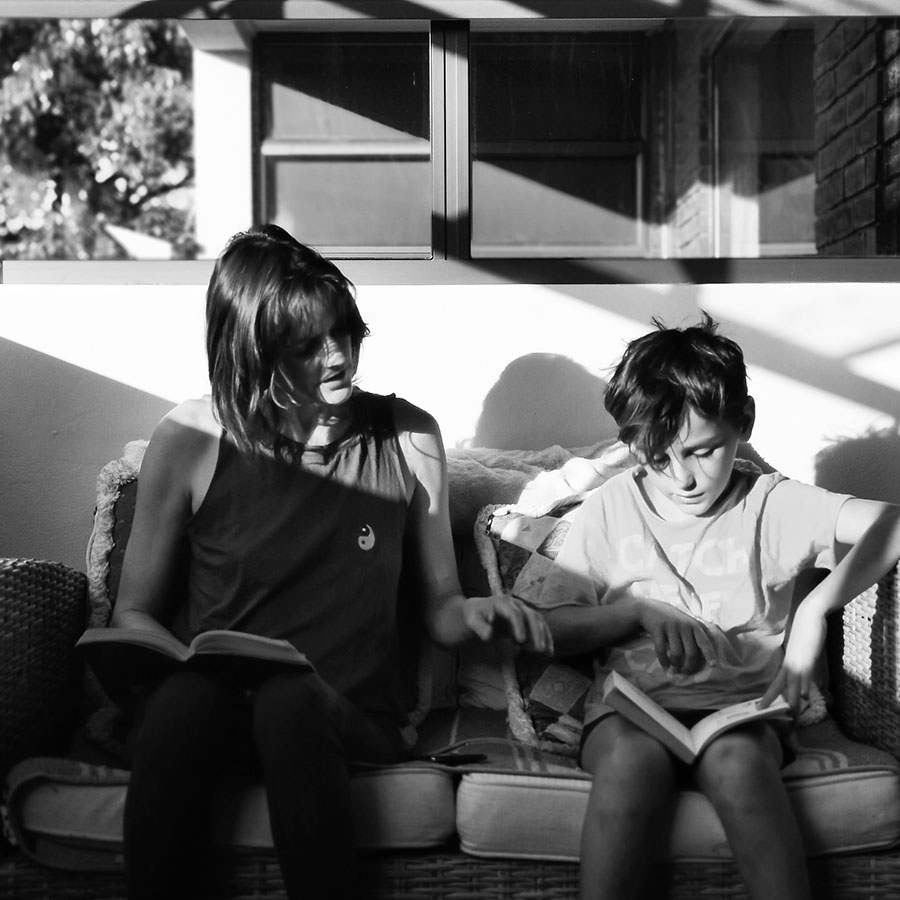
And so, today, I enjoyed the feeling under my feet, the sun casting shadows on the wall, Josh laughing outside as he played with the dogs. I wondered what he meant by living with decency…Perhaps it’s simply to love?

“They knew now that if there is one thing one can always yearn for, and sometimes attain, it is human love.”
― Albert Camus, The Plague

Still(a)Life #27: “As your lover describes you, so you are.”

“Through others, we become ourselves” said Vygotsky. As children, we develop cognitively and emotionally through interaction with our caregivers. This does not, however, end in childhood. As adults, the relationships we find ourselves in continue to shape who and how we are. Jeannette Winterson wrote that “As your lover describes you, so you are”.

It is my belief that, over time, people either grow together or they grow apart. Relationships, of any sort, are an invitation to this growth. We either take up these invitations or not. Any relationship you find yourself in will leave you either changed for the better or for the worse. The fact that relationships have the potential to leave us changed for the better implies that they could just be our ultimate form of therapy.

But, in order to achieve this, we must allow ourselves to be changed. We need to let go of our pasts and give in to our futures. Even when our futures feel uncertain. We must allow ourselves to be shaped by the people we are locked down with. If we don’t like the shape they give us, then we need to speak up.

We must be prepared to recognise how our past pains might have shaped us; how they flavour how we experience our present loves; and be willing to give ourselves up to a yet to be determined future self. “This is just who I am” is the greatest barrier to our growth and the greatest threat to fulfilment in a relationship. We are better off saying “This is who I would rather be”. The relationship that supports us in this vision, is the right relationship for us.

I have always said that I can’t screw a couple back together if they are not compatible enough. But, today a client shared a quote with me by Alain De Botton, that challenged this: “Compatibility is an achievement of love; it must not be its precondition.”

Even though I don’t believe that just any two people are potentially compatible, I think it is worth asking: How do we achieve such a love? Perhaps only through radical honesty? We have to be able to say things to each other that we know will hurt. Such honesty, although seemingly cruel, is an act of love. Such honesties are invitations to growth. But I must trust you enough to trust that your intention is love and not diminishment. I am compatible to you when I love you enough to want you to be everything you can be. Even if I risk the loss of you through that.

It’s day #27 and many a home is fast becoming a potential confessional or a bunker for hidden feelings. It’s a good time to find the courage to describe ourselves back to each other. Ultimately, these honest moments can be our sincerest acts of love.

Still(a)Life #26: A Rebellion Deep Inside

Compliance is, mostly, a good thing. It allows for cohesion. Over-compliance, however, risks hiding things. My son was distressed the other day and couldn’t get hold of me. He apparently said “I never want to see Dad again”. My heart sank when I heard that. But, I am learning the value of the freedom to express ourselves, especially when we’re young. Rumi imagined a field “out beyond ideas of wrongdoing and rightdoing”, it’s an especially good place for us to meet in times of struggle. There are moments when there is no right feeling or wrong feeling to be had. When the expression of that feeling, rightly or wrongly, is the truest thing.

Under the lockdown compliance, our homes are the distilleries of these truths. Therapy is, to a great extent, the pursuit of truths. Not a forensic kind of truth. Not the kind a lie detector might reveal. In fact, whenever lie detectors are suggested in a couple’s therapy, I know it’s the beginning of the end. It’s an indication that the very foundations of trust have already been demolished. Therapeutic truths are different truths. They are an embodied sense that this feels right for me. This is what we need to feel authentically ourselves. And, when we get a sense of these truths, radical change usually follows. The truth, however, takes time to make itself known. First, we have to get over the anxiety this will cause us. Radical change can be traumatic.

We are encouraged from youth to comply with expectations of us. Often, we find ourselves having to choose and behave in ways that meet the needs of a parent. An overly vulnerable mother or a particularly angry father might have us playing out a role that helps “keep the peace”. Winnicott believed that this contributed to the development of a “false self”; a persona that we put out there into the world in order to comply with the demands of our environment.

We learn a capacity to behave according to the demands of the needs of others, first our parents and siblings and, later, society as a whole. However, this role we learn to play gradually overshadows a more spontaneous expressions of our authentic needs and feelings. Eventually we risk losing touch with them altogether. This loss can contribute to inevitable feelings of emptiness and isolation. We can spend a lifetime avoiding this chasm. Then comes lockdown. Spend enough time with yourself and your own authenticity will start a rebellion somewhere deep inside you. The things you didn’t want to say or feel, will slowly find expression. There is no wrong or right feeling but the inevitable expression will bring you closer to some people and further from others. Trust this, there is truth in it.

Still(a)Life #25: Our Living Rooms, our Waiting Rooms

As the days pass, there is a deepening contrast between an “inside” and an “outside”. A definite boundary between things happening “in here” and the news I read about the world “out there”. I haven’t read much news the past few days. It feels pretty obvious to me that things “out there” will never be the same again. Today I spoke to a man who, by necessity, has his finger on the pulse of our economy. The conversation wasn’t about “out there”, it was about his “in here” but he mentioned a few things in passing, like “the greatest economic downturn the modern world has ever seen”.

I get a bit concerned when I speak to people and they don’t yet share the same concern about this. But its most likely because they are more concerned right now about the things “in here”, starting to bubble to the surface. I get a privileged window into people’s in-here-ness, especially in these times. My laptop opens up like a window into people’s living rooms. Curious term, “living rooms”. Are these meant to be the rooms we do our living in? Can we even call this living? How do we define what it means to really be living? Perhaps, for now, they should be called “waiting rooms”? Aren’t we all just waiting for something to happen? But, are we waiting for things to happen “out there” or “in here”? It’s a bit like Samuel Beckett’s Waiting for Godot.

“Let us do something, while we have the chance! It is not every day that we are needed. Not indeed that we personally are needed. Others would meet the case equally well, if not better. To all mankind they were addressed, those cries for help still ringing in our ears! But at this place, at this moment of time, all mankind is us, whether we like it or not. Let us make the most of it, before it is too late! Let us represent worthily for one the foul brood to which a cruel fate consigned us! What do you say? It is true that when with folded arms we weigh the pros and cons we are no less a credit to our species. The tiger bounds to the help of his congeners without the least reflexion, or else he slinks away into the depths of the thickets. But that is not the question. What are we doing here, that is the question. And we are blessed in this, that we happen to know the answer. Yes, in the immense confusion one thing alone is clear. We are waiting for Godot to come — ”
― Samuel Beckett, Waiting for Godot

Nevertheless, while we wait for Godot (who never arrives), Lockdown brings us face to face with the thoughts and feelings that have been waiting to for us. Especially as the novelty of sleep-ins, laps around the garden and playing monopoly with your kids wears off: there are things “in here” that want to be known. As the rations of ethanol dwindle, thoughts and feelings make themselves known. I’m hoping that my bubbles of ginger, yeast and sugar can beat my thoughts to the surface.

In all honesty, I feel much gratitude for the courage those in conversation with me are showing. It is a noble task to keep talking through these uncertain times. It’s much easier to build a fort with your kids in the supposed living room. Each session feels like we are going places we have never gone before. “I never thought I would say this”; “I never really realised this”; “I never thought I would write this”; “I’ve never ever talked about this before”. These are the precursors to almost every conversation in the last few days. I would like to take the credit, but it has more to do with the “waiting rooms” than therapy. There are things lying in waiting for us, if we just give them the time.

Buddhism has always known this. True insight doesn’t come from “working it all out”. True insight comes from the courage to just sit with things and see what it is that they have to reveal to us. True insight is not a cerebral event but rather a visceral experience. So as you wait for things to happen “out there”, outside of your control, take the time to listen to the things happening “in here” – they have things to tell you.

“You’re on Earth. There’s no cure for that.”
― Samuel Beckett

Still(a)Life #24: Just a Few Words

A footnote on yesterday’s post:

The first book I ever tried to read, cover to cover, was Jonathan Livinsgton Seagul. I chose it because it had the narrowest spine I could find in the library. I can’t recall the actual story because the effort it took to read it didn’t leave much cognitive room for retention. I was in my final year of highschool, an overpriced boarding establishment. They had beautiful lawns and an impressive little chapel, but they didn’t notice I was Dyslexic. My teacher that year had the good sense to pay little attention to the assessment requirements and when it came to my oral, she said I should just talk on any topic of my choosing. She was interested in my ability to reason not to read. At the end of that year she wrote “Without words he strives to answer questions that have never been asked”.

I had already given up on becoming a psychologist a year prior to this. I approached my English teacher at the time, Mr Candotti, with my fantasies. He seemed like a pretty cool guy. We liked him and I knew he was studying psychology part-time. He told me “I don’t think you have the aptitude”. I managed to hide my utter deflation and I geared myself for a career in art. Something that didn’t require words. I was the only student in the school who could airbrush. Not very well, but I enjoyed it. I became a psychologist by accident.

I finished my master’s in psychology with academic colours. I didn’t tell anyone. I was meant to wear some fancy blazer on graduation, but I was well on my way to avoiding institutional norms by then. I was asked to leave my first internship. I had an argument with the professor in charge about how I didn’t believe that asking a child to repeat the 7 random numbers I just shared was of any relevance to predicting their future. “Either you do this the way it’s always been done” he insisted in his thick Afrikaans accent (slamming his fist so hard on the desk that his fringe uncombed itself from the bald spot it was covering over his head) “or you can leave.” I got up from the table and never returned.

There are advantages to writing a thesis under the passionate supervision of the head of department. I had a new internship the next day. My thesis was on language. On words and how they do the work of constructing reality. I was no longer without words. They had become my chief preoccupation. I still struggle with them. I still struggle to read. I wrestle with them, like worthy appointments, all day. I can’t describe the satisfaction it now gives me.

So as I was muddling with words this morning, I looked up and saw Joshua wrestling his own battle. He has such difficulty with words and yet he gets so much satisfaction out of finally managing to pin a few of them down. He just needs people in his corner, worrying less about fluency and more about the world that he is opening doors to. He looked so satisfied with himself. Thank you Fiona, you are opening windows to a whole universe for him!

“Books and doors are the same thing. You open them, and you go through into another world.” – Jeanette Winterson

Still(a)Life #22: Floating in Limbo

“I’d rather have a bottle in front of me than a frontal lobotomy” said Tom Waits. I researched how to make genuine ginger beer today. The whisky is running out. It was a rough day. I had to trade with their mother, one son for the other. On his birthday! It feels like the kinds of choices you would only make in wartime. But, as I ventured out of the house for the first time in 22 days, it was alarming at how everything seemed so normal but not. More cars than I expected on the road. Everyone moving so seemingly freely. Half worn masks for their token value.

I wanted to roll down my car window and scream, don’t you get it, the world has changed forever. How can we all just go on like this? It’s changed for the better, in some respects? I want to change the way my children are educated. Reconsider the source of my food. Relocate humanity’s place on the planet. Appreciate the joy of travel.

As I walked into the shop a keeper shot me in the frontal lobe with a gauge, execution style. “33.5” he announced, almost disappointed. A bit too high I guess? Not the lobotomy I was hoping for. An elderly lady kept on looking at me suspiciously from behind her mask. When did we become so dangerous to one another?

The ships lie, increasingly, in waiting. A metaphor for the position we all find ourselves in. We are adrift from our everyday lives. Waiting to see what our future holds. When will we dock into a reality that is more recognisable to us all? Limbo is never a great place to spend too much time floating in.

I think we need to get on with it. Put on our masks and gloves. Buy what we need, support who we can. Socialise from a distance. Educate our children from home. There is no “back to normal”. And, do we even want that? Once we have found acceptance that we live in a changed world, the most important question could be: How do we go on from here?

Still Life #16: Exposing an Imagined and Unreal World

I think we have forgotten what it means to be human: Industrialization, accelerating technological advances, and the increasing specialization of what we do with our time have caused us to live in a relatively automated fashion. Although seemingly efficient, it leaves us further and further removed from what we are. Our children are brought up to conceive of chicken as a nugget in a take-away box, not a winged creature bred for food rather than flight.

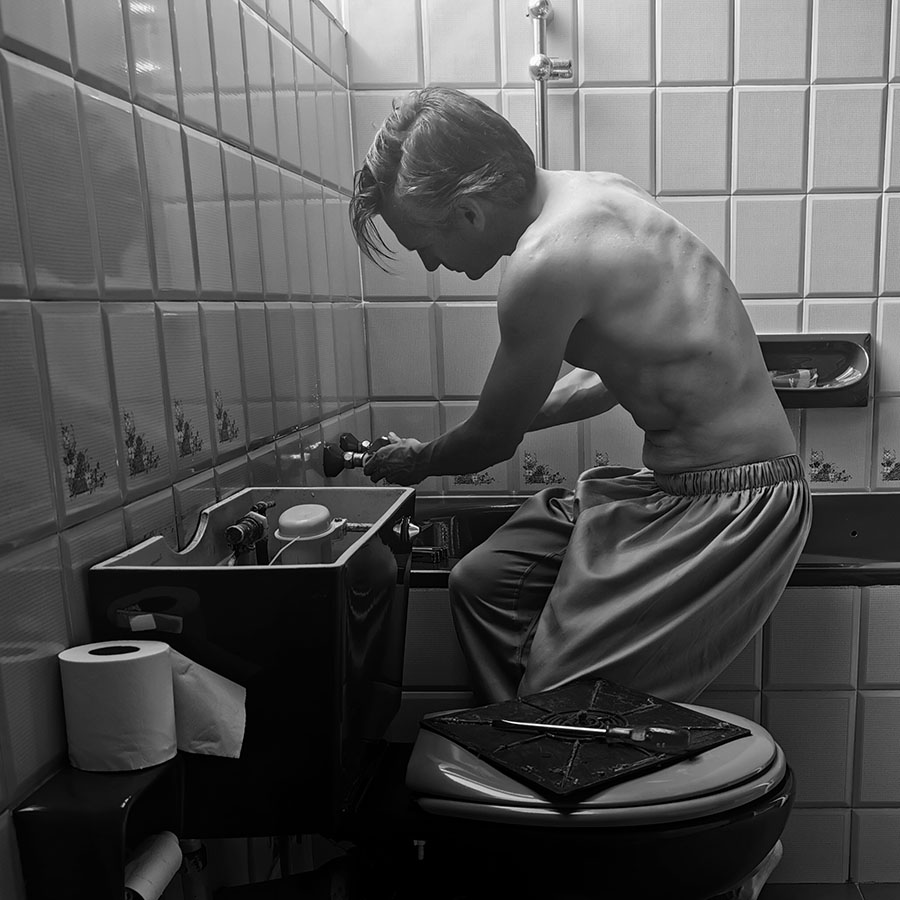
Today I tried my best to fix a broken tap. That is not a part of “who” I see myself to be; DIY is not my thing. But, without the luxury of just calling someone or popping to the hardware, I was forced to make an unsuccessful day of it. The water mains are still off. Lock-down gets a bit more real with no water. “How can this be happening, now” I thought to myself. As if the world owes me something. I wanted to blame somebody. I probably wasn’t very nice to be around.

We have conceptualized a world where we get what we want, where the basics are taken for granted and where things should always make sense. Especially bad things, they should not happen at all and if they do, they must have some sort of reason, some greater design. We have conceptualized a world where we have assumed that our human needs are central

*Enter Covid19

“We perceive the world in a particular way and confidently expect it to conform to its appearance. But we fail to recognize that certain aspects of the ‘reality’ that appear to us are nothing but figments of our own imagination. In this confusion a conflict ensues between the world as it is and the world as we believe it to be. And the more we insist on our infallibility, the more frustrated we become as the actual world again and again stubbornly refuses to live up to our expectations.”
― Stephen Batchelor, Alone with Others

Still Life #14: Keeping a Purpose

“It is starting to feel like a sentence” a client told me today. A stark contrast from the relative excitement he felt the week before. The problem with “confinement” is that the hours and days start to merge. The usual impetus, no matter how trivial, to get up in the morning and put on an identity can be easily lost. And, with it, we can start to lose our purpose.

After the initial forced respite from the business of life is over, we might start to crave a need to feel useful. If you are not a medic, a grocer or an officer – this might prove trying. One of the greatest needs we have is to “achieve” something. Our definitions of achievement are very caught up in things we may not have access to at the moment, especially capital gains.

The existentialist in me would like to urge that we all learn to come undone a little bit. Given the absence of our usual distractions, it will teach us something about ourselves.

Even though I’m reluctant to sound like a life coach, if you are fearing for your sanity, I would encourage you to forge some sort of daily routine. We all need to anchor ourselves into something.

Still Life #11: Apocalyptic Existentialism

This is Sam’s (12) Corona bird he scribbled out on a piece of paper for me. I framed it straight away. It encapsulates the balancing act we are all facing.

Some of us might be taking this time to savour a good meal or the bonds we share around the table while we simultaneously try to push away the contrasting anxiety of loss and the awareness of others less fortunate.

We juggle having to face the personal struggles we’ve had the luxury of ignoring while we wonder if a world crisis could make them suddenly irrelevant.

Unfortunately, I don’t think it will. Now is the time to face our demons or they will eat what’s left of us as the world goes hungry.

Although most of us are safe in the comfort of our homes. I wouldn’t recommend making a home of denial. Not of our own personal struggles nor of the state of things beyond our garden walls.

After reading my posts, a friend asked me today if I was okay. Therapists are not in the habit of being asked if they are okay. We don’t like to be asked. We like to take refuge in other people’s troubles to escape our own. I replied:

“Thank you. I think most people are in (perhaps necessary) denial. Focusing on zoom yoga and taking pictures of lockdown meals, while the world runs out of food and half of India dies. I’m trying not to jump on a soap box and I’m also trying to stay positive. People will die. And not just of Corona. South Africa will take years to recover and our politics, or lack thereof, will become more significant than ever. I think people want me to give them 7 steps to surviving lockdown with your kids, not apocalyptic existentialism. But it’s all I’ve got.”

Still Life #10: Brave New World

This morning we woke to the sound of waves breaking and a ship droning in the distance. It left a streak of fumes across the horizon as it found its place in the queue to a closed port.

It felt as if, as the ship stopped, a pause had been pressed on everything today. Until the swallows started to swoop into the same view. They are back while the iron birds are gone.

Things will start up again, some day soon. Perhaps not as soon as we’d like. But I’m hoping to take this time to reimagine how this life can be lived.

Newer posts »

© 2026 Jason Ross

Theme by Anders NorenUp ↑