PhD Philosophy & Psychoanalysis

Tag: covid19 (Page 1 of 2)

Introducing Existential Analysis

Beyond Snake Oil: The anti-cure of Existential Practice

From the onset of my training in psychology, I had reservations about how psychology was being done. My English professors seemed to have a much better grip on an understanding of the human condition than my Psychology lecturers. Classes on Samuel Beckett’s Waiting for Godot seemed to say more about how we relate to our own existence than a lesson on the characteristics and proposed treatment for supposed conditions like bipolar disorder. By the time I was in my final year of master’s training in Psychology, I was asked to leave my internship because I continually challenged the efficacy of psychometric tests as the means for understanding a person, their struggles, and their response to their life circumstances. Fortunately, I had a very supportive supervisor who happened to be head of our master’s program and he helped me find a new placement straight away. I wanted to explore the art of therapeutic conversation, and I had romantic ideas about the “The talking cure”, but I also distrusted psychodynamics and psychoanalysis. I was concerned for how the psychoanalytic approach was overly focused on our early years and gave too much agency to the unconscious. The psychoanalyst seemed too stoic to be of any help and the process seemed intent on breaking the analysand apart. I believed Freud was dead and we should move on. I discovered Narrative Therapy, an approach that had developed under the influence of Michelle Foucault’s ideas, very critical of the psy-industry (psychology, psychiatry and psychoanalysis). As a methodology, Narrative Therapy was against the idea of therapist as gatekeeper to a client’s experience – the therapist job was not to interpret the client’s world for them. In this way, Narrative Therapy attempts to avoid the potential power differential between client and therapist by focusing on how the client languages their own experience. It considers the client as the authority and author in their own lives, respecting the language that the client uses to articulate their own problems. I found it helpful to see our lives in terms of stories and the therapy room became an editing suite for understanding and transforming these stories. To some extent, therapy became a resistance movement to the dominant stories imposed on us by society and even our own families, about who and how we should be.

I took this further, writing a thesis in Discursive Psychology, scrutinising the everyday language we use in constructing our reality. In philosophical terms, this put me on the side of structuralism and post-structuralism, exploring how we structure reality through language. This seemed like the appropriate skill for a psychologist to develop, language being the means of “treatment”. This, however, set me off on somewhat of a lonely path of attempting to carve out a different way of doing Psychology. I applied this approach in many contexts, including sexuality; illness and injury; neurological rehabilitation; addiction; trauma; and relationship therapy. More than a decade and a half later, Covid hit, and I printed the portraits of the thinkers I was finding most helpful at the time. It felt particularly lonely in this daunting time to be a therapist. I stuck the portraits above my desk and as I looked up at them, I realised that most of these figures – including R.D. Laing, Jean Paul Sartre, and Albert Camus – were existentially inclined. There was also the existential Buddhists, Stephen Batchelor, and the postmodern author, Jeanette Winterson, who wrote: “To be ill adjusted to a deranged world is not a breakdown”.

Just before covid hit, Fiona and I had attempted to turn our home into a retreat centre – a live-in therapy centre that moved away from the clinic as a setting for dealing with problems of living and feeling. As part of this project, I had started to merge ideas from Western Philosophy and Buddhism. My interest in Buddhism spanned back to the onset of my 20’s. During Covid I decided to formalise this thinking in the form of a PhD in Philosophy. I had come across a contemporary philosopher and psychoanalyst whose work I appreciated, Julie Reshe. A lecture of hers on Sado Masochism led me to the Global Centre for Advanced Studies (GCAS).

As I began my studies with GCAS, I came to realise that the thinkers I had been exploring shared similar origins, Phenomenology (the study of experience from within experience), and some had translated this into a practice that could be called Existential Psychoanalysis. GCAS teaches Philosophy and Psychoanalysis, and I had the privilege of being exposed to contemporary thinkers and psychoanalysts like Jamieson Webster. I was very quickly seduced by Jamieson’s reading of Freud. It wasn’t so much Freud’s ideas but Jamieson’s intensity, the return to a deeply embodied practice of client and therapist being with each other in the almost inarticulatable struggles that we face. There was something deeply meditative about the approach. Jamieson and many others at GCAS favoured Lacan, a complicated language-based reading of Freud. Given my interest in how reality is constructed through language, I had often flirted with studying Lacan, but never had the courage to engage with his riddles. This gave me the chance to dabble in Lacan, even though I was drawn mostly to phenomenology and existentialism, and I even saw Lacan as a closet phenomenologist. For me, the important questions for us to start with was “how do we exist” and, from there, “how do we go on”.

I was appointed a super smart supervisor who held three doctorates, Prof Kevin Boileau. He knew so much and had many incredible ideas bursting out of him, more than he could write down in one lifetime and he had already written a lot. But I needed to develop my own ideas, my own way. I knew what I wanted to say, I just needed the time and the space to agonise with the words. Prof Boileau introduced me to a path that straddled the study of embodied experience (phenomenology) with an appreciation of how we function within a language (structuralism). In the end, I completed my PhD with a nudge and some inspiration from Julie Reshe herself. I wrote an exploration of a therapy that was against diagnosis and treatment. Using some ideas from Buddhist practice, I attempted to describe how to help people by being with them in their struggles, rather than acting upon them with a particular treatment methodology. It became somewhat of a study of consciousness and an account of how there is no “true self” behind consciousness, looking out at the world. It followed Sartre’s notion that “Existence precedes essence” – how we are in the world defines what we are. In this way, the “psych” fell away from “psychoanalysis”.

This has led me along a path of developing a practice more inclined towards Existential Analysis. Our struggles are not seen as individual pathos but as inherent aspect of how we exist in the world. It views our struggles, that we are in the habit of naming depression, anxiety, bi-polar, or addiction, as inherent to consciousness. These struggles are seen as responses to our lives, rather than conditions in the brain. It is not a practice that proclaims to tell people how they should live or what they should do with their lives, but brings a presence to your own experience and supports a courage with being with things as they manifest. Change is not something that we force but that we try and open up to, through giving contemplation to our responses, rather than giving in to our habitual reactions. Existential Analysis also involves an ethical stance towards our struggles: an appreciation of truth, responsibility and freedom.  In order to address our struggles with this kind of openness, resisting the impulse to try and “fix” and “get over” things, requires a certain courage, commitment and sufficient containment. The objective is not “cure” but finding ways of “being” in the world, in ways that feel most true to our own intentions. However, something needs to “hold” us as we allow ourselves to undo and redo ourselves in this way. Therapy becomes a constant process of relinquishing any grasp on a fixed idea of “who I am” or how things should be. For this reason, I have come to increasingly value commitment from both therapist and client to a weekly ceremony of connecting, the same day and time, for as long as we feel we need to, or for as long as the relationship lasts. In this way, we can really give our lives, the relationships it is made up of, and our experience of things sufficient care and attention. The therapy process becomes a lived-out experience of staying alert to things as they arise in our consciousness.
Why All Lives Matter

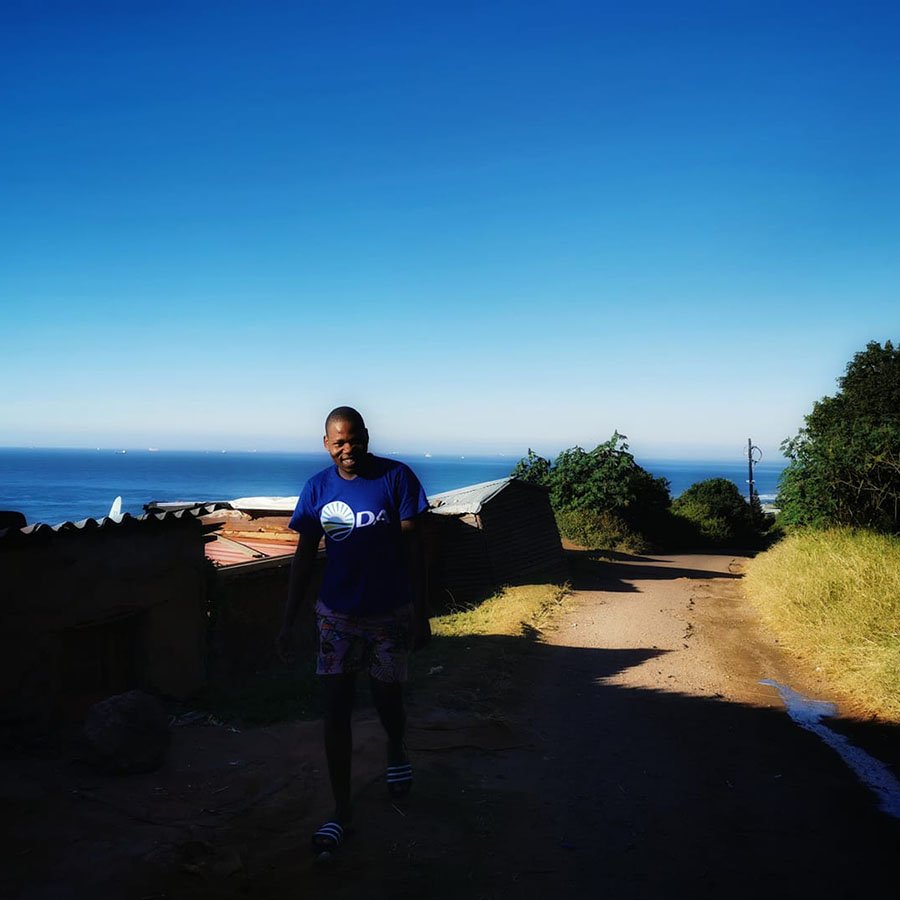
The other day I posted this image I had captured with the sentiment “all lives matter”.  Apparently, this is readable as a “rebuttal” to the recent social media meme #blacklivesmatter.  To be honest, I hadn’t even thought of it like that. I felt like my words, born out of a deeply cherished value system, had been abused – chewed by other mouths.  But this is the problem with words, we have little control over what is done to and by them once they leave our mouths.  However, if we really want to understand the meaning of an utterance, we need to understand it within the interactive context in which it is situated.  Another word for interactive context being “conversation”.  I don’t feel like the present climate has any room for conversation.  I just see and hear a whole lot of people talking at each other.  Rolling up over used memes like wet toilet paper and hurling them at each other’s screens.

If I have been ignorant, then I have been ignorant to a conversational norm occurring on social media – that it is my ethical duty not to challenge the legitimacy of #blacklivesmatter and that to do so is an indication of both privilege and ignorance.  I can understand that any statement that is hearable as undermining #blacklivesmatter would feel deeply undermining for anyone whose struggles due to prejudices have gone previously unnoticed.  But, let’s imagine for a moment that someone was interested in what I actually mean and, therefore, what context this utterance emerges from:

I was lying waiting for the sun to rise that morning.  My mood was dark.  I had spent the night worrying for my children and the impact that an ongoing strife between their biological mother and myself (over education) was having on them.  I scrolled, as one habitually does, through social media.  I was impressed by the solidarity of blacked out profile pictures but the hashtag “blacklivesmatter” left me concerned.  I didn’t have time to give it too much thought, we had planned to get eggs, bread and toys to the local settlement, and I needed to get back in time to see a client.

As I took a toy car out of our truck, a mass of children emerged. Their eyes looked at me vacantly. I thought it was the look of hunger until they took turns to sit in the car. Something inside of them came briefly alive. They couldn’t care about the food we had brought, they wanted to play.  In that moment I reminded myself that “all lives matter”.  In that moment, I opened myself up to the same care for those children as I had for my own.  It felt almost unbearable.  There seemed so much to be concerned about.  I didn’t want to leave, I wanted to stay and see what more we could do.

A man walked up the dirt road towards us.  He smiled at me, a beautiful open smile.  We don’t normally get that when we are bringing food.  People seem either suspicious, angry, vacant or apologetic.  No one looks us in the eyes.  He was wearing a DA shirt.  Wow, I thought, a most likely Zulu man living in an ANC stronghold, wearing a DA shirt (it’s perhaps important to note here that I didn’t vote for the DA).  I thought about the assumptions we habitually make and how these are the building blocks to all prejudice.  I greeted him and asked if he minded if a I took a picture.  He seemed proud to be in the photo.  We talked a bit, he helped organise the food and the kids.  It didn’t feel like I was making his life matter, it felt like him and I were treating lives as if they mattered.  I thought to myself, “all lives matter”.

You see, when you arrive in a township full of starving people with a truck full of food, you are in a position of power.  It’s got so much more to do with privilege than race.  I am the fed and they are the hungry. I can ask someone “where is your mask”, I can tell people to “stand in a line”, I can instruct how many eggs each person gets.  All this time, I am treating “black lives” as if they matter, but I do so from a position of power.  There is always power in privilege, independent of skin colour.  But the sense of equality between the man in the photo and I, the sense that we both mattered to each other, completely disarmed me.  It somehow made my position of power fall away.  As we drove off, I started to sob.  I sobbed so hard Fiona had to pull the truck over to try and calm me.  Disarmed and open to the suffering of those children, I ached for them and everyone else who might be suffering.  It is not new suffering, COVID19 has simply opened our eyes to it.  In a global health crisis, where we measure how bad things are by counting the number of deaths, I thought to myself “every single life matters”.

The Slovenian philosopher, Slavoj Zizek, is an interesting man to follow at the moment.  The academic world had mostly fobbed him off as an entertaining radical leftist with some loose, alluring yet outlandish ideas.  But, as the need for complete political and economic reform becomes imminent, I think more people are slowly taking him seriously.   He says things like “We do things to avoid really doing things”.  What he means by this is that, especially in Western liberal circles, we pay token tributes to inequality only to, in the end, uphold the status quo.  We don’t do much to actually challenge the underlying structures that keep inequality in place.  It is obvious to say “black live matter” because they should.  It is irrefutable that white prejudices exist.  But poor race relations are a symptom of much broader inequalities.  The history of our own country, South Africa, has surely proven this?  We have black leadership and (although the legacy of apartheid is a lot to transform) there don’t yet seem to be any significant shifts in inequality, especially for the people who need that shift the most?  I don’t think we should be talking about race; we should be talking about how we structure our society.  We should ask: What radical changes are we really prepared to make in our own individual lives?  The vast majority of people who made their profile pictures black last week, probably benefit from the very inequality that they are apposing, in ways they haven’t even considered.

So lets take this metaphor that was lobbed at my screen.

To truly understand this storyboard, we need to decipher what the “house” and the “hose” represent.  The houses seem to represent black versus white lives?  I think that this is an inaccurate representation of the problem.  The houses should represent how different sectors of society are structured.  The house on fire is not built with the same materials as the house not on fire and is, therefore, more likely to be burning.  In fact it has been burning for way too long already.  There happen to be mostly people who are black living in these kinds of houses, globally.  But, not only people who happen to be black, people of other races too.  And, what I really want to say when you stand there yelling “the house is on fire” is “where the hell have you been, grab a bucket and lets do something”.

What we need to talk about is what the real “hose” for this situation is.  To be frank, it is not #blacklivesmatter.  I think some positive things are coming out of this movement. As with the #metoo movement (which was more beneficial as it gave a first-person narrative stance) – people are coming out with their personal stories about the consequences of prejudice.  But, I don’t think it will have an effect on how we actually build these “houses” in the end.  In fact, I think it builds on the same flammable materials that contribute to the problem in the first place – a focus on distinctions and assumptions about race.    Einstein apparently said something like: You can’t solve a problem with the same logic that created it.

There have been attempts to counter this kind of racial homogony since the late 1800’s when people like Franz Boas (the pioneer of modern anthropology) started challenging the notion of scientific racism; challenging the idea that there are significant biological differences between races.  It is this original misconception, of race as a biological concept, that has served as the building blocks to what we now call “racial profiling”.  As a result, when I as a white person say “all lives matter” it is assumed that I am defending my whiteness as opposed to asserting a value system that hopes to make my whiteness (and your blackness) less relevant.

Racial homogony is a clear misconception.  There is very little similarity between the black person who lives in the settlement down the road from me and is without food at the moment, and my black clients who live in mansions in gated estates not too far from them.  In fact, the only similarity they hold is that when they walk through the streets they are met with the same prejudices and these prejudices ride on the idea that “blackness” stands for the a “thing”.  You can pick from a list of prejudices in this regard but they are glued together by the idea that blackness is a “thing” out there in the world that we can have fixed ideas about.  When we make blackness and whiteness a “thing”, we give racial prejudice a carcass to feed off.

Hilary Lawson calls this inevitable tendency to reduce our understanding of the world as “closure”.  He describes the world we live in (or so called reality) as “open” and that the ways we describe it to ourselves “close” it down.  The means we have for understanding our reality, primarily through language, will always fall short of achieving their task. They can never keep our understanding of the world adequately open.  From this post-modern perspective, language fails to describe a reality “out there” and is, in the end, constructive of our reality.  In other words, the world is how we describe it back to ourselves.  We, therefore, need to be especially careful about how we describe our reality.  I am concerned that describing inequality as “blackness” versus “whiteness” is far too narrow a “closure”.  There is no real rebuttal to the fact that the life of a person who happens to be black matters, but from within the narrowness of a #blacklivesmatter description of the problem, we risk reconstructing the very thing we are struggling against – the reduction of people to race.   Surely there is clear irony in trying to legitimate black lives through objectifying them?

There is no doubt that a person who happens to be black deserves a platform to articulate their experiences of prejudice.  This, I believe, was the chief mechanism of the #metoo campaign – it encouraged the first person narrative of stories that needed to be told and therefore allowed for people’s individual pain as well as society’s ill to be seen.  After hearing some actual accounts from clients of how “all lives matter” was experienced as an undermining of the experience of abuse and prejudice, I can understand the concern.  However, I think this is a linguistic muddle that betrays intentions. Linguistically speaking, one could argue that a lot of confusion would have been avoided if the slogan might have been #myblacklifematterstoo.

The philosophical debates around this are endless.  Linguistic debates don’t change lives.  But, neither does making your Instagram image black for a day.  Instagram is an interactional context all of its own.  It has its own “rules” of engagement, policing, social norms and underlying assumptions about reality.  The most dangerous assumptions it seems to perpetuate is that it can be taken to accurately represent reality “out there”.  Rather, Instagram is “a reality” of its own, one that works towards homogony and sameness through hashtag trends.  It is increasingly becoming a place of supposed activism.  This activism is achieved through making a meme fashionable.  When I put a hashtag in front of a collection of letters, they suddenly become treated as a universally shared idea.  In my opinion, it is difficult to find integrity in the ideas shared on these platforms.  There is very little clarification of facts and meanings for us to rely on.  Memes spread faster than global pandemics, not because they hold any real truth but because they become fashionable.  Perpetuating these memes says something about the online identity I am constructing for myself.  It is important on this platform to appear beautiful, liberal and free.  It’s a fashion show of scant, randomly chosen, poorly thought out ideas dressed up with images.  In the end, anything goes, as long as you don’t show a nipple.

The real fight – whether we are talking about access to food, healthcare, money or dignity – is against the polarization of the society we live in.  Unfortunately, the lives of the people who really need to be treated as if they matter, don’t have airtime for Instagram.  For those of us who do have airtime, these online dialogues run the grave risk of further polarizing our society.   Real dialogue about the building blocks of inequality is what needs to happen.  I don’t believe that a real conversation is happening.  People are being spoken at rather than spoken with. Do we really think that by protesting “blacklivesmatter” to people who don’t treat people who happen to be black as if their lives matter will change their minds in response?  I think memes such as this will have little effect:

The wife is asking “Do you love me?”  This is in the first person.  It is a personal account.  No one is being spoken about or spoken at in this example.  There are better and worse ways of creating “closure” (deciding on what is really happening in the world).  According to Lawson, the measure of a better or worse closure is:  does it allow us to achieve anything in the world.  I am not convinced that shouting #blacklivesmatter at people is going to help.  It paints the whole problem in one colour and invites rebuttal.  It doesn’t tell the full story.  For as long as black people’s lives are objectified rather than personalised, they risk increasing marginalisation.  What about the history teacher, who happens to be white, teaching history to 45 pupils of differing races over zoom?   How does she teach the chapter on apartheid without losing her job.  She might have her own experiences of injustice and prejudice, do they have any room on a canvas painted only black?  Her real task is not to negotiate the facts but to make young people feel seen and heard while at the same time humanising herself.

Covid19 has served as a giant global kiln; under the heat of the situation all the cracks in our society have started to show.  They will gradually become more obvious than ever.  They were always there.  We need to be curious about what is being demonstrated about our society as a whole right now.  We have finally been given a practical lesson that we are, in fact, deeply connected.  When one house burns and nothing is done about it, all of the houses will eventually burn.   The only “hose” for this is to treat all lives as if they matter.

This is both a value system and a mental attitude that goes back as far as ancient Indian sutras.  It has been roughly translated as: “Benevolence towards all living beings, joy at the sight of the virtuous, compassion and sympathy for the afflicted, and tolerance towards the insolent and ill-behaved.”

It is easy to talk about “equality” on social media. Instagram has little if any impact on the lives of the least equal. Rather, it has become a place for increasing moral posturing with little, if any, pragmatic value.  In the world “out there” equality is a mathematical concept that has never ever actually measured up in the whole of human history.  And, it is unlikely that it ever will. The most we can do is cultivate a mindset of benefit to ALL living beings. This is why the Buddhist principle of “The four immeasurables” is, to me, helpful:


May ALL BEINGS have happiness and the causes of happiness.

May ALL BEINGS be free from suffering and the causes of suffering.

May ALL BEINGS rejoice in the well-being of others.

May ALL BEINGS live in peace, free from greed and hatred.


These are not just ideals that we forever strive for (even though never reached) they are considered to be states of mind. These states have been described as loving kindness, compassion, sympathetic joy, and equanimity.  From this perspective, equality is not something we can measure. It is something we can attempt to embody.  I believe that the means to this embodiment is to enact the value that “all lives matter” at every given moment. A move away from this risks the perpetuation of all suffering.

This is why, as a therapist, I must have as much time and energy for the pedophile as I do the person who has been abused.  I need to take the experience of the “bored house wife” as seriously as I do the overloaded ICU nurse.  My deeply held value that “all lives matter” serves as an adage to #blacklivesmatter.  In fact, more than an adage, it serves as the overriding principle.  If we truly abide by the principle that “all lives matter”, then there should be no need to campaign for #blacklivesmatter.  In fact, it is my view that this present meme trend on social media places dangerous limitations on social change, especially in the present global crisis and particularly in the context of South African history.    Now is definitely the time for raising the alarm on social ills and the solutions need to be founded on the attitude of equanimity and cooperation.

True Progress is in Awareness

I haven’t been able to ignore how there is a seeming increase in numbers of birds announcing the wake of dawn. The natural world making itself known. It’s soothing on the one hand, but with a hint of prophecy. Their symphony says, “You’re not that relevant!” I try and let it be my meditation. I try and rest my mind on it in order to avoid getting too caught up in my own inner chirpings.  We take ourselves way too seriously.  Apart from my own more private struggles, I’ve been waking up worrying about the developments of the virus. More lately, I wake up worrying about the developments of ignorance. If there was a time to make good sense of our lives – it is now.

A month ago, philosopher Slavoj Zizek made a call for us to act with cooperation, awareness, deep ethical choices and wisdom. By “wisdom” he was referring to the need to “become aware of what a fragile entity we are; these humans on earth”. Referring to the biology of Corona he said that we are now threatened “by the most stupid reproductive mechanism one can imagine…It’s a good lesson in modesty.” Chomsky, his philosophical opponent, who is now in his 90’s (has lived through several world crisis by now) argues that humans themselves are the real threat; especially humans like the man he emphatically describes as “The Buffoon”, Donald Trump. Chomsky believes humanity will recover from Corona but not from Trump. Whether we are talking viruses, poor leadership, or conspiracy theorists – I think both Zizek and Chomsky would at least agree that we are really at war with ignorance and that poor decisions will be our demise, not viruses.

I could no longer hear the birds over Zizek and Chomsky arguing in my head. Fiona lifted her cheek from my chest. Perhaps my heartbeat gave it away. She smiled a pleading smile at me, “come sit with me, just for 10 minutes”. By “sit” she means meditate. I haven’t formerly sat on a meditation cushion since the beginning of lockdown. There is panic living somewhere in my body. I haven’t wanted to greet it. Meditation is not all about “bliss”. The cultivation of awareness can sometimes be a real grind and, at the same time, it is the greatest freedom to simply turn within.

I spoke to a man yesterday who was deeply disappointed with himself for finishing a bottle of brandy. He was trying to shake the feeling that he was now back on “day one”. I have a problem with this 12-step kind of logic. It is ill aligned with the nature of human development. Before I could say anything, he reflected a bit further: “I would rather think of it as picking up from where I left off”. Setbacks are real but with consciousness, growth is inevitable. Although it is alarmingly easily to re-awaken problematic patterns of thought and behaviour, “relapse” is a problematic concept. It focuses purely on external behaviours rather than internal struggles. True progress lies in the development of awareness, not in simply changing behaviours. Why do we do what we do; when we do it; in the way that we do it; and, with what intention? I have worked with many people who have managed abstinence or sobriety for considerable years and yet the underlying states of mind that evoked their cravings remain unaddressed. They may still not have made sense of themselves to themselves yet.

Psychology is an attempt at making both a science and an art of the sense-making process. Specifically, with the hope that this may lead to change; even if this change is simply a change in perspective. If there was ever a time in the history of our lives to be making sense of things, it is now. Even when things will never make sense, we can’t resist our attempts to do so. And, when things don’t make sense or we don’t like the sense things are making – we often invent other, more convenient, truths. This is human nature.

Attempting to contribute to a making sense of what my client was diluting with brandy, I shared some of my ideas from the previous blog post. I told him that I had the impression that he sometimes seems alone in his marriage. He replied, “only because I close the door from the inside”. Such an honest moment. How often do we all “close the door from the inside”? Failing to admit it, we cry “abandonment” to those on the outside. We went on to talk about why he might be closing that door form the inside.

There is a beautiful rule of thumb in psychology that – no behaviour is likely to be repeated unless it serves a function. Our behaviours might often seem completely senseless, but at closer inspection, there is usually a function they serve. Even if a less conscious function. Most of the decisions we make in our lives are not terribly conscious ones. Nevertheless, they have their causality and their consequences. I believe the recent surge in conspiracy theories is driven by our difficulty to face things for what they are. Buddhists call this “being with what is” and it isn’t always easy,

Are you sure? Are you not sure?
Well, things that start badly are never going to improve with age
The world has done things to you, but you’ve done more to yourself
Oh Robert! There’s something in the air
Slow release me now come on
From this awful night, I cannot stand the thought of all those lies
So I run from the light, from the thought I might
Not have done something right
At the back of your head, there’s an open door
There’s the shock and awe
It’s just shock that’s all

Chris Letcher

Truth, Responsibility, and Freedom

It’s 4.30am. Somehow the waves seem louder at this time of almost-day. The voluminous crash washes over my half-made thoughts. It’s a welcome intrusion. I try and use it to rinse the anxiety already waking up inside me. I am waiting for 6am, looking forward to our newly habitual walk to freedom, somewhere between 6 and 9. These walks leave me thinking about what it means to be truly “free”. To be told when you can and can’t leave your home is not real freedom, even though it feels like it for now. But, I get it! It’s my “responsibility” to stick to the rules. Although, whose responsibility is it to feed the people? We pass a man ploughing a pop-up suburban field. Now that is a man with a better contribution to make than me.

We take a long walk to a local farmhouse to see if we can buy chicks. The freedom to walk where you choose is one thing. But, the freedom to walk and talk alongside someone that you feel you can be so completely open with and they will still love you, is an entirely different thing. Just like we should have more than one word for “love”, we should perhaps have more than one word for “freedom” too. There are many freedoms.

A few people have asked me to write more about my divorce. I’ve had to think about this and why I have not written more before. One reason would be that it is far from over yet. The unfortunate thing about relationships that end badly is that everything that was bad remains and everything that was good evaporates into a vague ether. You start to wonder if it was even real. There’s an odd kind of grief to finding fictions in your own reality. Something vacuous about realising that it was other than what you thought or hoped it would be. I am sure for her, just as much as for me. However, there is perhaps no greater freedom than the truth. For me, divorce has been my greatest act of truth so far. There is freedom in truth, no matter how painful it is at first.

I can remember that moment that the truth first distilled in me. I was with, then, friends in the Transkei – walking. I felt free. The realisation felt free: I was not happy and yet I felt I should be free to be happy. I no longer wanted my life to be entirely hinged on a responsibility for someone else’s happiness. That is an easy mistake for a therapist to make. To make the happiness of other’s your responsibility. But, that doesn’t start in your psychology training, that starts in your childhood. I find myself sitting with my son, asking him why he doesn’t want to tell his mom the truth “I don’t know,” he sobs “I just don’t want to upset her even more.” I watch the shaping of myself in him.

As I sit here, my phone is heavy with messages received in the night. As I unlock my phone, I open the door into other people’s lives. What an odd yet beautiful freedom? To share in the lived experience of other people’s lives. A client writes: “Random thought, easier to type…I feel like I want someone to get me, to understand my shitty choices, to empathise, someone I don’t have to explain them to. Someone who doesn’t question but just accepts me for all my broken bits. I feel like this is everyone’s goal. In my aloneness I am actually exactly the same as everyone else. Except I don’t have my person. I should, but there are so many caveats. Mostly the ones I’ve put there because he has so many limits. That’s heartbreaking.”

I asked her if I could share this because I think it speaks for so many people. And, yes, this is “everyone’s goal”. To feel alone within your relationship is the real “lockdown”. In these situations it is not about the choice between staying or leaving. It is more about the question of what the truth will do. Along what path will it take you? Clients come to therapy because, somewhere inside them, they are finding the courage to take that path. It takes you where you need to go.

“I am just going to roll with it.” Another client tells me this week. She has started to recount her entire life and how feelings of “responsibility” run deep into her childhood. Fortunately, she is doing so with great compassion for those in her life story. Sometimes, however, finding compassion for ourselves (especially our younger selves) is not so easy. I asked her to think of herself as a young girl. What was she going through? “I can’t even imagine her”, she answers. The feeling of responsibility for our parent’s can rob us of aspects of our own childhoods.

What is our individual responsibility? What is the actual truth? What does it mean to be free? These are the questions we will find ourselves having to answer.

“The strength of a person’s spirit would then be measured by how much ‘truth’ he could tolerate, or more precisely, to what extent he needs to have it diluted, disguised, sweetened, muted, falsified.”

― Friedrich Nietzsche, Beyond Good and Evil

Still(a)Life#34:Invitation inward.

Today I was asked on radio “How are people dealing with all the uncertainty?” I don’t really have a straightforward answer to that. What I can say is that “uncertainty” is inherent to our everyday existence. Corona, however, is certainly the starkest confrontation with this uncertainty most of us have ever encountered. But, on any normal day, there is no real certainty of what is going to happen in the very next moment – I could be hit by a car, diagnosed with cancer or win the lottery. Certainty is something we try and build into our reality through the stories we tell ourselves about our imagined future.

In a recent interview, psychiatrist and Buddhist practitioner, Mark Epstein spoke about how we really don’t know what the next moment is going to bring and this is challenging for us because our tendency is to constantly try and imagine what the next moment will be like for us. This is one of the habitual tendencies of the mind – to forecast into the future. We also try and build security through the ways in which we habitually engage in the external world: through having things and doing things; by living outwardly rather than inwardly. Lockdown forces us inward as the doors to an outward are closed.

Stephen Batchelor also refers to this: how, through this outward orientation, our lives tend to leek away; we tend to dissolve ourselves into the world. In this regard, lockdown is an opportunity for re-collecting ourselves. Relative solitude allows for this. But solitude is not about a place or a space. According to Batchelor, it is a practice, an art form, any process that gives us access to our interiority – art, literature, poetry, dance or meditation.

At any given moment we are telling ourselves stories about our lives. Relative solitude allows us to bring some awareness to this more hidden, interior, storying process. Somehow, being open to this interiority has been considered taboo. We are, from young, encouraged to focus on the world out there rather than the universe inside ourselves.

To some extent, the interruption of everything habitual and recognisable to us “out there”, is a psychological gift, an invitation to turn inward. Even if, for now, we just take an initial peak. It’s a good start and it’s amazing what you might just find. You might just find that the only certainty available to you is to know what is happening while it is happening, inside you, in the here and now.

Still(a)Life#33: Ships in the Night

Ships that pass in the night, and speak each other in passing,
Only a signal shown and a distant voice in the darkness;
So on the ocean of life we pass and speak one another,
Only a look and a voice, then darkness again and a silence.

This is an extract from a 1874 poem that left us with the figure of speech “like ships that pass in the night”. On any normal day, when you look out of our bedroom window, you’ll find an average of four ships within our line of sight. Tonight there are 18. They sit there like ghosts of a struggling economy, already long gone. In the stillness of the morning, you can hear the drone of some of their engines as they leave a streak of polluted air across the horizon. At night their lights blink at us – beacons from a world beyond our lockdown.

But there are entire worlds unfolding inside our private lockdowns. This week I have read a letter from a person wanting to leave their spouse; a letter from a spouse that has already had the courage to leave; a letter confronting an abuser in the past; a letter to celebrate a new found comfort in sexuality and excitement for the future; a letter about unrequited love and the fear of loneliness; a letter about despondence with a partner’s lockdown drinking; a letter from a past client, savouring life, despite lockdown…to name just a few.

If there is something you have been neglecting: a feeling; a conversation; a bad habit; a chapter in your past; a role you reluctantly play in the lives of those you love; or a hope for your future – it is likely to make itself known during this period. There is only so much alcohol left in your cupboard or laps you can do around the garden. My concern is for how shutting these things down inevitably shuts us out from those around us. This gives rise to a whole different kind of isolation. We so easily become those “ships in the night” to one another. Individual vessels that give nothing but a “look and a voice” towards one another.
It’s become common place to talk a bit about the reality of covid19 at the start of every session. Fifteen minutes into a very valuable discussion on the state of things, a client apologises for wanting to turn to matters “on my doorstep”. I reassured her that it is these matters “on our doorsteps” that are more important than ever. I think we had the fantasy that as the world went into crisis, these “doorstep” issues would easily be swept under a mat of comparative irrelevance. It seems quite the opposite – they have become more relevant than ever.

Still(a)Life#32: Letting Go

I came downstairs from my last session of the day to find Fiona sifting through a lifetime of photographs. She wanted to know how to decide what to keep and what to chuck. I didn’t have a very helpful answer. In the end, we settled on imagining that, if she were writing her life story, what would she keep and what would she leave out. I was especially concerned for the things she might have been holding onto; that might be keeping stale pains alive. It’s a worthwhile task, when the time is right. A task worth doing when you have reached a point in your life when you can look back on its pictures, letters, postcards and memories with a bit of clarity. There is always the risk of holding on to things too long and too tightly. Even to the pain in the hope of one day revisiting it to find a better understanding. Alternatively, there is the risk of letting go of things too readily, even the sense of your own resilience. As we sit with ourselves in lockdown for longer now than we would like, this sorting process might start to happen all on its own in the backdrop of our minds. Such a process can be dangerous if not met with compassion. “So often, within the privacy of our inner worlds, we take the difficult thing and make it worse. Our own subliminal hate speech coats our experience and gives an added layer of meaning to things that are already difficult enough”, warns Dr Mark Epstein.

She skips past an intimate photo of a past lover, “Oops, sorry!” It’s an unusual position to be in; to once have been your lover’s therapist. As a therapist, I got to hear her life story with somewhat impartiality. Care in the absence of judgment. Wishing for her that she would flourish without feeling threatened by that. As a lover I find myself reluctantly wanting to shrink her story just to the chapter of her and I. I inevitably want to be the most significant part of her life. In this way, we rob each other of past and future. I try and remind myself of that therapeutic love. It guards against what Irvin Yalom’s critiques as “Marriage and its entourage of possession and jealousy [that] enslave the spirit.”

By the time we were lovers, I knew more than most people would know about their partners (after even decades of being together). We are, often, more honest with one another on our first date than we are on our first wedding anniversary. Concealment of our true thoughts and feelings becomes an anxious strategy to sustain a relationship’s security. The greater the insecurity, the greater the concealment. Infidelity gets a pretty bad moral wrap, but it’s just one of many dangerous concealments. In fact, infidelity is often simply the onset of an un-concealing.

The problem with saying “I do” is that following through on this runs the risk of having to conceal too much, even from ourselves. These parts of ourselves splinter off from who we say “I am” and, as a result, parts of us go on pause. Often, for so long that we become almost unrecognisable to ourselves.

I still don’t know what to do with this picture, she asks. Well, what does it mean to you, I answered. What does it mean to me, if she keeps it, is the question I would be asking.

What is it about this need to possess? To have thing for ourselves. Stephen Batchelor argues that our need to “have” engenders an anxiety that increasingly gets in the way of our ability to “be” and estranges us from knowing who and what we are.

It’s so much more joyful to strive to “be with” you rather than to try and “have” you.

Still(a)Life#31: On Writing and Listening

It has been interesting to write for 30 continuous days. I find myself writing on most days but this writing is usually a bit more focused on things outside of me. Mostly a reflection on a client’s circumstance. Sometimes a love letter. Now and again an erotic thought. I have tried not to write these lockdown diaries out of obligation. Doing anything out of sheer obligation is seldom a good idea. It has been freeing to write more openly. Even though it goes against the grain of a psychologist’s training. But, client and therapist are, after all, just two people in conversation. It’s been an ongoing project to try and find my own authenticity in that somewhat necessarily contrived relationship. The less contrived the better, I think. On the topics of authenticity and writing, I am reminded of the words of Charles Bukowski: “If it doesn’t come bursting out of you, in spite of everything, don’t do it. Unless it comes unasked out of your heart and your mind and your mouth and your gut, don’t do it.”

Some people, whose journeys are well known to me, have sent me endearing messages about what the writing has stirred in them and the choices they are finding the courage to make as a result. But, to continue writing tonight would be out of sheer obligation. There is nothing bursting out of me right now. I want to rather listen out for what the distant crash of waves has to tell me; the warmth of my lover can provide for me, as the hypnotics of sleep hopefully come and find me.

Still(a)Life#30: Coming Out of Hiding

While we collected wild fermenting guavas off the driveway, Josh found the courage to start telling me things he has been experiencing lately. Somehow the shared task made it easier for him to talk. He asked me questions about my own parent’s divorce and we seemed to find a sense that we’re in this together. Rather than him being the victim of my choices, we both spoke about how the boy in me felt similar things to the boy he is now. I realised just how much feeling and insight he harbours inside him; overly cautious about the implications for others of disclosing them. This is not a habit that I hope gets too ingrained in him. It is, perhaps, something I made a habit of myself. I guess I made a career out of that habit, tuning into other’s feelings rather than my own. Other people’s needs can easily become a hiding place. As Winnicott wrote, “It is a joy to be hidden, and disaster not to be found.”

I left my marriage when the joy subsided, and as I increasingly realised the disaster of not being found. Nobody’s fault but my own, I guess. It still takes conscious effort to ask to be found. Many of my friendships ended when I stopped doing all the finding. Now I increasingly feel the joy of coming out of hiding. The year I decided to leave my marriage I was gifted a ticket to AfrikaBurn. I camped with a large group of people, some of them my clients. But my identity as therapist seemed to be completely irrelevant in a dust storm of other people’s freedoms. I wasn’t quite sure what to do with myself. If I wasn’t rescuing someone or facilitating something, I wasn’t quite sure who I was.

I have found freedoms that I only ever allowed myself to imagine. It leaves me restless. I can’t shake the feeling that I am running out of time. Irvin Yalom, probably the greatest living therapist, wrote some time back “One thing I feel clear about is that it’s important not to let your life live you. Otherwise, you end up at forty feeling you haven’t really lived. What have I learned? Perhaps to live now, so that at fifty I won’t look back upon my forties with regret.” I feel like I just got started and then the world went on pause.
These freedoms are not always outward. The real rebellion is an inward one. Especially against the outdated voices in our heads that illegitimate our own feelings. There is something rather freeing about legitimating our own feelings. It somehow breathes life into us, despite the anxiety that comes with it. Lockdown seems a good time to bring awareness to those inner voices. As I write this, Josh is struggling to sleep. He seems upbeat, like he doesn’t want the day to end. I hope, somewhere inside of him, outside of his ability to language it, is the realisation that his love for those in his life does not have to be at the sacrifice of his own feelings and their legitimacy.

This afternoon I found myself writing feedback to a dear client that I have known for years: “I think absolute honesty about our feelings is the litmus test of any relationship and over censorship is the absolute demise of ourselves.”

Yalom also wrote, “To love means to be actively concerned for the life and the growth of another.” Love is an invitation to express and to grow. To sometimes hear the things you would rather not hear or say the things you are too afraid to say. Far too often, love seems to require censorship rather than expression.

Still(a)Life#29: Conditional Arising

“Life is the sum of all our choices” said Camus. Today I spoke to a man about to make the biggest decision of his life. Rather, it is perhaps true to say that he feels that the decision is making him. Lockdown is not an easy time to make life changing decisions. But, at the same time, it is perhaps the best time to be making those kinds of decisions – while life is dramatically changing in any case. Dramatic decisions are the bedfellows of dramatic events, even if secretly.

Buddhists call the way our contexts (internally and externally) give rise to our thoughts, feelings and actions – “conditional arising”. In other words, there are certain conditions that precede any thought, feeling or intention. This falls in line with what neuroscientist Sam Harris argues – there is no such thing as free will. You don’t pick your parents or the society you are born into. But, these are the things that shape who and how you become. Resistance to this fact can lead to a kind of self-righteousness, one that negates our capacity for compassion; our ability to identify with other people and the causes of their own actions.
Thoughts, intentions and choices are the “proximate cause of your actions” (Harris) and yet these arise out of conditions outside of our own control. It helps, to some extent to mitigate this with reason and ethics. But, as the world runs out of ICU beds, we learn that there are limits to the usefulness of reason and ethics. Sometimes decisions simply have to be made, actions have to be taken and the only immorality is not making a decision at all. We will only understand the true consequences of lockdown in retrospect.
“I should have bought more wine.” “I should have saved more money.” “I should have never left that job.” Should have’s have us looking backwards at times when we most need to be looking forwards. The choices we make over the next few months will feel definitive but there may not be right or wrong choices to be made, as long as you are making them.

Stephen Batchelor encourages that “Instead of asking “What is the ‘right’ or ‘wrong’ thing to do?” the practitioner asks, “What is the wisest and most compassionate thing to do?” For now, I’m making Mampoer. That is probably the wrong decision.

« Older posts

© 2026 Jason Ross

Theme by Anders NorenUp ↑