PhD Philosophy & Psychoanalysis

Tag: freedom

On being “no-thing-ness” (Day 3/5)

The Psychology of meditation

Ultimately, through a meditative approach to analysis, we are hoping for a different kind of insight. We are hoping for something more felt and instantaneous in consciousness, something that words can only try and make room for but that cannot be found in words themselves, but in the pauses between them. This is a shift away from the tendency to name, explain and pathologize our struggles as conditions of a self-like-structure. It is an invitation into an appreciation of the self as an unfolding process in relationship to a world it is embedded in.

For an Existential Phenomenologist, the task of the philosopher is to skeptically enter her own stream of consciousness and describe what she finds there. This fits neatly with the ambitions of insight-based meditation or Vipassana and the intention of “being with what is, no matter what it is”. Even though Irvin Yalom (esteemed Existential Psychotherapist) is not a meditator he prescribes solitude, silence, time, and freedom from distractions, as the ultimate therapeutic method. However, as Montaigne might have proposed, solitude without method can be at best fruitless and at worst dangerous. Traditional Buddhist methods of solitude can also be rather mentally destabilising for the average Westerner. Solitude does not even have to mean being completely cut off from other people or our everyday lives. Solitude (as an attitude) can simply be a method of making it possible to attend to what is really going on, right here and now. This could be awareness of a particular anxiety; a strong craving; or ways in which we may be feeling relatively stuck or depressed. Vipassana offers us a specific way of being aware of these states of mind, in their moment to moment unfolding, saving us from being overly swept away by them. Although it can be seen as a kind of training exercise, this way of being in the moment does not only apply to when we are formerly sitting on a meditation cushion. Ultimately, it is a means of practicing coming to terms with what is really going on and what it means to be alive.

In a recent interview with Trevor Noah, Jim Carey summarises existence as “None of this is real and all of it is true.” When it comes to thought and emotions, how do we distinguish what feels real from what is true? Vipassana offers a method for this; a systematic means of attempting to see things as they arise, or as the phenomenologist would say – as they are given to us in consciousness.

The origins of Mindfulness

Vipassana emerged out of Southeast Asian countries, such as Burma. Due to increasing contact with the West there was a need to preserve aspects of their own culture, therefore returning to some of their own original teachings. Simultaneously, there was a growing interest from some Westerners (partly brought on by the influence of psychedelics) in exploring what human consciousness was all about. Western curiosity and distilled Buddhist teachings found a meeting place in these countries. Vipassana is now widely considered by many Buddhist teachers as foundational to meditation and is particularly secular in its focus. Vipassana is sometimes knows as “insight-based meditation” but in the western world it has become popularised as “mindfulness”.

The Basic Method

The basic method is to start with finding calm. This is followed by the main task – sustained attention to the “present moment”. From this perspective, access to the “present moment” lies in our sensorial experience. Most typically we rest our attention on either our breath or sound. These are known as meditation “supports” or “anchors”. The anchor you choose can have a slightly different impact on your experience, each with its own challenges and benefits. Following your breath tends to help you achieve calm, it puts you in touch with our own facticity (the fact that you are in a living breathing body) and it is a sign of life that is unfolding in the moment. However, even though breathing happens automatically, we have the ability to manipulate our breath which can get in the way of an attitude of being with things as they are. Allowing your attention to rest on the sounds around you can sometimes be a bit more difficult to access, but sound is truly a phenomenon of this moment. Sounds tend to arise and fall much like thoughts do and attention to this coming and going can help one ease into a meditative attitude. Our tendency, however, is to name and embellish the sounds, make more of them then what is actually there.

The objective is to have no objective, to try and inhabit a sense that there is nothing to be done and nothing to be achieved. We spend most of our day in a doing, thinking, achieving mindset. It is often taught that one should imagine you had two minds, one for thinking and one for observing and it is the observing mind that you want to enter into. My phenomenological critique is that it is unlikely that there is an observer behind consciousness from which we experience the world. It is, nevertheless, fascinating that there is a faculty of consciousness that takes on this experiencing role – the reflective awareness that an experience is being had. We won’t go into this now but there are likely to be many cognitive faculties involved here, including working memory. However, what seems to make room for this ability to observe rather than become swept away in participation is an attitude of “impartiality”. Part of this artistry lies in resting our attention on our sensory experience “effortlessly”. The most common challenge is that we try too hard.


The inevitable arising

What you will experience is the inevitable arising of thoughts. Thoughts simply stir up of their own accord. This is not thinking. Thinking then occurs in how we engage in these original stirrings in the mind. It is remarkable to notice just how attached we are to our own thoughts and thinking. The task from here is perplexingly simple – when you realise that you have been swept away by your own thinking, you notice this, where you mind has taken you, and you gently bring yourself back to the sensory support. This helps us achieve a stance of impartiality we are hoping to develop. It is important to note here that the task is not to achieve a state of no thought: thoughts and thinking are inevitable, but the Buddhist attitude is that “thoughts in themselves have no power”.

As we continually bring ourselves back to the anchor, we start to make room for a clearer view of things as they are, that is less clouded by our own reactivity. As we become more rooted in a stance of being able to observe ourselves with impartiality, we get an increasing sense of “things as they are”. Over time, this gives rise to a more spontaneous kind of insight. In other words, this is not a cerebral kind of insight but a simple seeing and accepting things for what they are. Over time, regular practice allows for a clarity of mind that, ironically, cannot be the achieved through striving to achieve it. Although the initial practice is to continually bring yourself back to the meditation support, training sustained attention, practitioners like Stephen Batchelor promote a progression to attending to all that is given to us in consciousness, thoughts included. It is, therefore, important not to enter into a wrestling match with your own thoughts but to reach a point where you can attend to their naturally arising as if they were a passing sensation. The outcome is necessarily about achieving a state of bliss or calm, but rather practicing being with things as they are without becoming overly reactive, making room for a quality of attention to experience that helps brings insight. This is not easily achieved at first and so what follows are a few basic suggestions drawn mostly from Stephen Batchelor.


Basic steps to Vipassana

Attending
Simply bring your awareness to your own breath. Actively using your breath to achieve a sense of calm in your body. Taking deep, deliberate breaths at first. Begin to follow the breath all the way in and all the way out. Perhaps taking special note of the pause between breaths. Allow the sensation of your breath to bring attention to the fact that you are sitting here in a living breathing body, pinned to the world by gravity. When you are ready, allow your breath to return to its natural rhythm. Try not to interfere with the breath any longer. Simply notice how your body breaths, on its own accord. This is where we can begin to practice approaching experience as an impartial witness, entering into the capacity to experience yourself experiencing. Let your attention come to rest on your breath. See if you can allow your attention to ride your breath all the way in and all the way out.


Arising

Even though you are attending to your breath. It is simply your anchor. You can still cultivate an openness to whatever is going on in this very moment: bodily sensations; the natural and inevitable arsing of thoughts; underlying feelings or attitudes (even towards yourself); the sounds of life around you. It is remarkable how thoughts inevitably arise as brought in from some deeper current stirring in the mind. It is difficult to sense their moment of origination and by the time we know they have arrived, we are usually already caught up in them: usually taking the form of fantasies about the future or rehearsals of the past. This is also where our Ahamkara (“self-making”) becomes most obvious through our preferences of like – don’t like; want – don’t want; me – not me: an ongoing tendency of grasping and aversion. But, when you find yourself lost in thoughts and thinking, you simply notice that where you have ended up, what you are doing there, perhaps even how you get there and remind yourself that you can anchor back into the sensory support. In this way the sensory experience (usually your own breath or the sounds around you) serves as a reference point for the what is going on here and now. This is not so much about clearing your mind of all thoughts but in gaining perspective on your own experience and, especially, on how thoughts and thinking colour that experience. The problem is not the thoughts in themselves but how we involve a self in these thoughts. A good term for this is reactivity.


Reactivity

Thoughts arise seemingly out of nowhere. They don’t seem to require much conscious involvement from us in their initial arising. But as they arise, we become more and more involved in them. There are many habitual ways in which we become involved in them. Some unique to ourselves but, overall, we seem to have many shared tendencies (especially within any given culture). For example, we make constant comparisons – “is this good or bad” and react accordingly through either clinging on to that which we like and showing aversion for that which we don’t. This seems obvious and harmless but it is the foundation of the “I” position we discussed in Day 2. Not only do we establish an “I” but when we judge these thoughts as good or bad we judge ourselves for thinking them. The intention is to participate as little as possible in the arising of thoughts as we take note of the shape and shaping of these thoughts. Over time, this gradually introduces us to the reactive nature of our minds. The hope is to move away from habitual reactions to more conscious responsiveness. Much like the relation between dreaming and lucid dreaming – there is a quality of awareness that we would like to introduce that enables us to participate more effectively in our own lives. The basic premise is that unnecessary suffering is caused by attempts at escaping things as they are. From this perspective, the therapeutic outcome is a facilitation of “embracing the totality of experience” to use a phrase by Stephen Batchelor. Perhaps following from his interest in Buddhism, R.D. Laing suggested that:

“There is a great deal of pain in life and perhaps the only pain that can be avoided is the pain that comes from trying to avoid pain. ”


Sati Sampajanna

What we call “mindfulness” in the West refers to the Sanskrit term Sati Sampajanna which can be translated to “remember the present”. In order to “remember the present”, we continually bring ourselves back to the meditative support: something to hold us in the here and now. It is our senses that give us the most reliable access to the present, but they can also serve a place of refuge from how incessantly restless and reactive our minds are. If we break this term down – to remember the present – it may not just be about being in the moment (as is commonly understood) but in re-collecting ourselves around this moment. It would be almost impossible to function only in this moment and only from moment to moment. Much of life requires an anticipation of the future. It may even be possible to hide from life in the present moment. The objective here is, therefore, much more therapeutically minded – to use the reminder of the sensuous immediacy of what is happening here and now to help prevent us getting overly consumed by neurotic and delusional preoccupations with past and future. The preservation of a “self”, the “I” position that arises in relation to thoughts and experience seems instrumental in perpetuating our neuroses and delusions.


Spaciousness

Over time, what we intend to cultivate is a certain openness or spaciousness where the habitual patterns of the mind tend to lose their momentum. This may allow for a bit more freedom from our own reactivity to what we believe is going on in the here and now (often clouded by past ideas and experiences). This is where ideas about our “self” become less fixed and where we might find it a bit easier to “be with what is”. This also requires the practice of letting go of attachment to our thoughts, feelings, aversions, and cravings. The present moment, therefore, serves to hold us as we let go of the fixed grasp we have on an ”I” position (this is me, this is mine) in relation to experience. Experienced meditators often describe this as a feeling of spaciousness.

Coming to terms with our habitual tendencies:

1) What are particularly habitual thoughts you may be having at the moment?
2) What kind of reaction do you have to these thoughts?
3) What “I” position is involved in these thoughts?
For example: 1) “Did I leave the stove on?” 2) “The house is going to burn down” 3) “I am such an idiot, I always ruin things”.

Can you see how, when the self takes up a certain position towards a thought or experience, there is usually some sort of identity attached to this position – “I am such an idiot”. There is usually also a theme or story in your life that form part of this identity formation – “I always ruin things”. This identity and these themes tend to inform what we anticipate about the future. But, what if we made room for something new?
How did we get here?

It was some time ago now. Looking back, it feels like another life that someone else was living for me. But it wasn’t too long ago after all; almost yesterday in the greater insignificance of one lifetime. I was living out of a single room in the flatlet I was using as my practice. Trying desperately to juggle the needs of others and the expectations they had of me, with my own burning desires for myself. It was an impossible task with an inevitable ending. It was just a matter of time before I would have to make a move that would bring an end to my life as I had been knowing it and drastically change the lives of those around me. But it wasn’t that dramatic, really, it was just symbolic of the internal shifts that had already been made inside of me. You know those things that happen to you that you only realise in retrospect?

“Just come and live with me she said” one day. Giggling at her own seriousness. And so I did. And so we began. It was only going to be temporary. She had left commercial flying to go on a walk-about through India. I was unpacking my lost dreams, trying to find what I truly desired. Through truly wanting freedom for each other, we allowed one another to feel truly seen and believed in for the first time in our lives.

Soon we began, without even realising it, to imagine a life together. Or rather, increasingly, we could not imagine one without each other. A strange thing for two atheists with little value for societal norms to admit. Over the years, I had worked with every description of struggle. From bored housewives, or people who had lost the ability to speak, to those needing something as drastic as a change in their own physical gender. Few people were nearly as remarkable as Fiona. But, I was starting to realise that there was a common question underlying all therapeutic conversations – How do I go on? How can I carve out some sort of purpose to my everyday existence? It started to feel as if our days together, the relationship between Fiona and I, had become an embodiment of these very questions.

As we sat talking one evening about our pains, our longings, our histories and the new experiences we wanted for each other, I said “Don’t go to India, let’s bring India to you”. Somehow, through this, we found a shared dream. A dream I had once lost and then found in the remarkable human that Fiona is – The Centre for Purposeful Living.

We stumbled upon a house that would set the stage for our desires. And, since then, it has not only been our home but a philosophy café; a meditation studio; a yoga ashram; a tai-chi venue; a live music gig; and, even, a safe space for shibari (Japanese rope bondage).

The trouble with purpose is you don’t always choose it, it often chooses you. During lockdown the house became a homeschool and our retreat accommodation was repurposed to store food for those in need. All driven by Fiona and the abundance of her love. She could not help but respond, in some way, to the needs of the time.

The need for food is growing and if we can continue to secure funding, we hope that the #FoodFirst project will become a permanent community project. The world in lock-down has revealed many cracks in the fabric of our society. But as Leonard Cohen would say “that’s how the light gets in”.

Social distancing has simultaneously induced a compression of emotions for most of us. Those who have continued with therapy seem to have gone through some of the most intense transitions in their lives. We have had to work hard to make the most of the cracks that #lockdown has revealed.

We will be reopening the Centre for Purposeful Living as soon as it feels sensible to do so. But, for now, you can join Fiona and I in a Mindfulness Based Approach to Addiction and an intensive Vipassana Retreat (available soon, online). By November we hope that it will be safe to host our retreat at the Buddhist Retreat Centre, as planned: Buddhism, Existential Philosophy and Psychotherapy. If this is not possible, it will also be made available online.

In the meantime, in these uncertain times, I think it is important to demonstrate love. The days ahead of us will still take courage. They will require that we have conviction in our beliefs, in what truly matters. As Leonard would encourage “Love is the only engine of survival”.

Tata ma Chance

It has always concerned me how my children felt fearful at the presence of someone in police uniform.  I am not sure how that came about.  Perhaps the legacy of our country’s history made its way to them through overhearing adult dinner time conversations.  Sadly, they are more fearful now than ever.  When we see a blue and white car approaching on our morning walks, it more fear than protection that is felt.

From 6 to 9, it’s difficult to shake the feeling that I am not really free.  Despite the sense of openness that comes with sunshine, empty roads and clear blue water, I sit with this pending feeling that I could do something wrong at any point in time.  It’s not an entirely unfamiliar feeling.  I think I had it often as a child.  Waiting for my father’s unpredictable outburst or my mother’s feelings of injury.  It was easy to feel like you were getting something wrong.  Contemporary Psychanalyst, Adam Phillips, claims that “no one ever recovers from the sado-masochism of childhood”.  There is an inevitable power indifference to being a child and the only way to survive it is to find some pleasure in having power over you or, at times, some joy in finding ways of finding your own power.  I tell Josh this week, “If you don’t stop fighting with your brother you won’t get your violin”.  “I don’t want it anyway,” he replies, insincerely.

Good parenting, if there is such a thing, lies in making room for a child’s attempts at empowerment without giving into their every need.  At worst and unfortunately more commonly, parenting is done through a diminishing of the child.  We have a tendency to make the already small feel even smaller.  Luckily children are forever forgiving.  They are compelled to keep a fantasy alive that we will be what they need us to be.  Until, one day, they realise their parents are just mere mortal humans.  If this happens either too early or too late in life, it can be devastating.   In fact, throughout our lives we are likely to constantly try and resurrect our parents from the reality of their inadequacies.  We want them to be everything we need them to be.  It is perhaps then the job of parents to gradually introduce their real selves to us, when the time is right?

Adam Phillips believes that a good parent is able to tolerate a child’s inevitable anger towards them.  They will inevitably resist the power we have over them.  They will inevitably feel somewhat betrayed when they realise we are, in the end, only flawed humans.  As we walk past some officers and the boys creep closer to us out of fear, Fiona reassures them, “they are just people under those uniforms, like you and I, just as scared and unsure as we are.”

As the president made his first speech, most of the people I know cheered him on with much faith and fantasy in a reunited South Africa.  I hadn’t seen that since Madiba shimmied his way across the World Cup Rugby field.  We hoped for another Tata (isiXhosa for “Father”).  But, as we all know, you get different types of parents.  The biggest problem with a more punitive parent is that they give rise to shame.  Freud believed that “shame” was a useless emotion.  It is, but that doesn’t stop it from the havoc it causes.  A good parent allows you to ask them questions; is genuinely open to criticism; leaves less room for doubt; and allows you to gradually become responsible for your own choices.  An inadequate parent simply repeats what was done to them, normally by keeping cycles of oppression alive.  A good-enough parent allows for freedom within reasonable boundaries.  A good parent can be trusted to enforce those boundaries only when needed.  A good parent makes room for personal integrity and self-efficacy.

Shame is the feeling that there is something unacceptable about me and it is going to be revealed at any moment.  The most effective way to engender shame is to leave someone feeling that no matter what they do they will be in the wrong.  In psychology this is known as a “double bind”.  Here we sit, the whole of society caught up in a “double bind”.  It feels too dangerous to go back to everyday life and, yet, it is becoming too costly to stay at home.  There are people starving but it’s illegal to feed them. There are some who even feel that we shouldn’t even be at home in the first place.  There are some who will perhaps sit tight until a vaccine arrives.  But, our shared struggle with what to do and when to do it highlights an underlying condition of our very existence – the very contradictory nature of life itself.  Life is full of these “double binds”.

It is through our strife with life’s contradictory nature that the feeling of being disjointed and alienated (even from ourselves) can arise.  In fact, it was proposed by Bateson (a founder of Family Therapy) that the development of schizophrenia could be attributed to the extent to which we are exposed to “double binds” during our development.  We may not all show signs of schizophrenia, but contradictions are more common to our everyday lives than is ideal. If pervasive enough, these kinds of tensions can give rise to underlying feelings of fragmentation or un-realness within us.  The benchmark of an event being traumatic is the overwhelming question it may leave you with – “Is this really happening?”

This often manifests in the experience of our own bodies.  Shame is a very visceral experience.  It leaves us with a crawling skin.  This is often the flavour of our conversations in sex therapy.  Our sexuality is far too often shaped by the simultaneous occasioning of both pleasure and shame.  So many people have experienced how being in their bodies can feel both good and bad at the same time.  Abuse of any kind, especially from someone you trust or love, is the most obvious (yet least acknowledged) ingredient for this.  There is a distinct kind of trauma that evolves from the coupling of pleasure and shame – it renders us apologetic for our own needs.  In severe enough cases, apologetic for our own existence.  I spend a lot of my day campaigning on behalf of people’s needs, encouraging them to treat their own needs as legitimate enough.  To allow their needs to be seen.

I wonder how many people’s needs are going unseen right now. Those going hungry in their homes; those feeling alone in their marriages; those working harder than they ever have before; others wishing if only they could be working at all. Collectively, what is it that we “really” need?  Is it more ICU beds? Is it a chance to ride those glossy winter waves?  Is it the reliability of the next plate of food? I had this fantasy that covid-19 would be the greatest leveler our society has ever seen: A re-calibration towards a shared value system.  I fear that it may have more deeply embedded the existing inequalities in our society.

Condemned to be Free

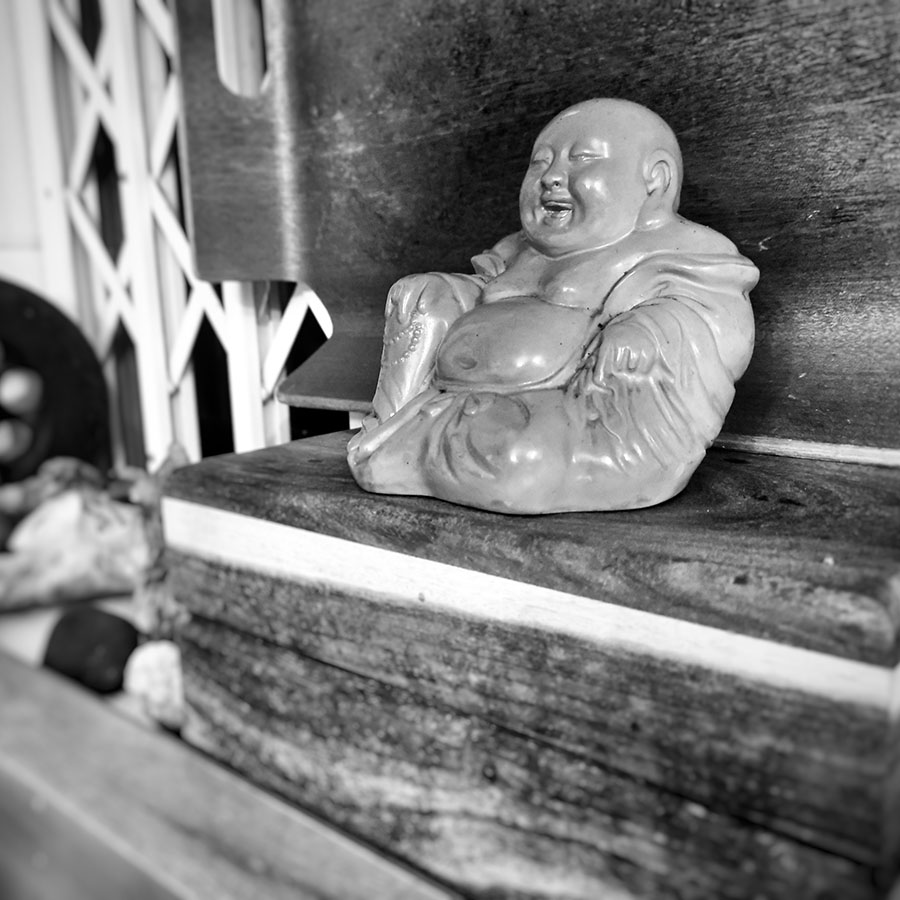
I didn’t walk this morning. Sometimes it’s a freedom to go inward rather than outward. I took the time to write. To double check the date on the side of my father’s box of ashes. It’s with great irony that a laughing Buddha sits on him now. It’s a beautiful box. I never planned to keep it. Nor did I plan to put a Buddha on it. Most of life happens like this – by chance. We have less control over life than we like to believe we do. At the age of 10 I wanted to become a priest. At the age of 30, my father was sending me books on Christianity and I was sending him back articles on Narcissism. I think it is good to live life with intention but, in the end, we don’t get to actually make too many of the choices for ourselves. The choices we do make, however, are the ones that give our lives their real shape. The last choice my father made was to end his life, on this day, 9 years ago.

I am not sure when his actual moment of death came. I have spent a lot of time trying to imagine what it must have been like: how and when it actually happened. My understanding of human consciousness is that it is unlikely that we experience the moment of death. It also seems that the decision to die does not happen in a single moment. In the end he would have suffocated somewhere in the depths of the night: confused at first; maybe euphoric for a few brief moments; then he would have lost himself in a sea of unconsciousness. The anesthesia he was craving – respite from the pain of his own living. What might have come before the half-asphyxiated elation? Was there determination, perhaps fear, or was he angry? His cellphone was plugged into the car charger. A sign, perhaps, that he did not really want to die alone. It is a pretty deliberate thing to do: To cut a piece of hosepipe just long enough to reach from the exhaust to your window. I only realise now, while writing this, that hosepipes lying innocently on the grass have always had a hidden meaning for me. The first time my father tried to end his life in this way, I was my son’s age. I discovered him unconscious in his car with enough time for my mother to slap him awake again.

The thing is, you are not really choosing to end your life, you are choosing to end your pain. The fantasy of suicide visits us when we are faced with struggles we feel that we can no longer bare and yet have no solution to. It’s a bit like a mental doomsday clock: every year we set it slightly further away or slightly closer to the possibility of an inevitable end. But, the possibility is always there. “I’d rather die” is a phrase all of us might have used at least once in our lives. The reality is, despite what religions or your insurance companies might say, you are that free – to choose your own ending.

A client tells me about her daughter’s relapse. Wine coming from seemingly nowhere keeping her in a disconnected and deranged state. Many people in lockdown are struggling to be with themselves without medicine. She tells me how worried she is about her. That her daughter is talking of her own ending. I tell her that this is the place where recovery happens – the moment we decide whether to live or die. Choosing to live is choosing to finally deal with those pains. We choose endings and beginnings all day long. Suicide is simply the most obvious and final choice. In this way, life can be like a slow puncture: a gradual yet undetected suicide. To eat the extra piece of chocolate cake; to not have that mole checked out; to stay in a bad relationship; or to not resign from that job.

The reality is, we are free to do whatever we like. Such freedom is somewhat of a burden. The ownership is on us to make life what it is. This is why Sartre spoke about us being “condemned to be free”. My father tried to call me that night. I didn’t take the call. He is probably drunk, I thought to myself. I was sitting in a psychiatric hospital, listening to an inane “continued professional development” talk. His message said “Alice has left me, but I am okay.” When I called back, he didn’t answer. I knew the inevitable moment had come. His doomsday clock was finally too close to midnight.

The thing that kills us is
there’s nothing to explain
us: moral courage is
not natural, striving
to unearth it is.
We need to know
how others stare
into the eye of pain
and wade across the river
to talk to us again.
– Don Maclennan, Suicide (an extract)

My father didn’t make it across the river that night. Perhaps he could not make sense of his own pain any longer? I like to think it was a choice he made out of courage rather than confusion. I have had those nights myself, but my sons stand in my mind, on the other side of that river, and so I have managed to wade my way across it. I was no longer standing on the other side, waiting for him. I had waited too long already.

Josh just asked me “Dad, it looked like you wanted to say something”. There was something on my mind but I didn’t want to make it his problem. I replied, “Yes, but I have decided not to say it. Parents should be responsible for their children, children should not feel responsible for their parents.” He nodded.

With freedom comes the responsibility for the most difficult thing – accountability for a self carved out of the choices we make.

And so, I sit here asking myself, what are the choices I want my sons to know me by?

True Progress is in Awareness

I haven’t been able to ignore how there is a seeming increase in numbers of birds announcing the wake of dawn. The natural world making itself known. It’s soothing on the one hand, but with a hint of prophecy. Their symphony says, “You’re not that relevant!” I try and let it be my meditation. I try and rest my mind on it in order to avoid getting too caught up in my own inner chirpings.  We take ourselves way too seriously.  Apart from my own more private struggles, I’ve been waking up worrying about the developments of the virus. More lately, I wake up worrying about the developments of ignorance. If there was a time to make good sense of our lives – it is now.

A month ago, philosopher Slavoj Zizek made a call for us to act with cooperation, awareness, deep ethical choices and wisdom. By “wisdom” he was referring to the need to “become aware of what a fragile entity we are; these humans on earth”. Referring to the biology of Corona he said that we are now threatened “by the most stupid reproductive mechanism one can imagine…It’s a good lesson in modesty.” Chomsky, his philosophical opponent, who is now in his 90’s (has lived through several world crisis by now) argues that humans themselves are the real threat; especially humans like the man he emphatically describes as “The Buffoon”, Donald Trump. Chomsky believes humanity will recover from Corona but not from Trump. Whether we are talking viruses, poor leadership, or conspiracy theorists – I think both Zizek and Chomsky would at least agree that we are really at war with ignorance and that poor decisions will be our demise, not viruses.

I could no longer hear the birds over Zizek and Chomsky arguing in my head. Fiona lifted her cheek from my chest. Perhaps my heartbeat gave it away. She smiled a pleading smile at me, “come sit with me, just for 10 minutes”. By “sit” she means meditate. I haven’t formerly sat on a meditation cushion since the beginning of lockdown. There is panic living somewhere in my body. I haven’t wanted to greet it. Meditation is not all about “bliss”. The cultivation of awareness can sometimes be a real grind and, at the same time, it is the greatest freedom to simply turn within.

I spoke to a man yesterday who was deeply disappointed with himself for finishing a bottle of brandy. He was trying to shake the feeling that he was now back on “day one”. I have a problem with this 12-step kind of logic. It is ill aligned with the nature of human development. Before I could say anything, he reflected a bit further: “I would rather think of it as picking up from where I left off”. Setbacks are real but with consciousness, growth is inevitable. Although it is alarmingly easily to re-awaken problematic patterns of thought and behaviour, “relapse” is a problematic concept. It focuses purely on external behaviours rather than internal struggles. True progress lies in the development of awareness, not in simply changing behaviours. Why do we do what we do; when we do it; in the way that we do it; and, with what intention? I have worked with many people who have managed abstinence or sobriety for considerable years and yet the underlying states of mind that evoked their cravings remain unaddressed. They may still not have made sense of themselves to themselves yet.

Psychology is an attempt at making both a science and an art of the sense-making process. Specifically, with the hope that this may lead to change; even if this change is simply a change in perspective. If there was ever a time in the history of our lives to be making sense of things, it is now. Even when things will never make sense, we can’t resist our attempts to do so. And, when things don’t make sense or we don’t like the sense things are making – we often invent other, more convenient, truths. This is human nature.

Attempting to contribute to a making sense of what my client was diluting with brandy, I shared some of my ideas from the previous blog post. I told him that I had the impression that he sometimes seems alone in his marriage. He replied, “only because I close the door from the inside”. Such an honest moment. How often do we all “close the door from the inside”? Failing to admit it, we cry “abandonment” to those on the outside. We went on to talk about why he might be closing that door form the inside.

There is a beautiful rule of thumb in psychology that – no behaviour is likely to be repeated unless it serves a function. Our behaviours might often seem completely senseless, but at closer inspection, there is usually a function they serve. Even if a less conscious function. Most of the decisions we make in our lives are not terribly conscious ones. Nevertheless, they have their causality and their consequences. I believe the recent surge in conspiracy theories is driven by our difficulty to face things for what they are. Buddhists call this “being with what is” and it isn’t always easy,

Are you sure? Are you not sure?
Well, things that start badly are never going to improve with age
The world has done things to you, but you’ve done more to yourself
Oh Robert! There’s something in the air
Slow release me now come on
From this awful night, I cannot stand the thought of all those lies
So I run from the light, from the thought I might
Not have done something right
At the back of your head, there’s an open door
There’s the shock and awe
It’s just shock that’s all

Chris Letcher

Truth, Responsibility, and Freedom

It’s 4.30am. Somehow the waves seem louder at this time of almost-day. The voluminous crash washes over my half-made thoughts. It’s a welcome intrusion. I try and use it to rinse the anxiety already waking up inside me. I am waiting for 6am, looking forward to our newly habitual walk to freedom, somewhere between 6 and 9. These walks leave me thinking about what it means to be truly “free”. To be told when you can and can’t leave your home is not real freedom, even though it feels like it for now. But, I get it! It’s my “responsibility” to stick to the rules. Although, whose responsibility is it to feed the people? We pass a man ploughing a pop-up suburban field. Now that is a man with a better contribution to make than me.

We take a long walk to a local farmhouse to see if we can buy chicks. The freedom to walk where you choose is one thing. But, the freedom to walk and talk alongside someone that you feel you can be so completely open with and they will still love you, is an entirely different thing. Just like we should have more than one word for “love”, we should perhaps have more than one word for “freedom” too. There are many freedoms.

A few people have asked me to write more about my divorce. I’ve had to think about this and why I have not written more before. One reason would be that it is far from over yet. The unfortunate thing about relationships that end badly is that everything that was bad remains and everything that was good evaporates into a vague ether. You start to wonder if it was even real. There’s an odd kind of grief to finding fictions in your own reality. Something vacuous about realising that it was other than what you thought or hoped it would be. I am sure for her, just as much as for me. However, there is perhaps no greater freedom than the truth. For me, divorce has been my greatest act of truth so far. There is freedom in truth, no matter how painful it is at first.

I can remember that moment that the truth first distilled in me. I was with, then, friends in the Transkei – walking. I felt free. The realisation felt free: I was not happy and yet I felt I should be free to be happy. I no longer wanted my life to be entirely hinged on a responsibility for someone else’s happiness. That is an easy mistake for a therapist to make. To make the happiness of other’s your responsibility. But, that doesn’t start in your psychology training, that starts in your childhood. I find myself sitting with my son, asking him why he doesn’t want to tell his mom the truth “I don’t know,” he sobs “I just don’t want to upset her even more.” I watch the shaping of myself in him.

As I sit here, my phone is heavy with messages received in the night. As I unlock my phone, I open the door into other people’s lives. What an odd yet beautiful freedom? To share in the lived experience of other people’s lives. A client writes: “Random thought, easier to type…I feel like I want someone to get me, to understand my shitty choices, to empathise, someone I don’t have to explain them to. Someone who doesn’t question but just accepts me for all my broken bits. I feel like this is everyone’s goal. In my aloneness I am actually exactly the same as everyone else. Except I don’t have my person. I should, but there are so many caveats. Mostly the ones I’ve put there because he has so many limits. That’s heartbreaking.”

I asked her if I could share this because I think it speaks for so many people. And, yes, this is “everyone’s goal”. To feel alone within your relationship is the real “lockdown”. In these situations it is not about the choice between staying or leaving. It is more about the question of what the truth will do. Along what path will it take you? Clients come to therapy because, somewhere inside them, they are finding the courage to take that path. It takes you where you need to go.

“I am just going to roll with it.” Another client tells me this week. She has started to recount her entire life and how feelings of “responsibility” run deep into her childhood. Fortunately, she is doing so with great compassion for those in her life story. Sometimes, however, finding compassion for ourselves (especially our younger selves) is not so easy. I asked her to think of herself as a young girl. What was she going through? “I can’t even imagine her”, she answers. The feeling of responsibility for our parent’s can rob us of aspects of our own childhoods.

What is our individual responsibility? What is the actual truth? What does it mean to be free? These are the questions we will find ourselves having to answer.

“The strength of a person’s spirit would then be measured by how much ‘truth’ he could tolerate, or more precisely, to what extent he needs to have it diluted, disguised, sweetened, muted, falsified.”

― Friedrich Nietzsche, Beyond Good and Evil

Still(a)Life#35: Freedom is the Luxury to Reinvent

Sometimes I learn more from my clients than they learn from me. This week a client was asking herself “What do we define as our greatest luxury?” Her answer to her own question was “freedom”. We spoke about the freedom of movement, to travel and visit the people we love. We also talked about the freedom to go inward. In the face of so many people having to do what it takes to simply stay alive, having the space and time to consider my own thoughts and feelings is surely an odd luxury?

South Africa has followed suit with the Oriental trend of a draconian approach to Covid19. As of tomorrow, we are essentially still in lockdown and our efforts to combat the effects of Covid19 are only just beginning. The virus is one thing, the consequences of the virus are a whole new struggle.

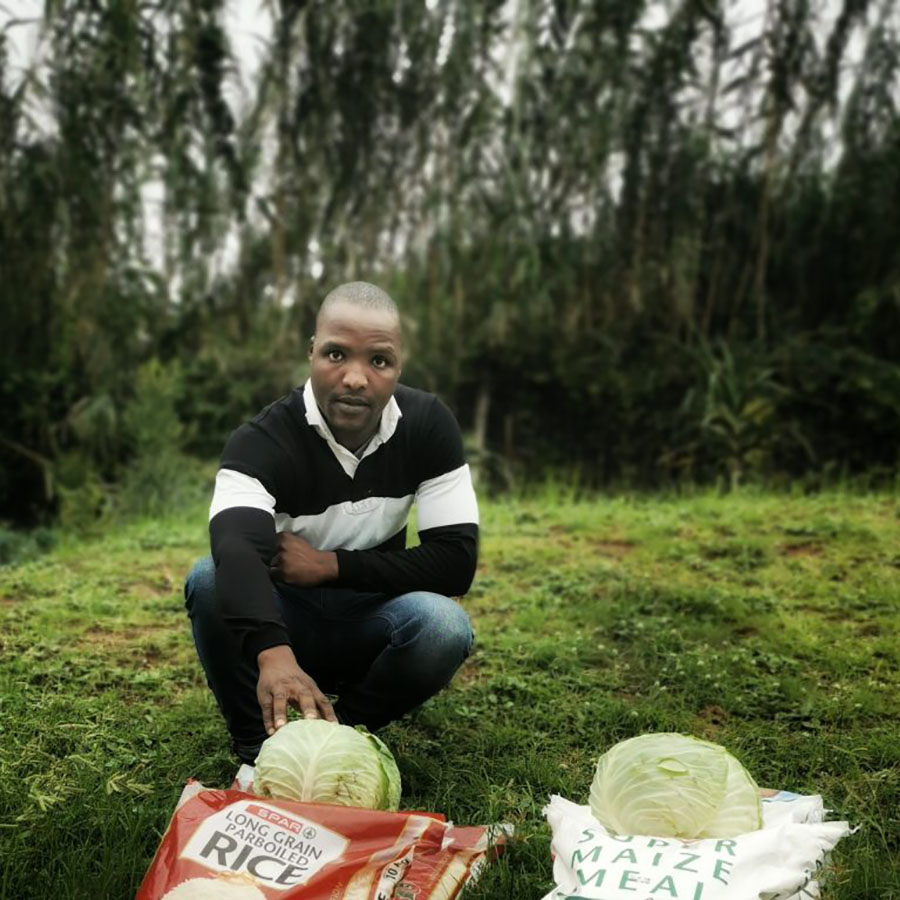
We were delivering food to the local community. I asked the man in the picture if he had been receiving food since lockdown:

He shook his head in resignation, nothing.

Not even hot meals?

Nothing.

But I have heard there are people giving out hot meals on some days.

I am too afraid to leave my room, he replied, his head still shaking with resign.

Mark Epstein wrote that “Awakening does not mean a change in difficulty, it means a change in how those difficulties are met.” The problem is that fear robs us of creative action. Fear hinders us from becoming the things we could become. Fear literally starves us of our freedoms.

This man’s resignation stuck with me. As we drove off I thought of Dostoevsky – “To live without hope is to cease to live.” We sometimes die before death arrives. I hoped that taking food back to his community might give him a sense that things are possible. We cannot live without hope and we cannot afford to become paralysed by fear. Freedom is not just about exercising between 6am-9am tomorrow. Freedom is a willingness to reinvent ourselves in the face of crisis, to continue to imagine possibilities for our lives, beyond the narrow confines of our collective fearfulness.

Still(a)Life#30: Coming Out of Hiding

While we collected wild fermenting guavas off the driveway, Josh found the courage to start telling me things he has been experiencing lately. Somehow the shared task made it easier for him to talk. He asked me questions about my own parent’s divorce and we seemed to find a sense that we’re in this together. Rather than him being the victim of my choices, we both spoke about how the boy in me felt similar things to the boy he is now. I realised just how much feeling and insight he harbours inside him; overly cautious about the implications for others of disclosing them. This is not a habit that I hope gets too ingrained in him. It is, perhaps, something I made a habit of myself. I guess I made a career out of that habit, tuning into other’s feelings rather than my own. Other people’s needs can easily become a hiding place. As Winnicott wrote, “It is a joy to be hidden, and disaster not to be found.”

I left my marriage when the joy subsided, and as I increasingly realised the disaster of not being found. Nobody’s fault but my own, I guess. It still takes conscious effort to ask to be found. Many of my friendships ended when I stopped doing all the finding. Now I increasingly feel the joy of coming out of hiding. The year I decided to leave my marriage I was gifted a ticket to AfrikaBurn. I camped with a large group of people, some of them my clients. But my identity as therapist seemed to be completely irrelevant in a dust storm of other people’s freedoms. I wasn’t quite sure what to do with myself. If I wasn’t rescuing someone or facilitating something, I wasn’t quite sure who I was.

I have found freedoms that I only ever allowed myself to imagine. It leaves me restless. I can’t shake the feeling that I am running out of time. Irvin Yalom, probably the greatest living therapist, wrote some time back “One thing I feel clear about is that it’s important not to let your life live you. Otherwise, you end up at forty feeling you haven’t really lived. What have I learned? Perhaps to live now, so that at fifty I won’t look back upon my forties with regret.” I feel like I just got started and then the world went on pause.
These freedoms are not always outward. The real rebellion is an inward one. Especially against the outdated voices in our heads that illegitimate our own feelings. There is something rather freeing about legitimating our own feelings. It somehow breathes life into us, despite the anxiety that comes with it. Lockdown seems a good time to bring awareness to those inner voices. As I write this, Josh is struggling to sleep. He seems upbeat, like he doesn’t want the day to end. I hope, somewhere inside of him, outside of his ability to language it, is the realisation that his love for those in his life does not have to be at the sacrifice of his own feelings and their legitimacy.

This afternoon I found myself writing feedback to a dear client that I have known for years: “I think absolute honesty about our feelings is the litmus test of any relationship and over censorship is the absolute demise of ourselves.”

Yalom also wrote, “To love means to be actively concerned for the life and the growth of another.” Love is an invitation to express and to grow. To sometimes hear the things you would rather not hear or say the things you are too afraid to say. Far too often, love seems to require censorship rather than expression.

© 2026 Jason Ross

Theme by Anders Noren — Up ↑