PhD Philosophy & Psychoanalysis

Tag: Epstein

Still(a)Life#35: Freedom is the Luxury to Reinvent

Sometimes I learn more from my clients than they learn from me. This week a client was asking herself “What do we define as our greatest luxury?” Her answer to her own question was “freedom”. We spoke about the freedom of movement, to travel and visit the people we love. We also talked about the freedom to go inward. In the face of so many people having to do what it takes to simply stay alive, having the space and time to consider my own thoughts and feelings is surely an odd luxury?

South Africa has followed suit with the Oriental trend of a draconian approach to Covid19. As of tomorrow, we are essentially still in lockdown and our efforts to combat the effects of Covid19 are only just beginning. The virus is one thing, the consequences of the virus are a whole new struggle.

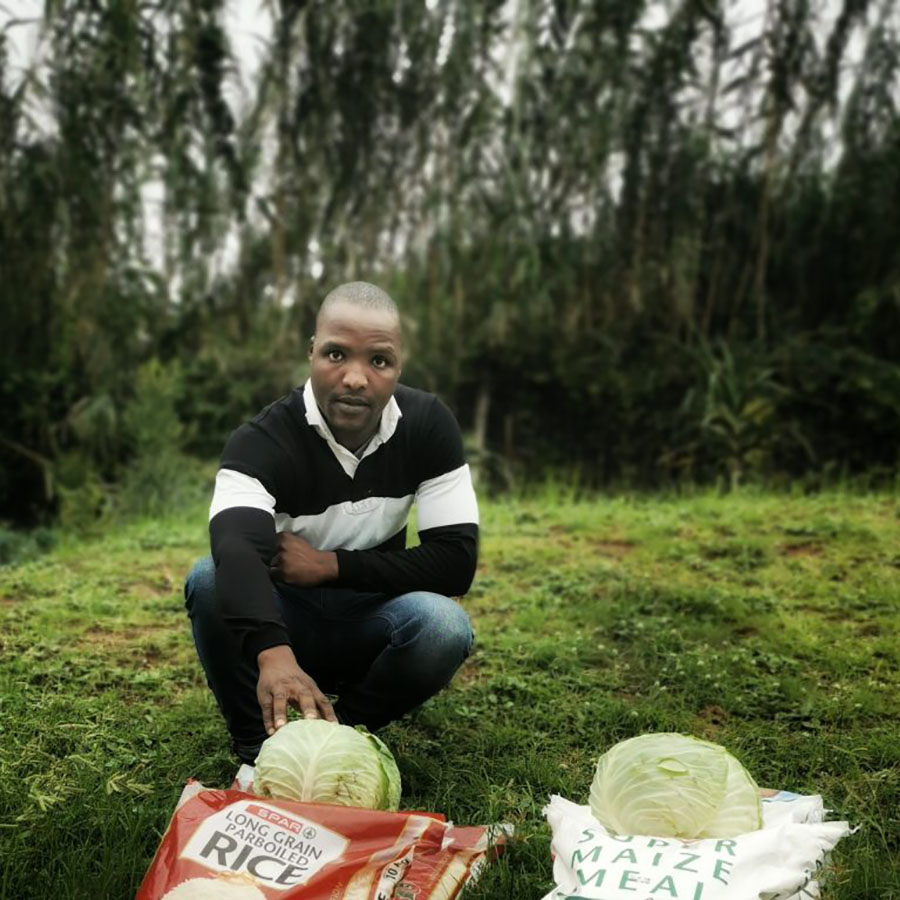
We were delivering food to the local community. I asked the man in the picture if he had been receiving food since lockdown:

He shook his head in resignation, nothing.

Not even hot meals?

Nothing.

But I have heard there are people giving out hot meals on some days.

I am too afraid to leave my room, he replied, his head still shaking with resign.

Mark Epstein wrote that “Awakening does not mean a change in difficulty, it means a change in how those difficulties are met.” The problem is that fear robs us of creative action. Fear hinders us from becoming the things we could become. Fear literally starves us of our freedoms.

This man’s resignation stuck with me. As we drove off I thought of Dostoevsky – “To live without hope is to cease to live.” We sometimes die before death arrives. I hoped that taking food back to his community might give him a sense that things are possible. We cannot live without hope and we cannot afford to become paralysed by fear. Freedom is not just about exercising between 6am-9am tomorrow. Freedom is a willingness to reinvent ourselves in the face of crisis, to continue to imagine possibilities for our lives, beyond the narrow confines of our collective fearfulness.

Still(a)Life#32: Letting Go

I came downstairs from my last session of the day to find Fiona sifting through a lifetime of photographs. She wanted to know how to decide what to keep and what to chuck. I didn’t have a very helpful answer. In the end, we settled on imagining that, if she were writing her life story, what would she keep and what would she leave out. I was especially concerned for the things she might have been holding onto; that might be keeping stale pains alive. It’s a worthwhile task, when the time is right. A task worth doing when you have reached a point in your life when you can look back on its pictures, letters, postcards and memories with a bit of clarity. There is always the risk of holding on to things too long and too tightly. Even to the pain in the hope of one day revisiting it to find a better understanding. Alternatively, there is the risk of letting go of things too readily, even the sense of your own resilience. As we sit with ourselves in lockdown for longer now than we would like, this sorting process might start to happen all on its own in the backdrop of our minds. Such a process can be dangerous if not met with compassion. “So often, within the privacy of our inner worlds, we take the difficult thing and make it worse. Our own subliminal hate speech coats our experience and gives an added layer of meaning to things that are already difficult enough”, warns Dr Mark Epstein.

She skips past an intimate photo of a past lover, “Oops, sorry!” It’s an unusual position to be in; to once have been your lover’s therapist. As a therapist, I got to hear her life story with somewhat impartiality. Care in the absence of judgment. Wishing for her that she would flourish without feeling threatened by that. As a lover I find myself reluctantly wanting to shrink her story just to the chapter of her and I. I inevitably want to be the most significant part of her life. In this way, we rob each other of past and future. I try and remind myself of that therapeutic love. It guards against what Irvin Yalom’s critiques as “Marriage and its entourage of possession and jealousy [that] enslave the spirit.”

By the time we were lovers, I knew more than most people would know about their partners (after even decades of being together). We are, often, more honest with one another on our first date than we are on our first wedding anniversary. Concealment of our true thoughts and feelings becomes an anxious strategy to sustain a relationship’s security. The greater the insecurity, the greater the concealment. Infidelity gets a pretty bad moral wrap, but it’s just one of many dangerous concealments. In fact, infidelity is often simply the onset of an un-concealing.

The problem with saying “I do” is that following through on this runs the risk of having to conceal too much, even from ourselves. These parts of ourselves splinter off from who we say “I am” and, as a result, parts of us go on pause. Often, for so long that we become almost unrecognisable to ourselves.

I still don’t know what to do with this picture, she asks. Well, what does it mean to you, I answered. What does it mean to me, if she keeps it, is the question I would be asking.

What is it about this need to possess? To have thing for ourselves. Stephen Batchelor argues that our need to “have” engenders an anxiety that increasingly gets in the way of our ability to “be” and estranges us from knowing who and what we are.

It’s so much more joyful to strive to “be with” you rather than to try and “have” you.

Still Life #9: Quiet Voices of Wisdom

I’ve been scanning the internet for wisdom from the usual voices of reason that I value. Those usual voices are quiet. Perhaps not because they have nothing to say but because they said it all a while ago. We just weren’t listening. Perhaps now is not the time for them to reach out. Perhaps now is the time they will all be reaching in. Today there was news from Arundhati Roy. A devastating account of life in India right now. She writes about how pandemics force us to leave behind everything about the world we knew and imagine an entirely new world. She encourages us to travel light in this transition. Why would we ever want things to return to a so called “normal”?

How do we imagine a new world? I think everything we need to know has already been said. We just have to get on with it, saving as many lives as we can along the way. As Camus wrote in The Plague “But what does it mean, the plague? It’s life, that’s all.”

So to help me find the courage to keep going, I decided to print the faces of all the voices I most value and put them on the wall above my desk. Somehow it feels slightly less forlorn, for now.

© 2026 Jason Ross

Theme by Anders NorenUp ↑