A footnote on yesterday’s post:
The first book I ever tried to read, cover to cover, was Jonathan Livinsgton Seagul. I chose it because it had the narrowest spine I could find in the library. I can’t recall the actual story because the effort it took to read it didn’t leave much cognitive room for retention. I was in my final year of highschool, an overpriced boarding establishment. They had beautiful lawns and an impressive little chapel, but they didn’t notice I was Dyslexic. My teacher that year had the good sense to pay little attention to the assessment requirements and when it came to my oral, she said I should just talk on any topic of my choosing. She was interested in my ability to reason not to read. At the end of that year she wrote “Without words he strives to answer questions that have never been asked”.
I had already given up on becoming a psychologist a year prior to this. I approached my English teacher at the time, Mr Candotti, with my fantasies. He seemed like a pretty cool guy. We liked him and I knew he was studying psychology part-time. He told me “I don’t think you have the aptitude”. I managed to hide my utter deflation and I geared myself for a career in art. Something that didn’t require words. I was the only student in the school who could airbrush. Not very well, but I enjoyed it. I became a psychologist by accident.
I finished my master’s in psychology with academic colours. I didn’t tell anyone. I was meant to wear some fancy blazer on graduation, but I was well on my way to avoiding institutional norms by then. I was asked to leave my first internship. I had an argument with the professor in charge about how I didn’t believe that asking a child to repeat the 7 random numbers I just shared was of any relevance to predicting their future. “Either you do this the way it’s always been done” he insisted in his thick Afrikaans accent (slamming his fist so hard on the desk that his fringe uncombed itself from the bald spot it was covering over his head) “or you can leave.” I got up from the table and never returned.
There are advantages to writing a thesis under the passionate supervision of the head of department. I had a new internship the next day. My thesis was on language. On words and how they do the work of constructing reality. I was no longer without words. They had become my chief preoccupation. I still struggle with them. I still struggle to read. I wrestle with them, like worthy appointments, all day. I can’t describe the satisfaction it now gives me.
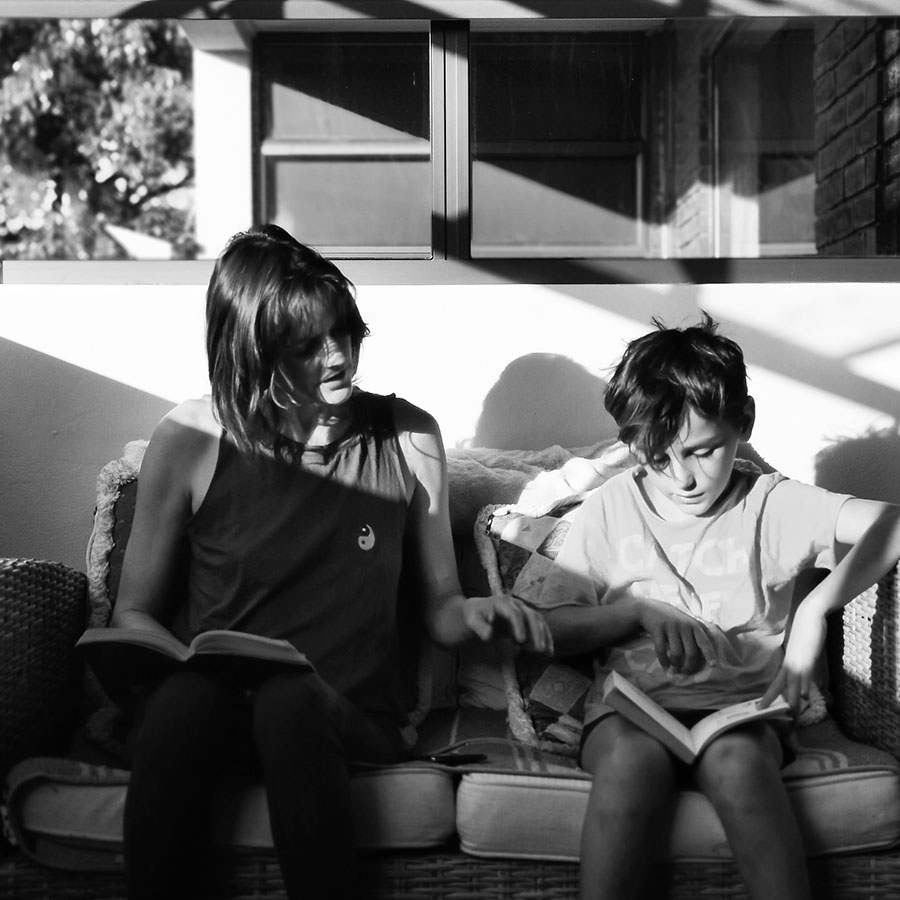
So as I was muddling with words this morning, I looked up and saw Joshua wrestling his own battle. He has such difficulty with words and yet he gets so much satisfaction out of finally managing to pin a few of them down. He just needs people in his corner, worrying less about fluency and more about the world that he is opening doors to. He looked so satisfied with himself. Thank you Fiona, you are opening windows to a whole universe for him!
“Books and doors are the same thing. You open them, and you go through into another world.” – Jeanette Winterson
