PhD Philosophy & Psychoanalysis

Category: Still Life: The Corona Diaries of an Existential Therapist. (Page 1 of 4)

Still(a)Life#35: Freedom is the Luxury to Reinvent

Sometimes I learn more from my clients than they learn from me. This week a client was asking herself “What do we define as our greatest luxury?” Her answer to her own question was “freedom”. We spoke about the freedom of movement, to travel and visit the people we love. We also talked about the freedom to go inward. In the face of so many people having to do what it takes to simply stay alive, having the space and time to consider my own thoughts and feelings is surely an odd luxury?

South Africa has followed suit with the Oriental trend of a draconian approach to Covid19. As of tomorrow, we are essentially still in lockdown and our efforts to combat the effects of Covid19 are only just beginning. The virus is one thing, the consequences of the virus are a whole new struggle.

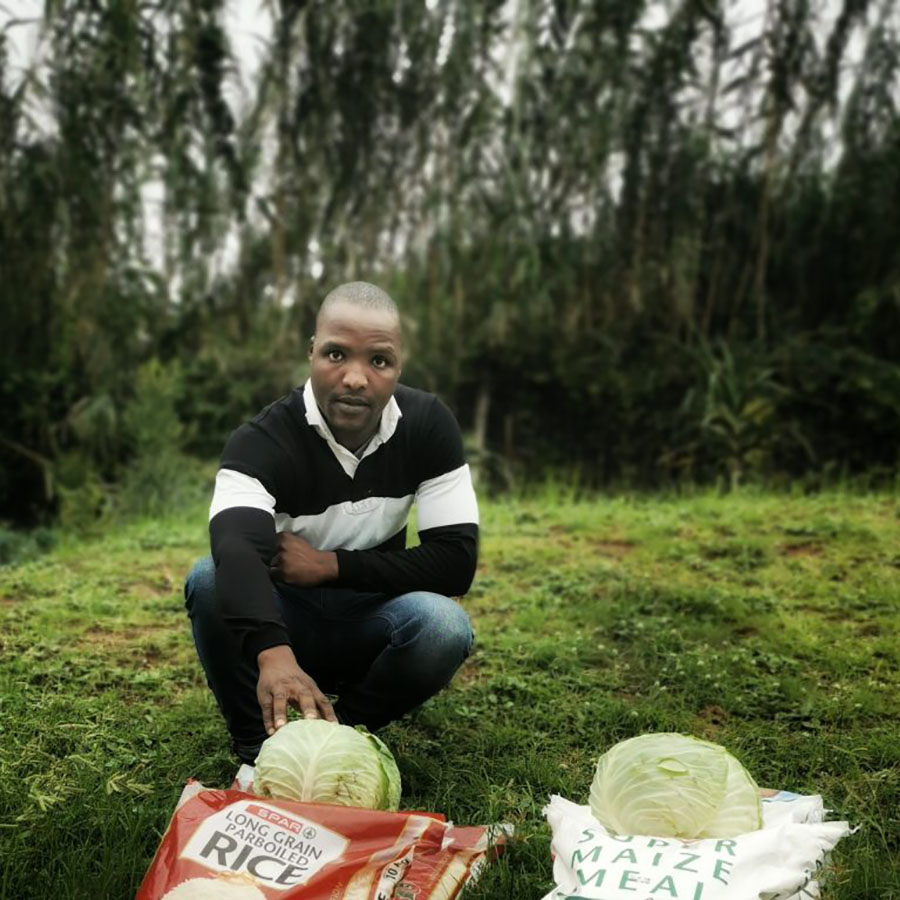
We were delivering food to the local community. I asked the man in the picture if he had been receiving food since lockdown:

He shook his head in resignation, nothing.

Not even hot meals?

Nothing.

But I have heard there are people giving out hot meals on some days.

I am too afraid to leave my room, he replied, his head still shaking with resign.

Mark Epstein wrote that “Awakening does not mean a change in difficulty, it means a change in how those difficulties are met.” The problem is that fear robs us of creative action. Fear hinders us from becoming the things we could become. Fear literally starves us of our freedoms.

This man’s resignation stuck with me. As we drove off I thought of Dostoevsky – “To live without hope is to cease to live.” We sometimes die before death arrives. I hoped that taking food back to his community might give him a sense that things are possible. We cannot live without hope and we cannot afford to become paralysed by fear. Freedom is not just about exercising between 6am-9am tomorrow. Freedom is a willingness to reinvent ourselves in the face of crisis, to continue to imagine possibilities for our lives, beyond the narrow confines of our collective fearfulness.

Still(a)Life#34:Invitation inward.

Today I was asked on radio “How are people dealing with all the uncertainty?” I don’t really have a straightforward answer to that. What I can say is that “uncertainty” is inherent to our everyday existence. Corona, however, is certainly the starkest confrontation with this uncertainty most of us have ever encountered. But, on any normal day, there is no real certainty of what is going to happen in the very next moment – I could be hit by a car, diagnosed with cancer or win the lottery. Certainty is something we try and build into our reality through the stories we tell ourselves about our imagined future.

In a recent interview, psychiatrist and Buddhist practitioner, Mark Epstein spoke about how we really don’t know what the next moment is going to bring and this is challenging for us because our tendency is to constantly try and imagine what the next moment will be like for us. This is one of the habitual tendencies of the mind – to forecast into the future. We also try and build security through the ways in which we habitually engage in the external world: through having things and doing things; by living outwardly rather than inwardly. Lockdown forces us inward as the doors to an outward are closed.

Stephen Batchelor also refers to this: how, through this outward orientation, our lives tend to leek away; we tend to dissolve ourselves into the world. In this regard, lockdown is an opportunity for re-collecting ourselves. Relative solitude allows for this. But solitude is not about a place or a space. According to Batchelor, it is a practice, an art form, any process that gives us access to our interiority – art, literature, poetry, dance or meditation.

At any given moment we are telling ourselves stories about our lives. Relative solitude allows us to bring some awareness to this more hidden, interior, storying process. Somehow, being open to this interiority has been considered taboo. We are, from young, encouraged to focus on the world out there rather than the universe inside ourselves.

To some extent, the interruption of everything habitual and recognisable to us “out there”, is a psychological gift, an invitation to turn inward. Even if, for now, we just take an initial peak. It’s a good start and it’s amazing what you might just find. You might just find that the only certainty available to you is to know what is happening while it is happening, inside you, in the here and now.

Still(a)Life#33: Ships in the Night

Ships that pass in the night, and speak each other in passing,
Only a signal shown and a distant voice in the darkness;
So on the ocean of life we pass and speak one another,
Only a look and a voice, then darkness again and a silence.

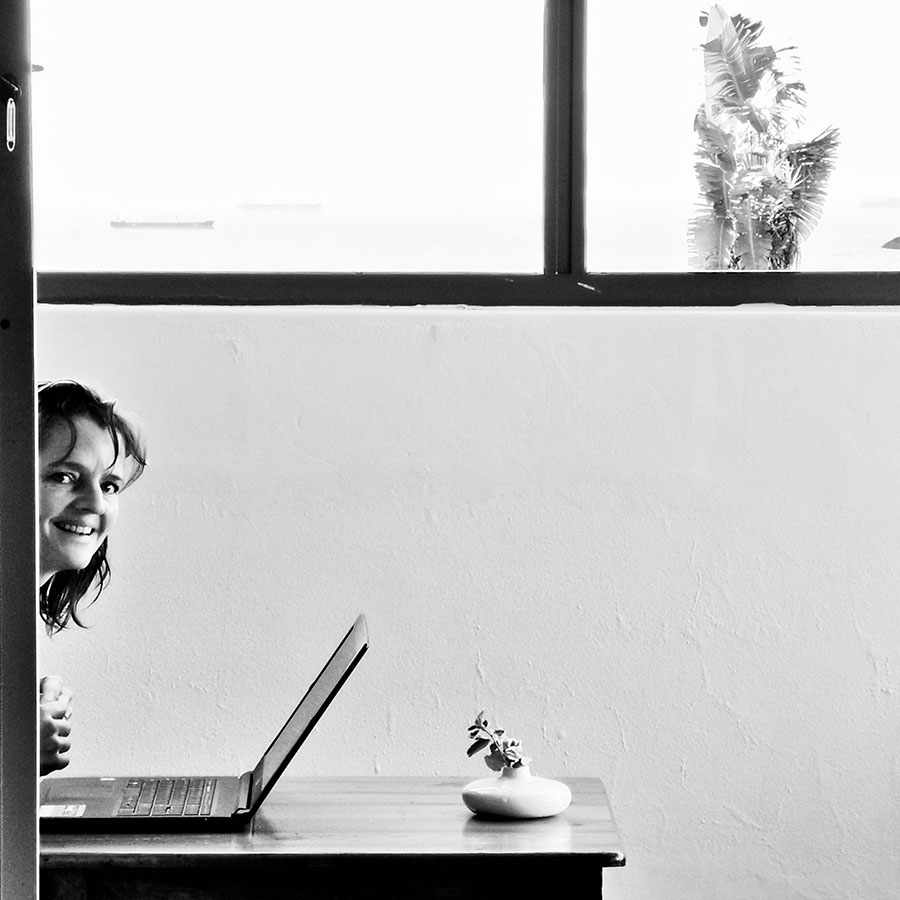
This is an extract from a 1874 poem that left us with the figure of speech “like ships that pass in the night”. On any normal day, when you look out of our bedroom window, you’ll find an average of four ships within our line of sight. Tonight there are 18. They sit there like ghosts of a struggling economy, already long gone. In the stillness of the morning, you can hear the drone of some of their engines as they leave a streak of polluted air across the horizon. At night their lights blink at us – beacons from a world beyond our lockdown.

But there are entire worlds unfolding inside our private lockdowns. This week I have read a letter from a person wanting to leave their spouse; a letter from a spouse that has already had the courage to leave; a letter confronting an abuser in the past; a letter to celebrate a new found comfort in sexuality and excitement for the future; a letter about unrequited love and the fear of loneliness; a letter about despondence with a partner’s lockdown drinking; a letter from a past client, savouring life, despite lockdown…to name just a few.

If there is something you have been neglecting: a feeling; a conversation; a bad habit; a chapter in your past; a role you reluctantly play in the lives of those you love; or a hope for your future – it is likely to make itself known during this period. There is only so much alcohol left in your cupboard or laps you can do around the garden. My concern is for how shutting these things down inevitably shuts us out from those around us. This gives rise to a whole different kind of isolation. We so easily become those “ships in the night” to one another. Individual vessels that give nothing but a “look and a voice” towards one another.
It’s become common place to talk a bit about the reality of covid19 at the start of every session. Fifteen minutes into a very valuable discussion on the state of things, a client apologises for wanting to turn to matters “on my doorstep”. I reassured her that it is these matters “on our doorsteps” that are more important than ever. I think we had the fantasy that as the world went into crisis, these “doorstep” issues would easily be swept under a mat of comparative irrelevance. It seems quite the opposite – they have become more relevant than ever.

Still(a)Life#32: Letting Go

I came downstairs from my last session of the day to find Fiona sifting through a lifetime of photographs. She wanted to know how to decide what to keep and what to chuck. I didn’t have a very helpful answer. In the end, we settled on imagining that, if she were writing her life story, what would she keep and what would she leave out. I was especially concerned for the things she might have been holding onto; that might be keeping stale pains alive. It’s a worthwhile task, when the time is right. A task worth doing when you have reached a point in your life when you can look back on its pictures, letters, postcards and memories with a bit of clarity. There is always the risk of holding on to things too long and too tightly. Even to the pain in the hope of one day revisiting it to find a better understanding. Alternatively, there is the risk of letting go of things too readily, even the sense of your own resilience. As we sit with ourselves in lockdown for longer now than we would like, this sorting process might start to happen all on its own in the backdrop of our minds. Such a process can be dangerous if not met with compassion. “So often, within the privacy of our inner worlds, we take the difficult thing and make it worse. Our own subliminal hate speech coats our experience and gives an added layer of meaning to things that are already difficult enough”, warns Dr Mark Epstein.

She skips past an intimate photo of a past lover, “Oops, sorry!” It’s an unusual position to be in; to once have been your lover’s therapist. As a therapist, I got to hear her life story with somewhat impartiality. Care in the absence of judgment. Wishing for her that she would flourish without feeling threatened by that. As a lover I find myself reluctantly wanting to shrink her story just to the chapter of her and I. I inevitably want to be the most significant part of her life. In this way, we rob each other of past and future. I try and remind myself of that therapeutic love. It guards against what Irvin Yalom’s critiques as “Marriage and its entourage of possession and jealousy [that] enslave the spirit.”

By the time we were lovers, I knew more than most people would know about their partners (after even decades of being together). We are, often, more honest with one another on our first date than we are on our first wedding anniversary. Concealment of our true thoughts and feelings becomes an anxious strategy to sustain a relationship’s security. The greater the insecurity, the greater the concealment. Infidelity gets a pretty bad moral wrap, but it’s just one of many dangerous concealments. In fact, infidelity is often simply the onset of an un-concealing.

The problem with saying “I do” is that following through on this runs the risk of having to conceal too much, even from ourselves. These parts of ourselves splinter off from who we say “I am” and, as a result, parts of us go on pause. Often, for so long that we become almost unrecognisable to ourselves.

I still don’t know what to do with this picture, she asks. Well, what does it mean to you, I answered. What does it mean to me, if she keeps it, is the question I would be asking.

What is it about this need to possess? To have thing for ourselves. Stephen Batchelor argues that our need to “have” engenders an anxiety that increasingly gets in the way of our ability to “be” and estranges us from knowing who and what we are.

It’s so much more joyful to strive to “be with” you rather than to try and “have” you.

Still(a)Life#31: On Writing and Listening

It has been interesting to write for 30 continuous days. I find myself writing on most days but this writing is usually a bit more focused on things outside of me. Mostly a reflection on a client’s circumstance. Sometimes a love letter. Now and again an erotic thought. I have tried not to write these lockdown diaries out of obligation. Doing anything out of sheer obligation is seldom a good idea. It has been freeing to write more openly. Even though it goes against the grain of a psychologist’s training. But, client and therapist are, after all, just two people in conversation. It’s been an ongoing project to try and find my own authenticity in that somewhat necessarily contrived relationship. The less contrived the better, I think. On the topics of authenticity and writing, I am reminded of the words of Charles Bukowski: “If it doesn’t come bursting out of you, in spite of everything, don’t do it. Unless it comes unasked out of your heart and your mind and your mouth and your gut, don’t do it.”

Some people, whose journeys are well known to me, have sent me endearing messages about what the writing has stirred in them and the choices they are finding the courage to make as a result. But, to continue writing tonight would be out of sheer obligation. There is nothing bursting out of me right now. I want to rather listen out for what the distant crash of waves has to tell me; the warmth of my lover can provide for me, as the hypnotics of sleep hopefully come and find me.

Still(a)Life#30: Coming Out of Hiding

While we collected wild fermenting guavas off the driveway, Josh found the courage to start telling me things he has been experiencing lately. Somehow the shared task made it easier for him to talk. He asked me questions about my own parent’s divorce and we seemed to find a sense that we’re in this together. Rather than him being the victim of my choices, we both spoke about how the boy in me felt similar things to the boy he is now. I realised just how much feeling and insight he harbours inside him; overly cautious about the implications for others of disclosing them. This is not a habit that I hope gets too ingrained in him. It is, perhaps, something I made a habit of myself. I guess I made a career out of that habit, tuning into other’s feelings rather than my own. Other people’s needs can easily become a hiding place. As Winnicott wrote, “It is a joy to be hidden, and disaster not to be found.”

I left my marriage when the joy subsided, and as I increasingly realised the disaster of not being found. Nobody’s fault but my own, I guess. It still takes conscious effort to ask to be found. Many of my friendships ended when I stopped doing all the finding. Now I increasingly feel the joy of coming out of hiding. The year I decided to leave my marriage I was gifted a ticket to AfrikaBurn. I camped with a large group of people, some of them my clients. But my identity as therapist seemed to be completely irrelevant in a dust storm of other people’s freedoms. I wasn’t quite sure what to do with myself. If I wasn’t rescuing someone or facilitating something, I wasn’t quite sure who I was.

I have found freedoms that I only ever allowed myself to imagine. It leaves me restless. I can’t shake the feeling that I am running out of time. Irvin Yalom, probably the greatest living therapist, wrote some time back “One thing I feel clear about is that it’s important not to let your life live you. Otherwise, you end up at forty feeling you haven’t really lived. What have I learned? Perhaps to live now, so that at fifty I won’t look back upon my forties with regret.” I feel like I just got started and then the world went on pause.
These freedoms are not always outward. The real rebellion is an inward one. Especially against the outdated voices in our heads that illegitimate our own feelings. There is something rather freeing about legitimating our own feelings. It somehow breathes life into us, despite the anxiety that comes with it. Lockdown seems a good time to bring awareness to those inner voices. As I write this, Josh is struggling to sleep. He seems upbeat, like he doesn’t want the day to end. I hope, somewhere inside of him, outside of his ability to language it, is the realisation that his love for those in his life does not have to be at the sacrifice of his own feelings and their legitimacy.

This afternoon I found myself writing feedback to a dear client that I have known for years: “I think absolute honesty about our feelings is the litmus test of any relationship and over censorship is the absolute demise of ourselves.”

Yalom also wrote, “To love means to be actively concerned for the life and the growth of another.” Love is an invitation to express and to grow. To sometimes hear the things you would rather not hear or say the things you are too afraid to say. Far too often, love seems to require censorship rather than expression.

Still(a)Life#29: Conditional Arising

“Life is the sum of all our choices” said Camus. Today I spoke to a man about to make the biggest decision of his life. Rather, it is perhaps true to say that he feels that the decision is making him. Lockdown is not an easy time to make life changing decisions. But, at the same time, it is perhaps the best time to be making those kinds of decisions – while life is dramatically changing in any case. Dramatic decisions are the bedfellows of dramatic events, even if secretly.

Buddhists call the way our contexts (internally and externally) give rise to our thoughts, feelings and actions – “conditional arising”. In other words, there are certain conditions that precede any thought, feeling or intention. This falls in line with what neuroscientist Sam Harris argues – there is no such thing as free will. You don’t pick your parents or the society you are born into. But, these are the things that shape who and how you become. Resistance to this fact can lead to a kind of self-righteousness, one that negates our capacity for compassion; our ability to identify with other people and the causes of their own actions.
Thoughts, intentions and choices are the “proximate cause of your actions” (Harris) and yet these arise out of conditions outside of our own control. It helps, to some extent to mitigate this with reason and ethics. But, as the world runs out of ICU beds, we learn that there are limits to the usefulness of reason and ethics. Sometimes decisions simply have to be made, actions have to be taken and the only immorality is not making a decision at all. We will only understand the true consequences of lockdown in retrospect.
“I should have bought more wine.” “I should have saved more money.” “I should have never left that job.” Should have’s have us looking backwards at times when we most need to be looking forwards. The choices we make over the next few months will feel definitive but there may not be right or wrong choices to be made, as long as you are making them.

Stephen Batchelor encourages that “Instead of asking “What is the ‘right’ or ‘wrong’ thing to do?” the practitioner asks, “What is the wisest and most compassionate thing to do?” For now, I’m making Mampoer. That is probably the wrong decision.

Still(a)Life#28: The Plague

When I first started my practice in Johannesburg, I used to make sure that I was always wearing a good pair of shoes. I was young and needed to be taken seriously. Clients spend an inordinate amount of time staring at your feet. Especially when you ask the more difficult questions. The other day I asked a client a difficult question, she simply turned the lid of her laptop up to the ceiling as she tried to answer it. There are some interesting advantages to online therapy.

Today I didn’t wear any shoes. I felt at first as I imagine a Muslim woman might feel without her hijab. But one or two sessions in and it felt comfortable: honest. There’s a book at my feet. I don’t get much chance to read it but I keep it close for a sense of security; that someone might just know a way forward for us. In 1941, the French Algerian, Albert Camus, started writing a book about a virus transmitted from animals to humans. He portrays how the society in the book doesn’t really question what it means to be alive until their lives come into a clear and present danger. For Camus, the real plague is not the virus but the fact that we are perpetually vulnerable to the absurdity of life. There is no hidden meaning or purpose to the plague, human suffering has no underlying “purpose” and death is a reminder of how our lives can be rendered suddenly meaningless. This is the human condition.

Camus’ real concern is for how humanity engages with this condition. For instance, our tendency to create an “us” and a “them” – to think of ourselves as uniquely immune to human struggles. Throughout History, pandemics, have proven that we are ultimately all vulnerable to the same fate. Camus, however, seems to find little value in panic. For him, panic is a response to a transient condition that we could potentially solve. Rather, if the condition we need to treat is the very circumstance of being human, then we need to find ways of “living”. Camus proposes that the only way to fight the plague would be through “decency” to one another. And the only way to deal with the human condition would be to live as fully and sensuously as possible. To live life to the fullest is to make life worth enduring.

And so, today, I enjoyed the feeling under my feet, the sun casting shadows on the wall, Josh laughing outside as he played with the dogs. I wondered what he meant by living with decency…Perhaps it’s simply to love?

“They knew now that if there is one thing one can always yearn for, and sometimes attain, it is human love.”
― Albert Camus, The Plague

Still(a)Life #27: “As your lover describes you, so you are.”

“Through others, we become ourselves” said Vygotsky. As children, we develop cognitively and emotionally through interaction with our caregivers. This does not, however, end in childhood. As adults, the relationships we find ourselves in continue to shape who and how we are. Jeannette Winterson wrote that “As your lover describes you, so you are”.

It is my belief that, over time, people either grow together or they grow apart. Relationships, of any sort, are an invitation to this growth. We either take up these invitations or not. Any relationship you find yourself in will leave you either changed for the better or for the worse. The fact that relationships have the potential to leave us changed for the better implies that they could just be our ultimate form of therapy.

But, in order to achieve this, we must allow ourselves to be changed. We need to let go of our pasts and give in to our futures. Even when our futures feel uncertain. We must allow ourselves to be shaped by the people we are locked down with. If we don’t like the shape they give us, then we need to speak up.

We must be prepared to recognise how our past pains might have shaped us; how they flavour how we experience our present loves; and be willing to give ourselves up to a yet to be determined future self. “This is just who I am” is the greatest barrier to our growth and the greatest threat to fulfilment in a relationship. We are better off saying “This is who I would rather be”. The relationship that supports us in this vision, is the right relationship for us.

I have always said that I can’t screw a couple back together if they are not compatible enough. But, today a client shared a quote with me by Alain De Botton, that challenged this: “Compatibility is an achievement of love; it must not be its precondition.”

Even though I don’t believe that just any two people are potentially compatible, I think it is worth asking: How do we achieve such a love? Perhaps only through radical honesty? We have to be able to say things to each other that we know will hurt. Such honesty, although seemingly cruel, is an act of love. Such honesties are invitations to growth. But I must trust you enough to trust that your intention is love and not diminishment. I am compatible to you when I love you enough to want you to be everything you can be. Even if I risk the loss of you through that.

It’s day #27 and many a home is fast becoming a potential confessional or a bunker for hidden feelings. It’s a good time to find the courage to describe ourselves back to each other. Ultimately, these honest moments can be our sincerest acts of love.

Still(a)Life #26: A Rebellion Deep Inside

Compliance is, mostly, a good thing. It allows for cohesion. Over-compliance, however, risks hiding things. My son was distressed the other day and couldn’t get hold of me. He apparently said “I never want to see Dad again”. My heart sank when I heard that. But, I am learning the value of the freedom to express ourselves, especially when we’re young. Rumi imagined a field “out beyond ideas of wrongdoing and rightdoing”, it’s an especially good place for us to meet in times of struggle. There are moments when there is no right feeling or wrong feeling to be had. When the expression of that feeling, rightly or wrongly, is the truest thing.

Under the lockdown compliance, our homes are the distilleries of these truths. Therapy is, to a great extent, the pursuit of truths. Not a forensic kind of truth. Not the kind a lie detector might reveal. In fact, whenever lie detectors are suggested in a couple’s therapy, I know it’s the beginning of the end. It’s an indication that the very foundations of trust have already been demolished. Therapeutic truths are different truths. They are an embodied sense that this feels right for me. This is what we need to feel authentically ourselves. And, when we get a sense of these truths, radical change usually follows. The truth, however, takes time to make itself known. First, we have to get over the anxiety this will cause us. Radical change can be traumatic.

We are encouraged from youth to comply with expectations of us. Often, we find ourselves having to choose and behave in ways that meet the needs of a parent. An overly vulnerable mother or a particularly angry father might have us playing out a role that helps “keep the peace”. Winnicott believed that this contributed to the development of a “false self”; a persona that we put out there into the world in order to comply with the demands of our environment.

We learn a capacity to behave according to the demands of the needs of others, first our parents and siblings and, later, society as a whole. However, this role we learn to play gradually overshadows a more spontaneous expressions of our authentic needs and feelings. Eventually we risk losing touch with them altogether. This loss can contribute to inevitable feelings of emptiness and isolation. We can spend a lifetime avoiding this chasm. Then comes lockdown. Spend enough time with yourself and your own authenticity will start a rebellion somewhere deep inside you. The things you didn’t want to say or feel, will slowly find expression. There is no wrong or right feeling but the inevitable expression will bring you closer to some people and further from others. Trust this, there is truth in it.

« Older posts

© 2026 Jason Ross

Theme by Anders NorenUp ↑