PhD Philosophy & Psychoanalysis

Category: Freedom: Somewhere between 6&9

Tata ma Chance

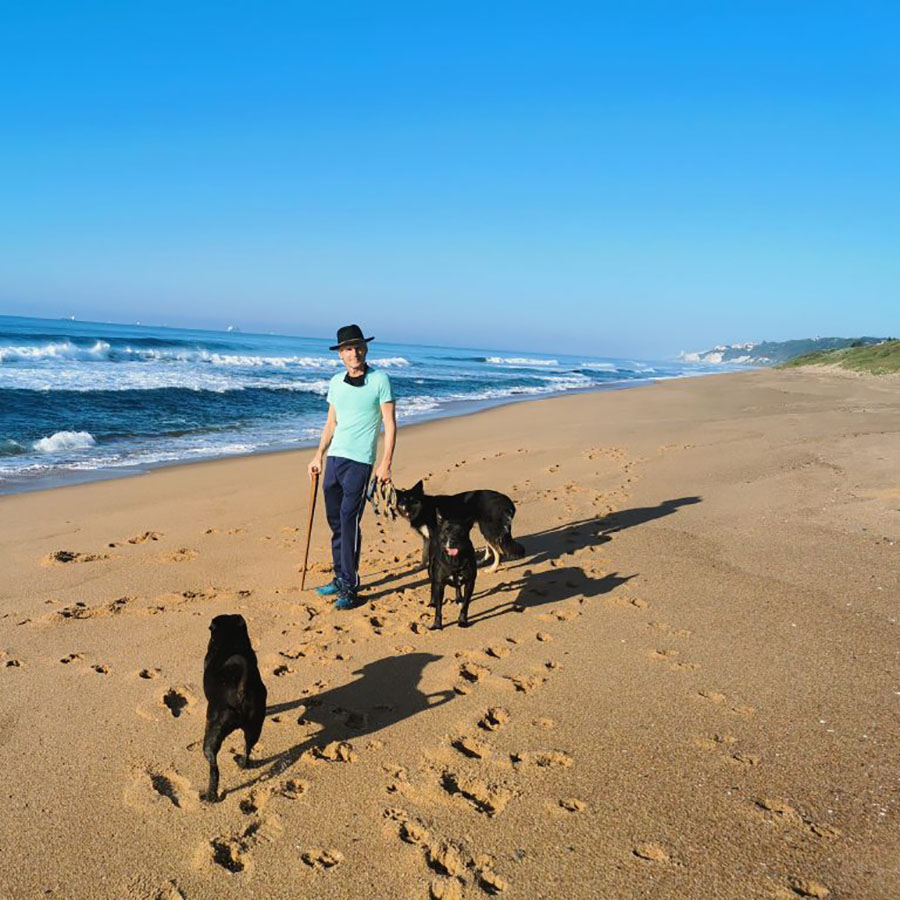
It has always concerned me how my children felt fearful at the presence of someone in police uniform.  I am not sure how that came about.  Perhaps the legacy of our country’s history made its way to them through overhearing adult dinner time conversations.  Sadly, they are more fearful now than ever.  When we see a blue and white car approaching on our morning walks, it more fear than protection that is felt.

From 6 to 9, it’s difficult to shake the feeling that I am not really free.  Despite the sense of openness that comes with sunshine, empty roads and clear blue water, I sit with this pending feeling that I could do something wrong at any point in time.  It’s not an entirely unfamiliar feeling.  I think I had it often as a child.  Waiting for my father’s unpredictable outburst or my mother’s feelings of injury.  It was easy to feel like you were getting something wrong.  Contemporary Psychanalyst, Adam Phillips, claims that “no one ever recovers from the sado-masochism of childhood”.  There is an inevitable power indifference to being a child and the only way to survive it is to find some pleasure in having power over you or, at times, some joy in finding ways of finding your own power.  I tell Josh this week, “If you don’t stop fighting with your brother you won’t get your violin”.  “I don’t want it anyway,” he replies, insincerely.

Good parenting, if there is such a thing, lies in making room for a child’s attempts at empowerment without giving into their every need.  At worst and unfortunately more commonly, parenting is done through a diminishing of the child.  We have a tendency to make the already small feel even smaller.  Luckily children are forever forgiving.  They are compelled to keep a fantasy alive that we will be what they need us to be.  Until, one day, they realise their parents are just mere mortal humans.  If this happens either too early or too late in life, it can be devastating.   In fact, throughout our lives we are likely to constantly try and resurrect our parents from the reality of their inadequacies.  We want them to be everything we need them to be.  It is perhaps then the job of parents to gradually introduce their real selves to us, when the time is right?

Adam Phillips believes that a good parent is able to tolerate a child’s inevitable anger towards them.  They will inevitably resist the power we have over them.  They will inevitably feel somewhat betrayed when they realise we are, in the end, only flawed humans.  As we walk past some officers and the boys creep closer to us out of fear, Fiona reassures them, “they are just people under those uniforms, like you and I, just as scared and unsure as we are.”

As the president made his first speech, most of the people I know cheered him on with much faith and fantasy in a reunited South Africa.  I hadn’t seen that since Madiba shimmied his way across the World Cup Rugby field.  We hoped for another Tata (isiXhosa for “Father”).  But, as we all know, you get different types of parents.  The biggest problem with a more punitive parent is that they give rise to shame.  Freud believed that “shame” was a useless emotion.  It is, but that doesn’t stop it from the havoc it causes.  A good parent allows you to ask them questions; is genuinely open to criticism; leaves less room for doubt; and allows you to gradually become responsible for your own choices.  An inadequate parent simply repeats what was done to them, normally by keeping cycles of oppression alive.  A good-enough parent allows for freedom within reasonable boundaries.  A good parent can be trusted to enforce those boundaries only when needed.  A good parent makes room for personal integrity and self-efficacy.

Shame is the feeling that there is something unacceptable about me and it is going to be revealed at any moment.  The most effective way to engender shame is to leave someone feeling that no matter what they do they will be in the wrong.  In psychology this is known as a “double bind”.  Here we sit, the whole of society caught up in a “double bind”.  It feels too dangerous to go back to everyday life and, yet, it is becoming too costly to stay at home.  There are people starving but it’s illegal to feed them. There are some who even feel that we shouldn’t even be at home in the first place.  There are some who will perhaps sit tight until a vaccine arrives.  But, our shared struggle with what to do and when to do it highlights an underlying condition of our very existence – the very contradictory nature of life itself.  Life is full of these “double binds”.

It is through our strife with life’s contradictory nature that the feeling of being disjointed and alienated (even from ourselves) can arise.  In fact, it was proposed by Bateson (a founder of Family Therapy) that the development of schizophrenia could be attributed to the extent to which we are exposed to “double binds” during our development.  We may not all show signs of schizophrenia, but contradictions are more common to our everyday lives than is ideal. If pervasive enough, these kinds of tensions can give rise to underlying feelings of fragmentation or un-realness within us.  The benchmark of an event being traumatic is the overwhelming question it may leave you with – “Is this really happening?”

This often manifests in the experience of our own bodies.  Shame is a very visceral experience.  It leaves us with a crawling skin.  This is often the flavour of our conversations in sex therapy.  Our sexuality is far too often shaped by the simultaneous occasioning of both pleasure and shame.  So many people have experienced how being in their bodies can feel both good and bad at the same time.  Abuse of any kind, especially from someone you trust or love, is the most obvious (yet least acknowledged) ingredient for this.  There is a distinct kind of trauma that evolves from the coupling of pleasure and shame – it renders us apologetic for our own needs.  In severe enough cases, apologetic for our own existence.  I spend a lot of my day campaigning on behalf of people’s needs, encouraging them to treat their own needs as legitimate enough.  To allow their needs to be seen.

I wonder how many people’s needs are going unseen right now. Those going hungry in their homes; those feeling alone in their marriages; those working harder than they ever have before; others wishing if only they could be working at all. Collectively, what is it that we “really” need?  Is it more ICU beds? Is it a chance to ride those glossy winter waves?  Is it the reliability of the next plate of food? I had this fantasy that covid-19 would be the greatest leveler our society has ever seen: A re-calibration towards a shared value system.  I fear that it may have more deeply embedded the existing inequalities in our society.
Condemned to be Free

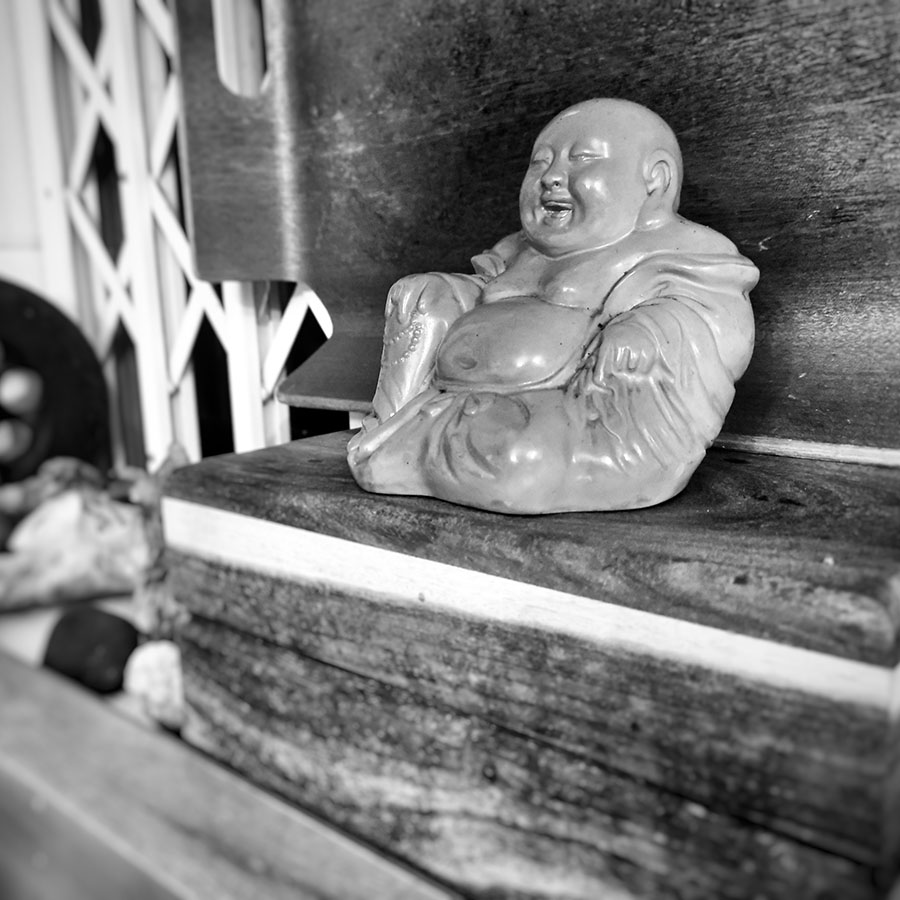
I didn’t walk this morning. Sometimes it’s a freedom to go inward rather than outward. I took the time to write. To double check the date on the side of my father’s box of ashes. It’s with great irony that a laughing Buddha sits on him now. It’s a beautiful box. I never planned to keep it. Nor did I plan to put a Buddha on it. Most of life happens like this – by chance. We have less control over life than we like to believe we do. At the age of 10 I wanted to become a priest. At the age of 30, my father was sending me books on Christianity and I was sending him back articles on Narcissism. I think it is good to live life with intention but, in the end, we don’t get to actually make too many of the choices for ourselves. The choices we do make, however, are the ones that give our lives their real shape. The last choice my father made was to end his life, on this day, 9 years ago.

I am not sure when his actual moment of death came. I have spent a lot of time trying to imagine what it must have been like: how and when it actually happened. My understanding of human consciousness is that it is unlikely that we experience the moment of death. It also seems that the decision to die does not happen in a single moment. In the end he would have suffocated somewhere in the depths of the night: confused at first; maybe euphoric for a few brief moments; then he would have lost himself in a sea of unconsciousness. The anesthesia he was craving – respite from the pain of his own living. What might have come before the half-asphyxiated elation? Was there determination, perhaps fear, or was he angry? His cellphone was plugged into the car charger. A sign, perhaps, that he did not really want to die alone. It is a pretty deliberate thing to do: To cut a piece of hosepipe just long enough to reach from the exhaust to your window. I only realise now, while writing this, that hosepipes lying innocently on the grass have always had a hidden meaning for me. The first time my father tried to end his life in this way, I was my son’s age. I discovered him unconscious in his car with enough time for my mother to slap him awake again.

The thing is, you are not really choosing to end your life, you are choosing to end your pain. The fantasy of suicide visits us when we are faced with struggles we feel that we can no longer bare and yet have no solution to. It’s a bit like a mental doomsday clock: every year we set it slightly further away or slightly closer to the possibility of an inevitable end. But, the possibility is always there. “I’d rather die” is a phrase all of us might have used at least once in our lives. The reality is, despite what religions or your insurance companies might say, you are that free – to choose your own ending.

A client tells me about her daughter’s relapse. Wine coming from seemingly nowhere keeping her in a disconnected and deranged state. Many people in lockdown are struggling to be with themselves without medicine. She tells me how worried she is about her. That her daughter is talking of her own ending. I tell her that this is the place where recovery happens – the moment we decide whether to live or die. Choosing to live is choosing to finally deal with those pains. We choose endings and beginnings all day long. Suicide is simply the most obvious and final choice. In this way, life can be like a slow puncture: a gradual yet undetected suicide. To eat the extra piece of chocolate cake; to not have that mole checked out; to stay in a bad relationship; or to not resign from that job.

The reality is, we are free to do whatever we like. Such freedom is somewhat of a burden. The ownership is on us to make life what it is. This is why Sartre spoke about us being “condemned to be free”. My father tried to call me that night. I didn’t take the call. He is probably drunk, I thought to myself. I was sitting in a psychiatric hospital, listening to an inane “continued professional development” talk. His message said “Alice has left me, but I am okay.” When I called back, he didn’t answer. I knew the inevitable moment had come. His doomsday clock was finally too close to midnight.

The thing that kills us is
there’s nothing to explain
us: moral courage is
not natural, striving
to unearth it is.
We need to know
how others stare
into the eye of pain
and wade across the river
to talk to us again.
– Don Maclennan, Suicide (an extract)

My father didn’t make it across the river that night. Perhaps he could not make sense of his own pain any longer? I like to think it was a choice he made out of courage rather than confusion. I have had those nights myself, but my sons stand in my mind, on the other side of that river, and so I have managed to wade my way across it. I was no longer standing on the other side, waiting for him. I had waited too long already.

Josh just asked me “Dad, it looked like you wanted to say something”. There was something on my mind but I didn’t want to make it his problem. I replied, “Yes, but I have decided not to say it. Parents should be responsible for their children, children should not feel responsible for their parents.” He nodded.

With freedom comes the responsibility for the most difficult thing – accountability for a self carved out of the choices we make.

And so, I sit here asking myself, what are the choices I want my sons to know me by?

True Progress is in Awareness

I haven’t been able to ignore how there is a seeming increase in numbers of birds announcing the wake of dawn. The natural world making itself known. It’s soothing on the one hand, but with a hint of prophecy. Their symphony says, “You’re not that relevant!” I try and let it be my meditation. I try and rest my mind on it in order to avoid getting too caught up in my own inner chirpings.  We take ourselves way too seriously.  Apart from my own more private struggles, I’ve been waking up worrying about the developments of the virus. More lately, I wake up worrying about the developments of ignorance. If there was a time to make good sense of our lives – it is now.

A month ago, philosopher Slavoj Zizek made a call for us to act with cooperation, awareness, deep ethical choices and wisdom. By “wisdom” he was referring to the need to “become aware of what a fragile entity we are; these humans on earth”. Referring to the biology of Corona he said that we are now threatened “by the most stupid reproductive mechanism one can imagine…It’s a good lesson in modesty.” Chomsky, his philosophical opponent, who is now in his 90’s (has lived through several world crisis by now) argues that humans themselves are the real threat; especially humans like the man he emphatically describes as “The Buffoon”, Donald Trump. Chomsky believes humanity will recover from Corona but not from Trump. Whether we are talking viruses, poor leadership, or conspiracy theorists – I think both Zizek and Chomsky would at least agree that we are really at war with ignorance and that poor decisions will be our demise, not viruses.

I could no longer hear the birds over Zizek and Chomsky arguing in my head. Fiona lifted her cheek from my chest. Perhaps my heartbeat gave it away. She smiled a pleading smile at me, “come sit with me, just for 10 minutes”. By “sit” she means meditate. I haven’t formerly sat on a meditation cushion since the beginning of lockdown. There is panic living somewhere in my body. I haven’t wanted to greet it. Meditation is not all about “bliss”. The cultivation of awareness can sometimes be a real grind and, at the same time, it is the greatest freedom to simply turn within.

I spoke to a man yesterday who was deeply disappointed with himself for finishing a bottle of brandy. He was trying to shake the feeling that he was now back on “day one”. I have a problem with this 12-step kind of logic. It is ill aligned with the nature of human development. Before I could say anything, he reflected a bit further: “I would rather think of it as picking up from where I left off”. Setbacks are real but with consciousness, growth is inevitable. Although it is alarmingly easily to re-awaken problematic patterns of thought and behaviour, “relapse” is a problematic concept. It focuses purely on external behaviours rather than internal struggles. True progress lies in the development of awareness, not in simply changing behaviours. Why do we do what we do; when we do it; in the way that we do it; and, with what intention? I have worked with many people who have managed abstinence or sobriety for considerable years and yet the underlying states of mind that evoked their cravings remain unaddressed. They may still not have made sense of themselves to themselves yet.

Psychology is an attempt at making both a science and an art of the sense-making process. Specifically, with the hope that this may lead to change; even if this change is simply a change in perspective. If there was ever a time in the history of our lives to be making sense of things, it is now. Even when things will never make sense, we can’t resist our attempts to do so. And, when things don’t make sense or we don’t like the sense things are making – we often invent other, more convenient, truths. This is human nature.

Attempting to contribute to a making sense of what my client was diluting with brandy, I shared some of my ideas from the previous blog post. I told him that I had the impression that he sometimes seems alone in his marriage. He replied, “only because I close the door from the inside”. Such an honest moment. How often do we all “close the door from the inside”? Failing to admit it, we cry “abandonment” to those on the outside. We went on to talk about why he might be closing that door form the inside.

There is a beautiful rule of thumb in psychology that – no behaviour is likely to be repeated unless it serves a function. Our behaviours might often seem completely senseless, but at closer inspection, there is usually a function they serve. Even if a less conscious function. Most of the decisions we make in our lives are not terribly conscious ones. Nevertheless, they have their causality and their consequences. I believe the recent surge in conspiracy theories is driven by our difficulty to face things for what they are. Buddhists call this “being with what is” and it isn’t always easy,

Are you sure? Are you not sure?
Well, things that start badly are never going to improve with age
The world has done things to you, but you’ve done more to yourself
Oh Robert! There’s something in the air
Slow release me now come on
From this awful night, I cannot stand the thought of all those lies
So I run from the light, from the thought I might
Not have done something right
At the back of your head, there’s an open door
There’s the shock and awe
It’s just shock that’s all

Chris Letcher

Truth, Responsibility, and Freedom

It’s 4.30am. Somehow the waves seem louder at this time of almost-day. The voluminous crash washes over my half-made thoughts. It’s a welcome intrusion. I try and use it to rinse the anxiety already waking up inside me. I am waiting for 6am, looking forward to our newly habitual walk to freedom, somewhere between 6 and 9. These walks leave me thinking about what it means to be truly “free”. To be told when you can and can’t leave your home is not real freedom, even though it feels like it for now. But, I get it! It’s my “responsibility” to stick to the rules. Although, whose responsibility is it to feed the people? We pass a man ploughing a pop-up suburban field. Now that is a man with a better contribution to make than me.

We take a long walk to a local farmhouse to see if we can buy chicks. The freedom to walk where you choose is one thing. But, the freedom to walk and talk alongside someone that you feel you can be so completely open with and they will still love you, is an entirely different thing. Just like we should have more than one word for “love”, we should perhaps have more than one word for “freedom” too. There are many freedoms.

A few people have asked me to write more about my divorce. I’ve had to think about this and why I have not written more before. One reason would be that it is far from over yet. The unfortunate thing about relationships that end badly is that everything that was bad remains and everything that was good evaporates into a vague ether. You start to wonder if it was even real. There’s an odd kind of grief to finding fictions in your own reality. Something vacuous about realising that it was other than what you thought or hoped it would be. I am sure for her, just as much as for me. However, there is perhaps no greater freedom than the truth. For me, divorce has been my greatest act of truth so far. There is freedom in truth, no matter how painful it is at first.

I can remember that moment that the truth first distilled in me. I was with, then, friends in the Transkei – walking. I felt free. The realisation felt free: I was not happy and yet I felt I should be free to be happy. I no longer wanted my life to be entirely hinged on a responsibility for someone else’s happiness. That is an easy mistake for a therapist to make. To make the happiness of other’s your responsibility. But, that doesn’t start in your psychology training, that starts in your childhood. I find myself sitting with my son, asking him why he doesn’t want to tell his mom the truth “I don’t know,” he sobs “I just don’t want to upset her even more.” I watch the shaping of myself in him.

As I sit here, my phone is heavy with messages received in the night. As I unlock my phone, I open the door into other people’s lives. What an odd yet beautiful freedom? To share in the lived experience of other people’s lives. A client writes: “Random thought, easier to type…I feel like I want someone to get me, to understand my shitty choices, to empathise, someone I don’t have to explain them to. Someone who doesn’t question but just accepts me for all my broken bits. I feel like this is everyone’s goal. In my aloneness I am actually exactly the same as everyone else. Except I don’t have my person. I should, but there are so many caveats. Mostly the ones I’ve put there because he has so many limits. That’s heartbreaking.”

I asked her if I could share this because I think it speaks for so many people. And, yes, this is “everyone’s goal”. To feel alone within your relationship is the real “lockdown”. In these situations it is not about the choice between staying or leaving. It is more about the question of what the truth will do. Along what path will it take you? Clients come to therapy because, somewhere inside them, they are finding the courage to take that path. It takes you where you need to go.

“I am just going to roll with it.” Another client tells me this week. She has started to recount her entire life and how feelings of “responsibility” run deep into her childhood. Fortunately, she is doing so with great compassion for those in her life story. Sometimes, however, finding compassion for ourselves (especially our younger selves) is not so easy. I asked her to think of herself as a young girl. What was she going through? “I can’t even imagine her”, she answers. The feeling of responsibility for our parent’s can rob us of aspects of our own childhoods.

What is our individual responsibility? What is the actual truth? What does it mean to be free? These are the questions we will find ourselves having to answer.

“The strength of a person’s spirit would then be measured by how much ‘truth’ he could tolerate, or more precisely, to what extent he needs to have it diluted, disguised, sweetened, muted, falsified.”

― Friedrich Nietzsche, Beyond Good and Evil

© 2026 Jason Ross

Theme by Anders Noren — Up ↑