Jason Ross

PhD Philosophy & Psychoanalysis

Page 5 of 6

Still Life #18: Being, in the World

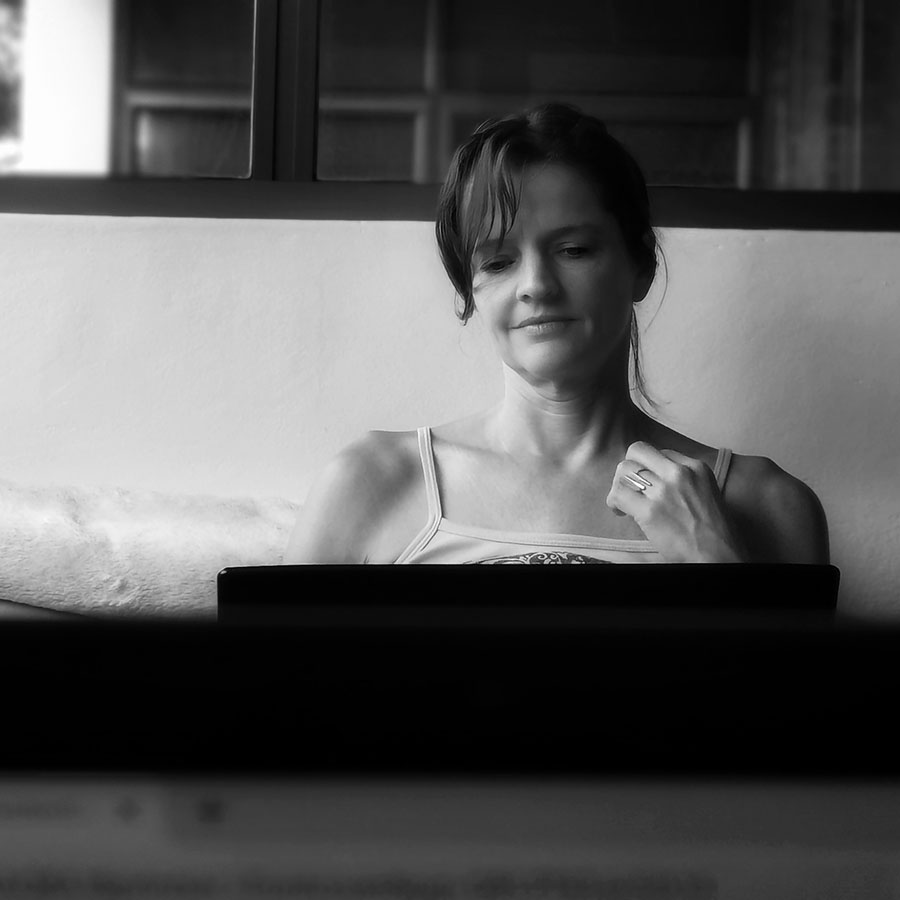
Here we are, me and my love, taking refuge in our screens. Me in existentialism, she in French. Our bunker, sheltering us from the world’s war on human ignorance.

We struggle to embrace what it means to be alive because there is a particular, yet hardly articulable, feeling of uncertainty that comes with such contemplation. And, nothing really seems to ever fully calm it. We try and escape this anxiety through making something solid or permanent out of the things we “have” and the things we “do”. We build an identity of who and what we are, using “stuff” as props. In the sea of time, we try build a life raft out of discardable things. But, objects, “out there” in the world, only prop us up temporarily because this angst we feel rests on the half-understood realisation that the only real certainty about our individual lives is that they will end.

As #Heidegger says “Anxiety is there. It is only sleeping. Its breath quivers perpetually through man’s being.” Covid19 is the rude awakening of this anxiety. It’s no longer just breathing. It’s screaming “enough with the having and the doing, they only bring temporary comfort, it is time for being”.

Even when we’re busy “having” and “doing” it never fully defends us against the whisper. This in itself becomes an anxiety of its own: the fear of losing. It gives rise to a chase for constantly taking from this world rather than a settling into “being in the world”. Right now, those that have the most might just be those that are panicking the most?

This may sound nihilistic. But beyond the initial panic lies a call to fully embrace what it means to be alive. To feel the sun on your back. The taste of the food you are lucky enough to have. The sound of the birds gathering in the trees. The awareness that we all depend on each other. And, appreciation for those you love and fear to lose.

Still Life #17: Throwing Possibilities into the Future

“Existence precedes essence” said #Sartre . We are born into the world, void, and are gradually impregnated by our experience of it. As Stephen Batchelor puts it “we are thrown into existence and its possibilities are thrust upon us”.

This morning Sam created his own Easter Egg hunt. Put his jersey on backwards so that the hoodie covered his face and enthusiastically tossed chocolate eggs into the shrubs so that he could later find them. The author of his own fantasies, recreating for himself a childhood familiarity.

This is the place where we continuously find ourselves in every given moment: our pasts shaping the possibilities we imagine for our futures. “We constantly are confronted with a future that irretrievably plunges to the past, “ Batchelor suggests, “but in doing so demands that we firmly seize it in the present moment and project our possibilities into actuality.”

Today Sam decided to find some respite by making the Easter Bunny real again, even if by his own conscious design.

What about your past is informing how you imagine your future? How might your past enrich or limit this imagination? What if we tried to leave the past behind and allowed ourselves to be entirely shaped by the present?

Still Life #16: Exposing an Imagined and Unreal World

I think we have forgotten what it means to be human: Industrialization, accelerating technological advances, and the increasing specialization of what we do with our time have caused us to live in a relatively automated fashion. Although seemingly efficient, it leaves us further and further removed from what we are. Our children are brought up to conceive of chicken as a nugget in a take-away box, not a winged creature bred for food rather than flight.

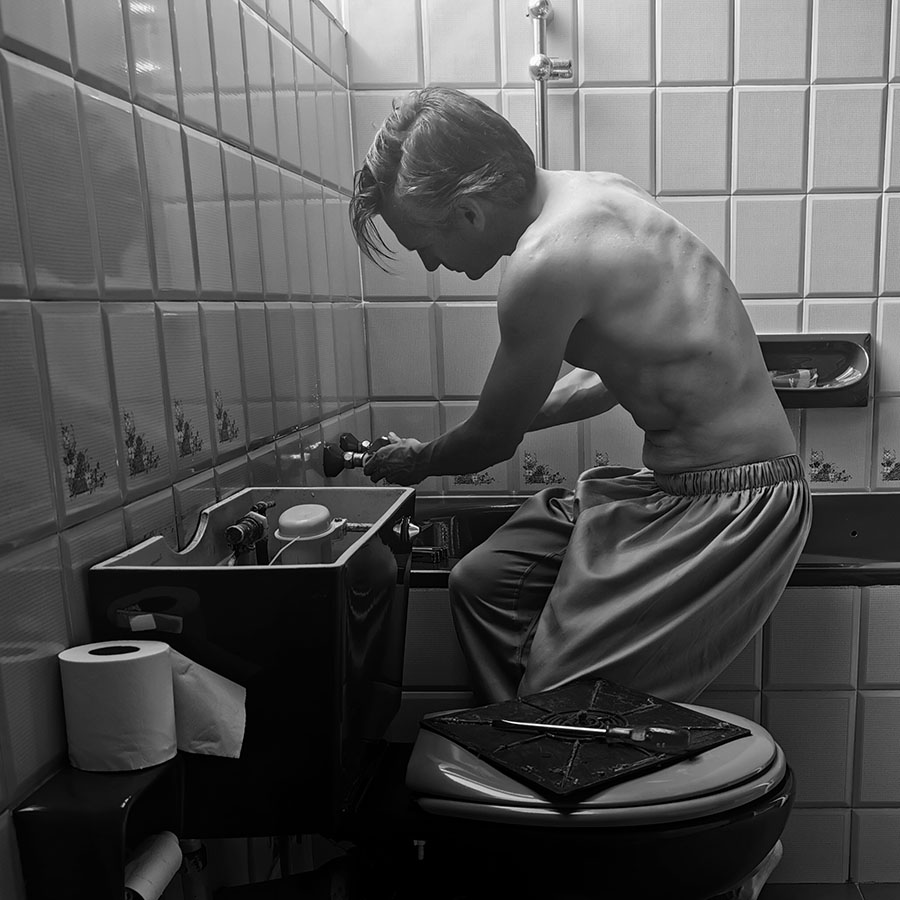
Today I tried my best to fix a broken tap. That is not a part of “who” I see myself to be; DIY is not my thing. But, without the luxury of just calling someone or popping to the hardware, I was forced to make an unsuccessful day of it. The water mains are still off. Lock-down gets a bit more real with no water. “How can this be happening, now” I thought to myself. As if the world owes me something. I wanted to blame somebody. I probably wasn’t very nice to be around.

We have conceptualized a world where we get what we want, where the basics are taken for granted and where things should always make sense. Especially bad things, they should not happen at all and if they do, they must have some sort of reason, some greater design. We have conceptualized a world where we have assumed that our human needs are central

*Enter Covid19

“We perceive the world in a particular way and confidently expect it to conform to its appearance. But we fail to recognize that certain aspects of the ‘reality’ that appear to us are nothing but figments of our own imagination. In this confusion a conflict ensues between the world as it is and the world as we believe it to be. And the more we insist on our infallibility, the more frustrated we become as the actual world again and again stubbornly refuses to live up to our expectations.”
― Stephen Batchelor, Alone with Others

Still Life #15: Shared Experience

Online consults are not new to me. 7 years ago I moved my practice to Durban and many of my Johannesburg clients have stayed in contact in this way. But there’s something different about these consultations at the moment. Usually there is a level of removal between your client’s experience and your own. Suddenly, there’s a sense of a more deeply shared experience.

My anxieties are their anxieties. And yet, it’s remarkable how, at the same time, our idiosyncratic struggles are more relevant than ever. Problematic relationships with food or alcohol are suddenly more apparent than ever. Frustrations in a marriage won’t go unheard by the second week. Or, our usual anxieties seem to have suddenly taken up all the room in our heads or our beds.

I find myself wondering how doctors feel – treating something that they are equally at risk of contracting. I wonder what they do with that vulnerability. Does a hazmat help? Despite all the room we are privileged enough to have, I’ve been camping out on our bedroom balcony. My own hazmat hut, out from which I peer into people’s living realities through a screen.

When I’m not talking, I’m reading, obsessively. Trying to forge some sort of safety out of epidemiological predictions. “Modelling” is what they call it – using science to make guesses.

But I’m not taking my own advice. I’m not embracing what it means to be alive, in this moment. I’m trading the here and now for an imagined future.

I’ve promised not to read anything this weekend. Cold turkey!

Still Life #14: Keeping a Purpose

“It is starting to feel like a sentence” a client told me today. A stark contrast from the relative excitement he felt the week before. The problem with “confinement” is that the hours and days start to merge. The usual impetus, no matter how trivial, to get up in the morning and put on an identity can be easily lost. And, with it, we can start to lose our purpose.

After the initial forced respite from the business of life is over, we might start to crave a need to feel useful. If you are not a medic, a grocer or an officer – this might prove trying. One of the greatest needs we have is to “achieve” something. Our definitions of achievement are very caught up in things we may not have access to at the moment, especially capital gains.

The existentialist in me would like to urge that we all learn to come undone a little bit. Given the absence of our usual distractions, it will teach us something about ourselves.

Even though I’m reluctant to sound like a life coach, if you are fearing for your sanity, I would encourage you to forge some sort of daily routine. We all need to anchor ourselves into something.

Still Life #13: “What is this?”

I don’t know too much about David Icke, but he doesn’t strike me as the most lucid public figure. Anyone who believes in a genetically modified hybrid of reptilian-humans poised to take over the planet should be considered with scepticism. Especially if he is talking about science.

Who knows the exact origin of the #virus (yet) or the long-term health risks of #5g. But, what we do know is that the Corona virus is very real. There is definite science behind this.

In Korean #Zen, the practice is to meditate on a specific question: “What is this?” The attitude with which one meditates on this question is not to find a concrete answer, but to keep this kind of curious-questioning alive.

When we ask the question “what is this” in response to Corona, science is fast finding answers. By now there are at least estimates of how long it takes from infection to symptoms; how likely is an infected person going to infect others; or how long it takes from initial symptoms to the need for medical attention.

However, when it comes to #Corona, the question “what is this” needs to be asked more broadly and consistently. What is this vague discomfort that I feel? What is this nervousness about how much wine I still have for #lockdown? Why does the stillness outside wake me up at 2am?

It’s less about the answers and more about staying curious about “what is this #experience I am having” beyond the actual #science.

Still Life #12: The Naked Truth

Brene Brown proposes that “Vulnerability is the birthplace of innovation, creativity and change”. I would add to this that the courage to “be with what is”, is a necessary precursor to vulnerability. In order to be vulnerable, we need to strip ourselves down to the bare truth of things.

This is difficult at the moment, given the layers of anxiety we might be trying to avoid. We are likely to sooth ourselves on a count down. 9 more days. But, even if we come out of lockdown (for economic reasons) it would be unwise to go back to business as usual.

To be vulnerable means to appreciate that our lives will be different for the next 18months (at least). To be vulnerable means to be willing to change our lives forever. If to be vulnerable means innovation, creativity and change; then to be vulnerable requires us to reflect on how we live. The tighter we hold on to how things have been, the more anxious we will continue to be. The less innovative we will become.

To be vulnerable requires an openness to re-evaluating how we school our children; earn our money; grow our food; treat our elderly; care for the sick.

To be vulnerable means I no longer see the homeless, the poor, the old, the foreign as living in a separate world to me.

To be vulnerable is to have the courage to see things as they are.

Still Life #11: Apocalyptic Existentialism

This is Sam’s (12) Corona bird he scribbled out on a piece of paper for me. I framed it straight away. It encapsulates the balancing act we are all facing.

Some of us might be taking this time to savour a good meal or the bonds we share around the table while we simultaneously try to push away the contrasting anxiety of loss and the awareness of others less fortunate.

We juggle having to face the personal struggles we’ve had the luxury of ignoring while we wonder if a world crisis could make them suddenly irrelevant.

Unfortunately, I don’t think it will. Now is the time to face our demons or they will eat what’s left of us as the world goes hungry.

Although most of us are safe in the comfort of our homes. I wouldn’t recommend making a home of denial. Not of our own personal struggles nor of the state of things beyond our garden walls.

After reading my posts, a friend asked me today if I was okay. Therapists are not in the habit of being asked if they are okay. We don’t like to be asked. We like to take refuge in other people’s troubles to escape our own. I replied:

“Thank you. I think most people are in (perhaps necessary) denial. Focusing on zoom yoga and taking pictures of lockdown meals, while the world runs out of food and half of India dies. I’m trying not to jump on a soap box and I’m also trying to stay positive. People will die. And not just of Corona. South Africa will take years to recover and our politics, or lack thereof, will become more significant than ever. I think people want me to give them 7 steps to surviving lockdown with your kids, not apocalyptic existentialism. But it’s all I’ve got.”

Still Life #10: Brave New World

This morning we woke to the sound of waves breaking and a ship droning in the distance. It left a streak of fumes across the horizon as it found its place in the queue to a closed port.

It felt as if, as the ship stopped, a pause had been pressed on everything today. Until the swallows started to swoop into the same view. They are back while the iron birds are gone.

Things will start up again, some day soon. Perhaps not as soon as we’d like. But I’m hoping to take this time to reimagine how this life can be lived.

Still Life #9: Quiet Voices of Wisdom

I’ve been scanning the internet for wisdom from the usual voices of reason that I value. Those usual voices are quiet. Perhaps not because they have nothing to say but because they said it all a while ago. We just weren’t listening. Perhaps now is not the time for them to reach out. Perhaps now is the time they will all be reaching in. Today there was news from Arundhati Roy. A devastating account of life in India right now. She writes about how pandemics force us to leave behind everything about the world we knew and imagine an entirely new world. She encourages us to travel light in this transition. Why would we ever want things to return to a so called “normal”?

How do we imagine a new world? I think everything we need to know has already been said. We just have to get on with it, saving as many lives as we can along the way. As Camus wrote in The Plague “But what does it mean, the plague? It’s life, that’s all.”

So to help me find the courage to keep going, I decided to print the faces of all the voices I most value and put them on the wall above my desk. Somehow it feels slightly less forlorn, for now.

« Older posts Newer posts »

© 2026 Jason Ross

Theme by Anders Noren — Up ↑