PhD Philosophy & Psychoanalysis

Author: admin (Page 4 of 6)

Still(a)Life#28: The Plague

When I first started my practice in Johannesburg, I used to make sure that I was always wearing a good pair of shoes. I was young and needed to be taken seriously. Clients spend an inordinate amount of time staring at your feet. Especially when you ask the more difficult questions. The other day I asked a client a difficult question, she simply turned the lid of her laptop up to the ceiling as she tried to answer it. There are some interesting advantages to online therapy.

Today I didn’t wear any shoes. I felt at first as I imagine a Muslim woman might feel without her hijab. But one or two sessions in and it felt comfortable: honest. There’s a book at my feet. I don’t get much chance to read it but I keep it close for a sense of security; that someone might just know a way forward for us. In 1941, the French Algerian, Albert Camus, started writing a book about a virus transmitted from animals to humans. He portrays how the society in the book doesn’t really question what it means to be alive until their lives come into a clear and present danger. For Camus, the real plague is not the virus but the fact that we are perpetually vulnerable to the absurdity of life. There is no hidden meaning or purpose to the plague, human suffering has no underlying “purpose” and death is a reminder of how our lives can be rendered suddenly meaningless. This is the human condition.

Camus’ real concern is for how humanity engages with this condition. For instance, our tendency to create an “us” and a “them” – to think of ourselves as uniquely immune to human struggles. Throughout History, pandemics, have proven that we are ultimately all vulnerable to the same fate. Camus, however, seems to find little value in panic. For him, panic is a response to a transient condition that we could potentially solve. Rather, if the condition we need to treat is the very circumstance of being human, then we need to find ways of “living”. Camus proposes that the only way to fight the plague would be through “decency” to one another. And the only way to deal with the human condition would be to live as fully and sensuously as possible. To live life to the fullest is to make life worth enduring.

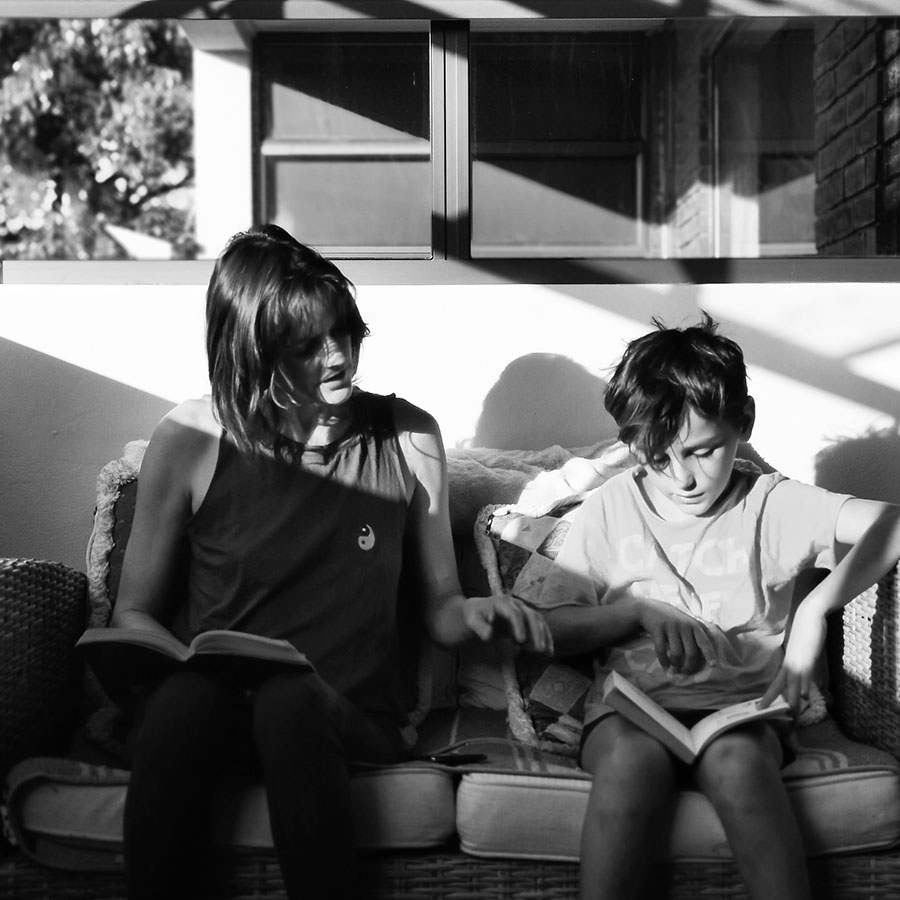
And so, today, I enjoyed the feeling under my feet, the sun casting shadows on the wall, Josh laughing outside as he played with the dogs. I wondered what he meant by living with decency…Perhaps it’s simply to love?

“They knew now that if there is one thing one can always yearn for, and sometimes attain, it is human love.”
― Albert Camus, The Plague

Still(a)Life #27: “As your lover describes you, so you are.”

“Through others, we become ourselves” said Vygotsky. As children, we develop cognitively and emotionally through interaction with our caregivers. This does not, however, end in childhood. As adults, the relationships we find ourselves in continue to shape who and how we are. Jeannette Winterson wrote that “As your lover describes you, so you are”.

It is my belief that, over time, people either grow together or they grow apart. Relationships, of any sort, are an invitation to this growth. We either take up these invitations or not. Any relationship you find yourself in will leave you either changed for the better or for the worse. The fact that relationships have the potential to leave us changed for the better implies that they could just be our ultimate form of therapy.

But, in order to achieve this, we must allow ourselves to be changed. We need to let go of our pasts and give in to our futures. Even when our futures feel uncertain. We must allow ourselves to be shaped by the people we are locked down with. If we don’t like the shape they give us, then we need to speak up.

We must be prepared to recognise how our past pains might have shaped us; how they flavour how we experience our present loves; and be willing to give ourselves up to a yet to be determined future self. “This is just who I am” is the greatest barrier to our growth and the greatest threat to fulfilment in a relationship. We are better off saying “This is who I would rather be”. The relationship that supports us in this vision, is the right relationship for us.

I have always said that I can’t screw a couple back together if they are not compatible enough. But, today a client shared a quote with me by Alain De Botton, that challenged this: “Compatibility is an achievement of love; it must not be its precondition.”

Even though I don’t believe that just any two people are potentially compatible, I think it is worth asking: How do we achieve such a love? Perhaps only through radical honesty? We have to be able to say things to each other that we know will hurt. Such honesty, although seemingly cruel, is an act of love. Such honesties are invitations to growth. But I must trust you enough to trust that your intention is love and not diminishment. I am compatible to you when I love you enough to want you to be everything you can be. Even if I risk the loss of you through that.

It’s day #27 and many a home is fast becoming a potential confessional or a bunker for hidden feelings. It’s a good time to find the courage to describe ourselves back to each other. Ultimately, these honest moments can be our sincerest acts of love.

Still(a)Life #26: A Rebellion Deep Inside

Compliance is, mostly, a good thing. It allows for cohesion. Over-compliance, however, risks hiding things. My son was distressed the other day and couldn’t get hold of me. He apparently said “I never want to see Dad again”. My heart sank when I heard that. But, I am learning the value of the freedom to express ourselves, especially when we’re young. Rumi imagined a field “out beyond ideas of wrongdoing and rightdoing”, it’s an especially good place for us to meet in times of struggle. There are moments when there is no right feeling or wrong feeling to be had. When the expression of that feeling, rightly or wrongly, is the truest thing.

Under the lockdown compliance, our homes are the distilleries of these truths. Therapy is, to a great extent, the pursuit of truths. Not a forensic kind of truth. Not the kind a lie detector might reveal. In fact, whenever lie detectors are suggested in a couple’s therapy, I know it’s the beginning of the end. It’s an indication that the very foundations of trust have already been demolished. Therapeutic truths are different truths. They are an embodied sense that this feels right for me. This is what we need to feel authentically ourselves. And, when we get a sense of these truths, radical change usually follows. The truth, however, takes time to make itself known. First, we have to get over the anxiety this will cause us. Radical change can be traumatic.

We are encouraged from youth to comply with expectations of us. Often, we find ourselves having to choose and behave in ways that meet the needs of a parent. An overly vulnerable mother or a particularly angry father might have us playing out a role that helps “keep the peace”. Winnicott believed that this contributed to the development of a “false self”; a persona that we put out there into the world in order to comply with the demands of our environment.

We learn a capacity to behave according to the demands of the needs of others, first our parents and siblings and, later, society as a whole. However, this role we learn to play gradually overshadows a more spontaneous expressions of our authentic needs and feelings. Eventually we risk losing touch with them altogether. This loss can contribute to inevitable feelings of emptiness and isolation. We can spend a lifetime avoiding this chasm. Then comes lockdown. Spend enough time with yourself and your own authenticity will start a rebellion somewhere deep inside you. The things you didn’t want to say or feel, will slowly find expression. There is no wrong or right feeling but the inevitable expression will bring you closer to some people and further from others. Trust this, there is truth in it.

Still(a)Life #25: Our Living Rooms, our Waiting Rooms

As the days pass, there is a deepening contrast between an “inside” and an “outside”. A definite boundary between things happening “in here” and the news I read about the world “out there”. I haven’t read much news the past few days. It feels pretty obvious to me that things “out there” will never be the same again. Today I spoke to a man who, by necessity, has his finger on the pulse of our economy. The conversation wasn’t about “out there”, it was about his “in here” but he mentioned a few things in passing, like “the greatest economic downturn the modern world has ever seen”.

I get a bit concerned when I speak to people and they don’t yet share the same concern about this. But its most likely because they are more concerned right now about the things “in here”, starting to bubble to the surface. I get a privileged window into people’s in-here-ness, especially in these times. My laptop opens up like a window into people’s living rooms. Curious term, “living rooms”. Are these meant to be the rooms we do our living in? Can we even call this living? How do we define what it means to really be living? Perhaps, for now, they should be called “waiting rooms”? Aren’t we all just waiting for something to happen? But, are we waiting for things to happen “out there” or “in here”? It’s a bit like Samuel Beckett’s Waiting for Godot.

“Let us do something, while we have the chance! It is not every day that we are needed. Not indeed that we personally are needed. Others would meet the case equally well, if not better. To all mankind they were addressed, those cries for help still ringing in our ears! But at this place, at this moment of time, all mankind is us, whether we like it or not. Let us make the most of it, before it is too late! Let us represent worthily for one the foul brood to which a cruel fate consigned us! What do you say? It is true that when with folded arms we weigh the pros and cons we are no less a credit to our species. The tiger bounds to the help of his congeners without the least reflexion, or else he slinks away into the depths of the thickets. But that is not the question. What are we doing here, that is the question. And we are blessed in this, that we happen to know the answer. Yes, in the immense confusion one thing alone is clear. We are waiting for Godot to come — ”
― Samuel Beckett, Waiting for Godot

Nevertheless, while we wait for Godot (who never arrives), Lockdown brings us face to face with the thoughts and feelings that have been waiting to for us. Especially as the novelty of sleep-ins, laps around the garden and playing monopoly with your kids wears off: there are things “in here” that want to be known. As the rations of ethanol dwindle, thoughts and feelings make themselves known. I’m hoping that my bubbles of ginger, yeast and sugar can beat my thoughts to the surface.

In all honesty, I feel much gratitude for the courage those in conversation with me are showing. It is a noble task to keep talking through these uncertain times. It’s much easier to build a fort with your kids in the supposed living room. Each session feels like we are going places we have never gone before. “I never thought I would say this”; “I never really realised this”; “I never thought I would write this”; “I’ve never ever talked about this before”. These are the precursors to almost every conversation in the last few days. I would like to take the credit, but it has more to do with the “waiting rooms” than therapy. There are things lying in waiting for us, if we just give them the time.

Buddhism has always known this. True insight doesn’t come from “working it all out”. True insight comes from the courage to just sit with things and see what it is that they have to reveal to us. True insight is not a cerebral event but rather a visceral experience. So as you wait for things to happen “out there”, outside of your control, take the time to listen to the things happening “in here” – they have things to tell you.

“You’re on Earth. There’s no cure for that.”
― Samuel Beckett

Still(a)Life #24: Just a Few Words

A footnote on yesterday’s post:

The first book I ever tried to read, cover to cover, was Jonathan Livinsgton Seagul. I chose it because it had the narrowest spine I could find in the library. I can’t recall the actual story because the effort it took to read it didn’t leave much cognitive room for retention. I was in my final year of highschool, an overpriced boarding establishment. They had beautiful lawns and an impressive little chapel, but they didn’t notice I was Dyslexic. My teacher that year had the good sense to pay little attention to the assessment requirements and when it came to my oral, she said I should just talk on any topic of my choosing. She was interested in my ability to reason not to read. At the end of that year she wrote “Without words he strives to answer questions that have never been asked”.

I had already given up on becoming a psychologist a year prior to this. I approached my English teacher at the time, Mr Candotti, with my fantasies. He seemed like a pretty cool guy. We liked him and I knew he was studying psychology part-time. He told me “I don’t think you have the aptitude”. I managed to hide my utter deflation and I geared myself for a career in art. Something that didn’t require words. I was the only student in the school who could airbrush. Not very well, but I enjoyed it. I became a psychologist by accident.

I finished my master’s in psychology with academic colours. I didn’t tell anyone. I was meant to wear some fancy blazer on graduation, but I was well on my way to avoiding institutional norms by then. I was asked to leave my first internship. I had an argument with the professor in charge about how I didn’t believe that asking a child to repeat the 7 random numbers I just shared was of any relevance to predicting their future. “Either you do this the way it’s always been done” he insisted in his thick Afrikaans accent (slamming his fist so hard on the desk that his fringe uncombed itself from the bald spot it was covering over his head) “or you can leave.” I got up from the table and never returned.

There are advantages to writing a thesis under the passionate supervision of the head of department. I had a new internship the next day. My thesis was on language. On words and how they do the work of constructing reality. I was no longer without words. They had become my chief preoccupation. I still struggle with them. I still struggle to read. I wrestle with them, like worthy appointments, all day. I can’t describe the satisfaction it now gives me.

So as I was muddling with words this morning, I looked up and saw Joshua wrestling his own battle. He has such difficulty with words and yet he gets so much satisfaction out of finally managing to pin a few of them down. He just needs people in his corner, worrying less about fluency and more about the world that he is opening doors to. He looked so satisfied with himself. Thank you Fiona, you are opening windows to a whole universe for him!

“Books and doors are the same thing. You open them, and you go through into another world.” – Jeanette Winterson

Still(a)Life #23: Learning through Curiosity

If we listen closely enough, there are perhaps voices arising out of the uncharacteristically silent lockdown days, telling us things. This morning it was Josh playing chopsticks on an out of tune piano. When I stopped to listen, I realised he was starting to improvise. His usual busy self bursting into spontaneous melody. I found myself relieved that he has not had too much formal musical training yet. Something in him is developing through this free play. As Vygotsky wrote “In play, a child is always above his average age, above his daily behaviour; in play, it is as though he were a head taller than himself.” I found myself angry with how my child’s education has so often left him feeling smaller than himself, diminished, behind.

The silence is confirming for me that we need to rethink education, more so now than ever. I was trying to force Joshua to do his schoolwork and Fiona interjected, “let’s not call it that anymore, let’s call it learning”. We’ve made a new rule: if we can’t call it “learning” it has no place in our home. Learning is not about grades; worksheets; completing tasks; the successful regurgitation of facts. Learning is a process of making something part of who you are; the chance to enact something; demonstrate it upon the world. Learning is development that is born out of relationships with others and not an acquisition of knowledge through repetition. Learning is something you become not something you simply have to do. Think of how we learn a language or a musical skill. True learning doesn’t necessarily happen in a classroom or a place, it happens through play, enactment, often through struggle but not in the absence of passion and imagination.

Personally, I’m done with education. And if you have been trying to help your children learn from home, I bet that by now you are too? There is no child who is not, at first, curious about the world they are born into. We have an ownership to them to open every window we can to that world. A brand new world awaits them.

Still(a)Life #22: Floating in Limbo

“I’d rather have a bottle in front of me than a frontal lobotomy” said Tom Waits. I researched how to make genuine ginger beer today. The whisky is running out. It was a rough day. I had to trade with their mother, one son for the other. On his birthday! It feels like the kinds of choices you would only make in wartime. But, as I ventured out of the house for the first time in 22 days, it was alarming at how everything seemed so normal but not. More cars than I expected on the road. Everyone moving so seemingly freely. Half worn masks for their token value.

I wanted to roll down my car window and scream, don’t you get it, the world has changed forever. How can we all just go on like this? It’s changed for the better, in some respects? I want to change the way my children are educated. Reconsider the source of my food. Relocate humanity’s place on the planet. Appreciate the joy of travel.

As I walked into the shop a keeper shot me in the frontal lobe with a gauge, execution style. “33.5” he announced, almost disappointed. A bit too high I guess? Not the lobotomy I was hoping for. An elderly lady kept on looking at me suspiciously from behind her mask. When did we become so dangerous to one another?

The ships lie, increasingly, in waiting. A metaphor for the position we all find ourselves in. We are adrift from our everyday lives. Waiting to see what our future holds. When will we dock into a reality that is more recognisable to us all? Limbo is never a great place to spend too much time floating in.

I think we need to get on with it. Put on our masks and gloves. Buy what we need, support who we can. Socialise from a distance. Educate our children from home. There is no “back to normal”. And, do we even want that? Once we have found acceptance that we live in a changed world, the most important question could be: How do we go on from here?

Still(a)Life#21: Hidden Layers Crack through the Surface

All of experience is a layered occasion. At any given moment, there is more to each experience than that which lies on the surface. Conscious and unconscious. Apparent and hidden. Suppressed versus expressed. For the most part, we present to the world an outer layer. A shell hardened by time, social norms and experience. It’s a shell designed to safely keep hidden the more vulnerable aspects of ourselves. The unborn parts we have not yet had the courage to enact and the missing parts we have not been able to find a place for. The thing is, we struggle to admit to ourselves what it is that we really want or to face the things we find too uncomfortable. We stick to the surface of things.

Lockdown slowly compresses these layers, they collapse in on each other and the things we have been hiding away or hiding from, crack through the surface. The husband chooses to sleep in his office. The wife struggles to hide her difficulty with food. The child refuses to go back to his mother’s house. The lover decides she is no longer settling for less.

My phone has started to vibrate in the night. The rumble of people’s layers stirring to the surface. Our initial tendency is to quickly find a place for these thoughts and feelings. Make sense of them. Move on. Put everything back together. This is not the time for getting “back to normal”. Not everything has a neat place.

The world outside our windows is changing as you read this. And, if you want to find out where you are in that world, it starts with a journey inward. Embracing the change does not start with holding on but with letting go.

“The only way to find out where I was was to get out of the way and let myself happen.”
― Mark Epstein, Going to Pieces Without Falling Apart: A Buddhist Perspective on Wholeness

Still(a)Life#20: In This Together

When Veronica saw the bags of food piled at the kitchen door she shrieked “Thank you, thank you” at Fiona, “if it wasn’t for Corona, I would hug you”.

“We can hug” Fiona replied, “we’re all in this together”.

Veronica squeezed her as tight and long as she could. The food was for the community down the road but, despite being a Zimbabwean with her own family struggling far off out of her own reach, it was as if we were feeding her own children.

There are many forms of isolation but surely hunger is the worst? It’s so ghastly, we tend to look the other way. Today I am struggling to find words. I think I’ve used up my daily quota. So I’m lending some from Arundhati Roy:

“The only dream worth having is to dream that you will live while you are alive, and die only when you are dead. To love, to be loved. To never forget your own insignificance. To never get used to the unspeakable violence and vulgar disparity of the life around you. To seek joy in the saddest places. To pursue beauty to its lair. To never simplify what is complicated or complicate what is simple. To respect strength, never power. Above all to watch. To try and understand. To never look away. And never, never to forget.”

Still(a)Life #19: Effort to Contain Anxiety

This is what the fear of Corona has done to our morning coffee; cluttered it with vitamin C and other potentially placebo prophylactics. The difference between fear and anxiety is that fear is for something that tangibly exists in the world. Fear is designed to help us avoid the object of our fear. Fear is rooted in something real and is designed for our own survival through encouraging us to do something about it, even if this “something” is simple avoidance. Anxiety, on the other hand, is for something less tangible. Anxiety is fear dislodged from any specific object, “free floating” (as psychology puts it) in the background of our minds. It is not so easy to do “something” about anxiety. We are born into the world with an inkling of it. As it increasingly frees itself from its original moorings, it slips away from our efforts to contain it.

It is a good time to try and recognise the difference between fear and anxiety. It’s a good idea to fear #covid19 and behave accordingly. The anxiety that it feeds, however, is not going to be all that helpful. Anxiety will leave us in denial, restlessness, panic or disorganisation. The most we can do with anxiety is to just let it be. Treat it with somewhat indifference. Or bring it back to its original object – fear of death, loss and loneliness. Or, the very incomprehensibility of the fact that we exist at all and why.

This is especially important for us at this stage of our efforts here in South Africa. We are only at the onset of our battle with the corona virus. For those of us who are privileged enough to have a fridge full of food and a roof over our heads; lockdown is a temporary breather before the real change comes and our real efforts begin. So, I have been encouraging my clients to pace themselves. To save their energy for what is to come. Anxiety is wasteful of our resources. “Worrying is carrying tomorrow’s load with today’s strength- carrying two days at once. It is moving into tomorrow ahead of time. Worrying doesn’t empty tomorrow of its sorrow; it empties today of its strength.”
― Corrie Ten Boomanxiety

« Older posts Newer posts »

© 2026 Jason Ross

Theme by Anders Noren — Up ↑